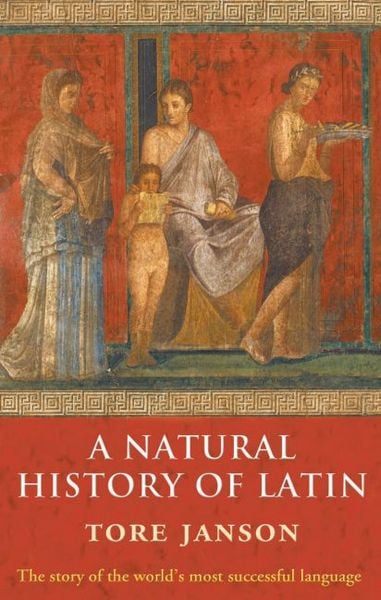
Produktbild: A Natural History of Latin

A Natural History of Latin New Edition

13,99 €

inkl. gesetzl. MwSt., Versandkostenfrei


Beschreibung

Produktdetails

Einband

Taschenbuch

Erscheinungsdatum

25.01.2007

Verlag

Oxford Academic

Seitenzahl

320

Maße (L/B/H)

21,5/13,9/1,9 cm

Gewicht

413 g

Sprache

Englisch

ISBN

978-0-19-921405-1

Beschreibung

Produktdetails

Einband

Taschenbuch

Erscheinungsdatum

25.01.2007

Verlag

Oxford Academic

Seitenzahl

320

Maße (L/B/H)

21,5/13,9/1,9 cm

Gewicht

413 g

Sprache

Englisch

ISBN

978-0-19-921405-1

Herstelleradresse

Libri GmbH
Europaallee 1
36244 Bad Hersfeld
DE

Email: gpsr@libri.de

Ein neues Kapitel für Ihre Bücher

Ein neues Kapitel für Ihre Bücher

Schenken Sie Ihren alten Schätzen ein zweites Leben: Einfach Barcode scannen, Versandetikett ausdrucken, Bücher verschicken und Thalia Geschenkkarte erhalten.

Jetzt verkaufen
Jetzt verkaufen

Kundinnen und Kunden meinen

0 Bewertungen

Informationen zu Bewertungen

Zur Abgabe einer Bewertung ist eine Anmeldung im Konto notwendig. Die Authentizität der Bewertungen wird von uns nicht überprüft. Wir behalten uns vor, Bewertungstexte, die unseren Richtlinien widersprechen, entsprechend zu kürzen oder zu löschen.

Die Bewertungen sind nach Format, Anzahl Sterne und Datum sortiert.

Verfassen Sie die erste Bewertung zu diesem Artikel

Helfen Sie anderen Kund*innen durch Ihre Meinung

Kundinnen und Kunden meinen

0 Bewertungen filtern

Die Leseprobe wird geladen.
  • Produktbild: A Natural History of Latin
    • Part I Latin and the Romans

    • 1: Lingua latina: a first acquaintance

    • 2: The earliest period of Rome

    • 3: How Latin became Latin

    • 4: From small town to great power

    • 5: How bad were the Romans?

    • 6: A voice from early Rome

    • 7: The meeting with Greece

    • 8: Theatre for the people

    • 9: The age of revolutions

    • 10: Writing, reading, listening, and speaking

    • 11: Speeches, politics, and lawsuits

    • 12: Cicero and rhetoric

    • 13: The language of history

    • 14: Imperium romanum: Augustus and the Roman Empire

    • 15: Name and family

    • 16: Years and months

    • 17: Latin becomes the language of Europe

    • 18: Poets and poetry

    • 19: Philosophy: Lucretius, Cicero, Seneca

    • 20: The Schools and Quintilian

    • 21: The sciences

    • 22: Everyday language

    • 23: Laws and legal language

    • 24: Tacitus, the emperors, and Britain

    • 25: Christianity: from dangerous sect to state religion

    • Part II Latin and Europe

    • 26: Europe after Rome

    • 27: From Latin to the Romance languages

    • 28: Missionaries, Latin, and foreign languages

    • 29: Latin in Britain

    • 30: Latin in schools

    • 31: Speaking and spelling

    • 32: Books and scribes

    • 33: Saints and heretics

    • 34: The guardians of the heritage

    • 35: Poetry after antiquity

    • 36: Abelard and Heloise

    • 37: The thinkers

    • 38: The Renaissance

    • 39: Doctors and their language

    • 40: Linnaeus and Latin

    • 41: Physicists, chemists, and others

    • 42: Alchemy, witchcraft, and Harry Potter

    • 43: Loanwords and neologisms

    • 44: Latin and German

    • 45: Latin and French

    • 46: Latin and English

    • 47: Latin and us

    • Part III About the Grammar

    • 48: Introduction

    • 49: Pronunciation and stress

    • 50: Sentences, verbs and nouns

    • 51: Words and word classes

    • 52: Nouns

    • 53: Adjectives

    • 54: Pronouns

    • 55: THe forms of the verb

    • 56: Amandi and amanda

    • 57: How words are formed

    • Glossary of words and expressions

    • Part IV Basic Vocabulary

    • Part V Common Phrases and Expressions

    • Suggested reading

    • Index