KI-Beratung Beta

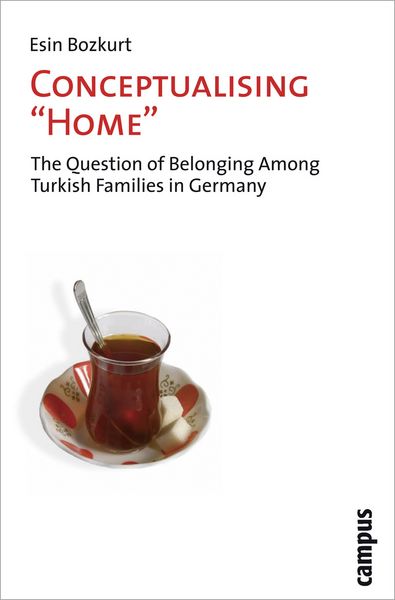
Produktbild: Conceptualising Home

Conceptualising Home The Question of Belonging Among Turkish Families in Germany

39,00 €

inkl. gesetzl. MwSt., Versandkostenfrei


Beschreibung

Produktdetails

Einband

Taschenbuch

Erscheinungsdatum

02.03.2009

Verlag

Campus

Seitenzahl

243

Maße (L/B/H)

1,8/14/21,5 cm

Gewicht

341 g

Auflage

1

Sprache

Englisch

ISBN

978-3-593-38791-8

Beschreibung

Produktdetails

Einband

Taschenbuch

Erscheinungsdatum

02.03.2009

Verlag

Campus

Seitenzahl

243

Maße (L/B/H)

1,8/14/21,5 cm

Gewicht

341 g

Auflage

1

Sprache

Englisch

ISBN

978-3-593-38791-8

Herstelleradresse

Beltz Verlagsgruppe GmbH & Co. KG
Werderstr. 10
69469 Weinheim
DE
info@campus.de

Ein neues Kapitel für Ihre Bücher

Ein neues Kapitel für Ihre Bücher

Schenken Sie Ihren alten Schätzen ein zweites Leben und erhalten Sie dafür eine Thalia Geschenkkarte.

Jetzt verkaufen
Jetzt verkaufen

Noch keine Bewertungen vorhanden

Verfassen Sie die erste Bewertung zu diesem Artikel

Helfen Sie anderen Kundinnen und Kunden durch Ihre Meinung.

Kundinnen und Kunden meinen

Bewertungen (0)

Weitere Artikel finden Sie in

  • Produktbild: Conceptualising Home
  • Table of Contents


    Acknowledgements


    Introduction


    1 Migration and belonging

    1.1 Defining home across three socio-linguistic contexts

    Home and homeland in Turkish context - Home and homeland in German context - Related concepts

    1.2 Mobility and home

    Migration, resettlement and the making of home - Reconceptualising home


    2 Contextualising "home": Turkish immigrants in Germany

    2.1 Turkish migration to Germany

    Migration and resettlement - Migrancy, longing and belonging - Religious home-making abroad - Crystallisation of belongings -Conclusions and open questions

    2.2 Children of Turkish emigrants in the literature

    Experiences with exclusion - Finding feet in the battlefield - Spatial and cultural references - Religious belonging consolidated and transformed - Sympathetic others and suffering companions - Conclusions and open questions


    3 Gender, migration and belonging

    3.1 The question of gender in migration research

    3.2 Gendered facets of Turkish migration to Germany

    3.3 Women and home

    3.4 Conclusions and outlook


    4 Empirical Research

    4.1 Recapitulating research objectives

    4.2 Research questions

    4.3 Research methods

    Qualitative research: Problem-centred interviews - In the field - Access to the sample - Introducing families - Conducting interviews - The language of interviews - The transcription of interviews - Data analysis


    5 The question of belonging across three generations

    5.1 From guests to commuters: The first generation

    The experience of migration - Loss of status - Temporality - The making of home as a guest -Conclusions: From a airy home to a heavy life

    5.2 Claiming home: The second generation

    The profile of the second generation - From Turkey to Germany - Schooling in Germany: Initial Difficulties - Experiences in Germany and changing relations with Turkey - Difference and exclusion - Back at home as a guest - The question of belonging - Conclusions: Questioning home as children of the first generation and parents of the third generation

    5.3 Fighting for belonging: The third generation

    The profile of the third generation in the sample - Living and grounding in Germany with backups and emergency exits - Escape from reality, sheltering in roots - Dealing with the present: Reborn Turks, Muslims and other Others - Conclusions: Incomplete lives, substitute homes


    6 Gendered (re)constructions of "home": Turkish men and women in Germany

    6.1 Gender in migration process

    Gender differences in the experience of migration - Employment of Turkish women - Experiences in Germany and in Turkey

    6.2 Gendered (re)constructions of home

    Home as conceptualised by women - Home as conceptualised by men

    6.3 Gendered return orientations

    6.4 Conclusions


    7 Belonging at the crossroads of gender and generations

    7.1 Common themes and shared patterns of intergenerational communications across six turkish families

    7.2 Differences across families: Changing emphases on culture, nation and religion

    7.3 Gendered communication of belonging across generations

    Women and communication - Men and communication

    7.4 Conclusions


    Conclusion


    List of Tables

    Bibliography

    Appendix