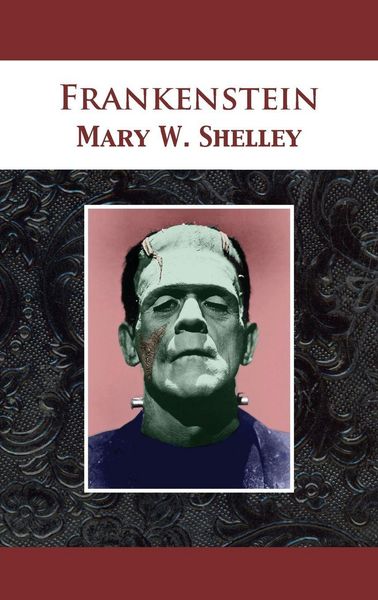
Frankenstein
11-
- Hardcover ausgewählt
- Taschenbuch
- Besondere Ausgabe
- eBook
- Hörbuch
-
Sprache:Englisch
- Deutsch 19,80 €
- Englisch 19,99 € ausgewählt
- Spanisch 15,99 €
-
Verlag:12th Media Services
- Arcturus Publishing 14,99 €
- Hachette Book Group USA 17,99 €
- Random House N.Y. 14,99 €
- UK Books 16,99 €
- Canterbury Classics 14,99 €
- Quarto Publishing Group 11,99 €
- 12th Media Services 19,99 € ausgewählt
- Classics Illustrated Comics 14,49 €
- Racehorse for Young Readers 13,99 €
- Flame Tree Publishing 13,99 €
- Dover Publications Inc 19,99 €
- Prakash Books 15,99 €
- 1828 Press 18,99 €
- Wordsworth Editions Ltd 16,99 €
- Saltway 10,09 €
- Pan MacMillan 12,49 €
- Gröls Verlag 19,90 €
- Penguin Books Ltd 15,49 €
19,99 €
inkl. gesetzl. MwSt.,
Beschreibung
Produktdetails
Einband
Gebundene Ausgabe
Erscheinungsdatum
07.04.2019
Verlag
12th Media ServicesSeitenzahl
132
Maße (L/B/H)
24/16,1/1,2 cm
Gewicht
320 g
Sprache
Englisch
ISBN
978-1-68092-257-8
Frankenstein; or, The Modern Prometheus is a novel written by English author Mary Shelley (1797–1851) that tells the story of Victor Frankenstein, a young scientist who creates a hideous, sapient creature in an unorthodox scientific experiment. Shelley started writing the story when she was 18, and the first edition of the novel was published anonymously in London on 1 January 1818, when she was 20. Her name first appeared on the second edition, published in 1823. Shelley travelled through Europe in 1814, journeying along the river Rhine in Germany with a stop in Gernsheim, which is 17 kilometres (11 mi) away from Frankenstein Castle, where, two centuries before, an alchemist was engaged in experiments. Later, she travelled in the region of Geneva (Switzerland)—where much of the story takes place—and the topic of galvanism and occult ideas were themes of conversation among her companions, particularly her lover and future husband, Percy Shelley. Mary, Percy and Lord Byron decided to have a competition to see who could write the best horror story. After thinking for days, Shelley dreamt about a scientist who created life and was horrified by what he had made; her dream later evolved into the novel's story. Frankenstein is infused with elements of the Gothic novel and the Romantic movement. At the same time, it is an early example of science fiction. Brian Aldiss has argued that it should be considered the first true science fiction story because, in contrast to previous stories with fantastical elements resembling those of later science fiction, the central character "makes a deliberate decision" and "turns to modern experiments in the laboratory" to achieve fantastic results. It has had a considerable influence in literature and popular culture and spawned a complete genre of horror stories, films and plays. Since the novel's publication, the name "Frankenstein" has often been used to refer to the monster itself. This usage is considered erroneous, but some commentators regard it as well-established and acceptable. In the novel, Frankenstein's creation is identified by words such as "creature", "monster", "daemon", "wretch", "abortion", "fiend" and "it". Speaking to Victor Frankenstein, the monster says "I ought to be thy Adam, but I am rather the fallen angel" (which ties to Lucifer in Paradise Lost, which the monster reads, and which relates to the disobedience of Prometheus in the book's subtitle). Source: Wikipedia
Ein neues Kapitel für Ihre Bücher
Ein neues Kapitel für Ihre Bücher
Schenken Sie Ihren alten Schätzen ein zweites Leben und erhalten Sie dafür eine Thalia Geschenkkarte.
Kundinnen und Kunden meinen
Unsere Meinungen
-
Zum Bewerterprofil von Maria Gehl

Maria Gehl
Thalia Hamburg – AEZ
Buchhändler*in
Es ist ein Problem aufgetreten. Bitte laden Sie die Seite neu und versuchen es noch einmal.
Buch (Gebundene Ausgabe)
"The Modern Prometheus"
Einer meiner Lieblingsklassiker. Mary Shelley wirft Fragen über Moral, Leben, Tod und Veranlagung vs. Erziehung auf. Wer dieses Buch liest, wird noch lange darüber nachdenken. Die Geschichte von Victor Frankenstein und seiner Kreatur ist wahrscheinlich den Meisten schon durch die Verfilmungen bekannt, doch ich kann Jedem nur ans Herz legen, das Buch zu lesen. Wer ist am Ende wirklich das Monster? Frankenstein oder die Kreatur? Beide? Keiner von Beiden? Ein zeitloser Klassiker, der noch heute wichtige Themen behandelt. -
Zum Bewerterprofil von C. Wiechert

C. Wiechert
Thalia Brühl Markt
Buchhändler*in
Es ist ein Problem aufgetreten. Bitte laden Sie die Seite neu und versuchen es noch einmal.
Buch (Taschenbuch)
My favourite classic
I made it my mission to read or re-read more classics. Frankenstein is definitly still my favourite. The story basically is just Victor not wanting to take responsibility for the problems he caused. And the creature basically turning "dark" because a certain someone didn't want anything to do with "it". Beautiful prose, characters that are fundamentally flawed and a gloomy setting, Frankenstein has ist all. -
Zum Bewerterprofil von Lillian-Fay Götz

Lillian-Fay Götz
Thalia Hamburg – Europapassage
Buchhändler*in
Es ist ein Problem aufgetreten. Bitte laden Sie die Seite neu und versuchen es noch einmal.
Buch (Taschenbuch)
Schaurig schöner Klassiker
Weder staubtrocken, noch aus der Zeit gefallen oder schwierig zu lesen oder zu verstehen. Frankenstein von Mary Shelley ist wahrlich zeitlos. Sicher, sollte man die Charaktereigenschaften von Viktor Frankenstein nicht als bloße Marotten abtun oder den jugendlichen Leichtsinn eines Mannes aus guten Verhältnissen. Viel mehr ist der Text aus heutiger Sicht spannend, da er psychologisch in die Fehlbarkeit von Meister und Monster eintaucht und Schwächen beider Figuren aufdeckt. Ist Frankenenstein ein Incel? Ist das Monster ein Philosph? Was mich vor allem seit jeher an der Geschichte begeistert, ist die Erzählart. Auf mehreren Erzählebenen berichten die unterschiedlichsten Figuren von ihren Abenteuern mit Frankenstein und der Kreatur. Ein Abenteuerroman, ein schauriger Horrortext, ein Klassiker, den man unbedingt gelesen haben sollte. Und wer gar nicht genug von dem Thema kriegt, für den hab ich an dieser Stelle noch ein paar weitere Lektüretipps: "Botanical Daughter", "Frankissstein", "W1ll1am", The Dark Descent of Elizabeth Frankensetiin" und "What moves the Dead". -
Zum Bewerterprofil von Sophie Dorn

Sophie Dorn
Thalia Langenfeld – Stadtgalerie
Buchhändler*in
Es ist ein Problem aufgetreten. Bitte laden Sie die Seite neu und versuchen es noch einmal.
Buch (Taschenbuch)
Shelley ist ein Profi ihres Genres
"And why must I describe a sorrow which all have felt, and must feel?" Nachdem ich dieses Buch gelesen habe, habe ich gelesen das Frankeinstein über die Erfahrung ist eine Frau zu sein. Das ist ein schöner und akkurater aber dennoch gruseliger Gedanke. Frankenstein beschäftigt sich mich Philosophischen Themen, nicht umsonst ist dies ein Klassiker. Die Ethik der Wissenschaft, ob wir überhaupt Gott spielen dürfen, was es für Konsequenzen trägt. Die gesellschaftliche Empathie, oder das Fehlen dieser. Shelley spiegelt Rousseau wieder, dass Menschheit mit ihrer Korruption, Hass und Ablehnung ein unschuldiges Wesen zerstört. Außerdem ist die Frage "Wer ist das echte Monster?" nicht einfachso populär, auch wenn es im Buch deutlich ist, wer das echte Monster ist. Diese Frage spiegelt wieder wie die Gesellschaft "Monster" definiert. Phänomenales Buch.
Kurze Frage zu unserer Seite
Vielen Dank für Ihr Feedback
Wir nutzen Ihr Feedback, um unsere Produktseiten zu verbessern. Bitte haben Sie Verständnis, dass wir Ihnen keine Rückmeldung geben können. Falls Sie Kontakt mit uns aufnehmen möchten, können Sie sich aber gerne an unseren Kund*innenservice wenden.
zum Kundenservice