















































KI-Beratung Beta

Gutscheinbedingungen

Gültig bis 30.11.2026 | Gültig für nicht preisgebundene fremdsprachige Bücher | Einzelne Artikel können ausgeschlossen sein | Online auf thalia.de und in der Thalia App einlösbar | Click & Collect nur mit Online-Zahlung (Paypal/Kreditkarte) vorab | Nicht kombinierbar mit anderen Gutscheinen oder Preisaktionen | Nur einmal pro Einkauf einlösbar | Gutschein wird auf max. 500€ Bestellwert angerechnet | Keine Barauszahlung | Nicht gültig für Versandkosten und Services

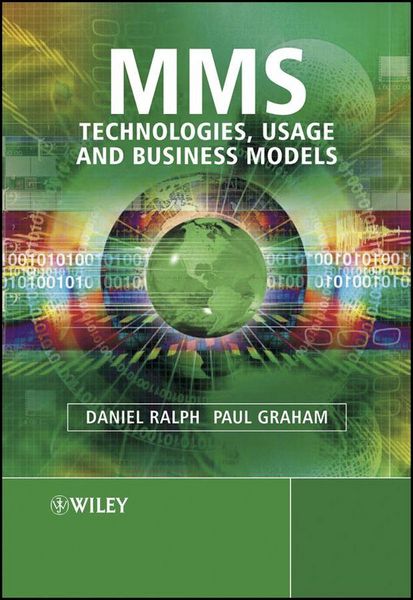
Produktbild: Mms

Mms Technologies, Usage and Business Models

165,99 €

inkl. gesetzl. MwSt., Versandkostenfrei


Beschreibung

MMS has evolved from the huge popularity of the SMS text service for GSM networks. It is a departure from the transport mechanism used for SMS (which is based on the GSM signalling channels) to the use of IP to transport messages within the MMS network. To this end MMS has similarities with Internet...

Beschreibung

MMS has evolved from the huge popularity of the SMS text service for GSM networks. It is a departure from the transport mechanism used for SMS (which is based on the GSM signalling channels) to the use of IP to transport messages within the MMS network. To this end MMS has similarities with Internet email and standard IETF protocols. As with any new technology it is difficult to accurately predict the position within the next 5 years, although based on previous experience with WAP and SMS it would be fair to say that these protocols will increase in usage over the next 5 years and become legacy for a further 5 years following which, users will migrate onto the next wave of messaging. Significant revenue growth and data usage is expected to be driven by consumer usage of MMS.
 
But MMS technology offers more than just a broadening of message content. With MMS, it is not only possible to send your multimedia messages from one phone to another, but also from phone to email, and vice versa. This feature dramatically increases the possibilities of mobile communication, both for private and corporate use.
 
Multimedia messaging will reshape the landscape of mobile communication, making it more personal, more versatile, and more expressive than ever before.
 
MMS:
* Is the first book to address how MMS (and the use of IP to transport messages) will affect existing infrastructure and business models
* Covers the fundamental changes to mail and billing systems
* Includes future recommendations, such as interoperability and evolution
* Presents an overview of the MMS technology components
 
Drawing on the authors hands-on experience in the implementation of MMS technology (developing, billing and delivering services) at BT, this innovative book will appeal to engineering managers, network operators, market analysts, business decision makers, content providers and operator organizations.

Rezension

"...a good introduction to GPRS..." (IEE Communications Engineer, February 2004)
 
"...target audience should find Daniel Ralph and Paul Graham's book a useful addition to their office..." (M2 Best Books, 2004)
 
"...a very comprehensive guide...can be strongly recommended..." (EBU Technical Review, 20 July 2004)

Produktdetails

ISBN

978-0-470-86116-5

Auflage

1. Auflage

Erscheinungsdatum

02.12.2003

Einband

Gebundene Ausgabe

Produktdetails

ISBN

978-0-470-86116-5

Auflage

1. Auflage

Erscheinungsdatum

02.12.2003

Einband

Gebundene Ausgabe

Verlag John Wiley & Sons Inc
Seitenzahl

384

Maße (L/B/H)

24,9/16,7/2,6 cm

Gewicht

839 g

Sprache

Englisch

Herstelleradresse

Libri GmbH
Europaallee 1
36244 Bad Hersfeld
DE

Email: gpsr@libri.de

Noch keine Bewertungen vorhanden

Verfassen Sie die erste Bewertung zu diesem Artikel

Helfen Sie anderen Kundinnen und Kunden durch Ihre Meinung.

Kundinnen und Kunden meinen

Bewertungen (0)

  • Produktbild: Mms
  • About the Authors.
     
    How This Book Is Organized.
     
    Acknowledgements.
     
    PART I: MOBILE MESSAGING BUSINESS CHALLENGES.
     
    1. Multimedia Messaging Overview.
     
    2. The Multimedia Messaging Value Chain.
     
    PART II: THE TECHNOLOGIES OF MULTI MEDIA MESSAGING.
     
    3. A Standards-based Approach.
     
    4. Application Layer.
     
    5. Network Layer.
     
    PART III: MULTI MEDIA MESSAGING SERVICES TODAY AND TOMORROW.
     
    6. Multimedia Messaging Services Today and Tomorrow.
     
    7. Future Recommendations.
     
    Table of Infrastructure, Content and Software Vendors.
     
    Glossary.
     
    Standards and Specifications.
     
    Websites.
     
    Industrial Fora, Regulatory Organizations and Other Relevant Initiatives.
     
    References.
     
    Index.