















































KI-Beratung Beta

Gutscheinbedingungen

Gültig bis 30.11.2026 | Gültig für nicht preisgebundene fremdsprachige Bücher | Einzelne Artikel können ausgeschlossen sein | Online auf thalia.de und in der Thalia App einlösbar | Click & Collect nur mit Online-Zahlung (Paypal/Kreditkarte) vorab | Nicht kombinierbar mit anderen Gutscheinen oder Preisaktionen | Nur einmal pro Einkauf einlösbar | Gutschein wird auf max. 500€ Bestellwert angerechnet | Keine Barauszahlung | Nicht gültig für Versandkosten und Services

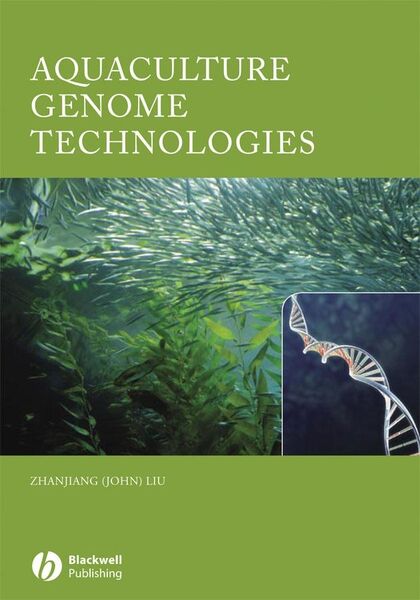
Produktbild: Aquaculture Genome Technologies

Aquaculture Genome Technologies

285,99 €

inkl. gesetzl. MwSt., Versandkostenfrei


Beschreibung

Genomics is a rapidly growing scientific field with applications ranging from improved disease resistance to increased rate of growth. Aquaculture Genome Technologies comprehensively covers the field of genomics and its applications to the aquaculture industry. This volume looks to bridge the gap between...

Beschreibung

Genomics is a rapidly growing scientific field with applications ranging from improved disease resistance to increased rate of growth. Aquaculture Genome Technologies comprehensively covers the field of genomics and its applications to the aquaculture industry. This volume looks to bridge the gap between a basic understanding of genomic technology to its practical use in the aquaculture industry.
 
Aquaculture Genome Technologies provides the reader with a tour through the aquaculture genomics process. The book opens with a discussion of concepts and principles and moves from there to a detailed discussion of genome mapping and analysis of genome expression. The final two sections look forward toward sequencing of entire genomes of aquaculture species. Aquaculture Genome Technologies is edited by an international leader in the field of aquaculture genome research, with contributions from an international team of leading researchers.
 
Aquaculture Genome Technologies is an essential reference for anyone with an interest in aquaculture genetics.

Rezension

"A good and comprehensive overview of the principles of genomic tools ... .[It] will be an important reference for quite some time, and I welcome its arrival." ( Aquaculture International , August 2008)
" Aquaculture Genome Technologies is the quintessential What, When, Why and How-to book for aquatic genome research...an important addition to any science classroom, laboratory or office."
( Aquatic Association of Canada Newsletter )
"This most impressive text tells very clearly and comprehensively how and why." ( Ausmarine )

Produktdetails

Einband

Gebundene Ausgabe

Erscheinungsdatum

28.08.2007

Verlag John Wiley & Sons Inc
Seitenzahl

576

Produktdetails

Einband

Gebundene Ausgabe

Erscheinungsdatum

28.08.2007

Verlag John Wiley & Sons Inc
Seitenzahl

576

Maße (L/B/H)

26,2/18,2/3,4 cm

Gewicht

1574 g

Auflage

1. Auflage

Sprache

Englisch

ISBN

978-0-8138-0203-9

Herstelleradresse

Libri GmbH
Europaallee 1
36244 Bad Hersfeld
DE

Email: gpsr@libri.de

Ein neues Kapitel für Ihre Bücher

Ein neues Kapitel für Ihre Bücher

Schenken Sie Ihren alten Schätzen ein zweites Leben und erhalten Sie dafür eine Thalia Geschenkkarte.

Jetzt verkaufen
Jetzt verkaufen

Noch keine Bewertungen vorhanden

Verfassen Sie die erste Bewertung zu diesem Artikel

Helfen Sie anderen Kundinnen und Kunden durch Ihre Meinung.

Kundinnen und Kunden meinen

Bewertungen (0)

  • Produktbild: Aquaculture Genome Technologies
  • Preface.
     
    Foreword.
     
    Chapter 1. Concept of genome and genomics.
     
    Part 1: Marking Genomes.
     
    Chapter 2. Restriction fragment length polymorphism (RFLP).
     
    Chapter 3. Randomly amplified polymorphic DNA (RAPD).
     
    Chapter 4. Amplified fragment length polymorphism (AFLP).
     
    Chapter 5. Microsatellite markers and assessment of marker utility.
     
    Chapter 6. Single nucleotide polymorphism (SNP).
     
    Chapter 7. Allozyme and mitochondrial markers.
     
    Chapter 8. Individual-based genotype methods in aquaculture.
     
    Chapter 9. Application of DNA markers for population genetic analysis.
     
    Part 2: Mapping Genomes.
     
    Chapter 10. Linkage mapping in aquaculture species.
     
    Chapter 11.Detection and analysis of quantitative trait loci (QTLs) for economic traits in aquatic species.
     
    Chapter 12. Marker Assisted Selection for Aquaculture Species.
     
    Chapter 13. Construction of large-insert bacterial clone libraries and their applications.
     
    Chapter 14. Bacterial artificial chromosome libraries and BAC-based physical mapping of aquaculture genomes.
     
    Chapter 15. Physical characterization of aquaculture genomes through BAC end sequencing.
     
    Chapter 16. Genomescape: characterizing the repeat structure of the genome.
     
    Chapter 17. Genomic analyses using fluorescence in situ hybridization.
     
    Chapter 18. Radiation hybrid mapping in aquatic species.
     
    Chapter 19. Comparative Genomics and Positional Cloning.
     
    Part 3. Analysis of Genome Expression and Function.
     
    Chapter 20. Transcriptome characterization through the analysis of expressed sequence.
     
    Chapter 21. Microarray fundamentals: Basic principles and application in aquaculture.
     
    Chapter 22. Salmonid DNA microarrays and other tools for functional genomics research.
     
    Chapter 23. Computational challenges for the analysis of large datasets related to aquatic environmental genomics.
     
    Chapter 24. Functional genomics.
     
    Part 4. Preparing for Genome Sequencing.
     
    Chapter 25. DNA sequencing technologies.
     
    Chapter 26. Sequencing the genome.
     
    Chapter 27. Bioinformatics.
     
    Part 5. Dealing with the Daunting Genomes of Aquaculture Species.
     
    Chapter 28. Dealing with duplicated genomes of teleosts.
     
    Chapter 29. Bivalve genomics: complications, challenges, and future perspectives