















































KI-Beratung Beta

Gutscheinbedingungen

Gültig bis 30.11.2026 | Gültig für nicht preisgebundene fremdsprachige Bücher | Einzelne Artikel können ausgeschlossen sein | Online auf thalia.de und in der Thalia App einlösbar | Click & Collect nur mit Online-Zahlung (Paypal/Kreditkarte) vorab | Nicht kombinierbar mit anderen Gutscheinen oder Preisaktionen | Nur einmal pro Einkauf einlösbar | Gutschein wird auf max. 500€ Bestellwert angerechnet | Keine Barauszahlung | Nicht gültig für Versandkosten und Services

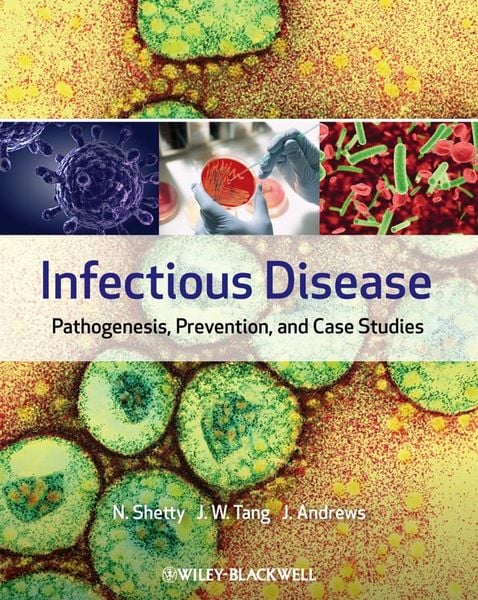
Produktbild: Infectious Disease

Infectious Disease Pathogenesis, Prevention, and Case Studies

221,99 €

inkl. gesetzl. MwSt., Versandkostenfrei


Beschreibung

The study of infectious diseases has undergone major changes since its infancy when it was largely a documentation of epidemics. It has now evolved into a dynamic phenomenon involving the ecology of the infectious agent, pathogenesis in the host, reservoirs and vetors, as well as the complex mechanisms...

Beschreibung

The study of infectious diseases has undergone major changes since its infancy when it was largely a documentation of epidemics. It has now evolved into a dynamic phenomenon involving the ecology of the infectious agent, pathogenesis in the host, reservoirs and vetors, as well as the complex mechanisms concerned in the spread of infection and the extent to which this spread occurs. Rapid globalization has led to unprecedented interest in infectious diseases worldwide and their effect on complex population dynamics including migration, famine, fire, war, and terrorism. It is now essential for public health officials to understand the basic science behind infectious disease and, likewise, students studying ID must have a broader understanding of the implications of infectious disease in a public health context as well as clinical presentation and prevention. The clear demand for an integrated approach has led to the publication of this text.

Rezension

"All three of these pictures are excellent, both for beauty and illustration." (The Quarterly Review of Biology, 1 September 2011)
 
"A fun and readable book that engages the imagination and retains the interest of the clinically orientated reader while conveying an understanding of the direct implications of molecular characteristics of infectious agents to the practise of medicine."
 
Louisa Chapman, Emerging Infectious Diseases, January 2010
 
"This book provides a valuable overview of the basic principles and issues pertaining to the pathogenesis and prevention of infectious diseases. The illustrations, the chapter summaries with relevant information, and the case studies are all particularly useful for the targeted readers. The book is well designed and manages to convey the general concepts of the various aspects of infectious diseases without overwhelming."
 
Stella U. Kalu and Tasnee Chonmaitree, Clinical infectious diseases, January 2010

Produktdetails

Einband

Gebundene Ausgabe

Erscheinungsdatum

01.05.2009

Verlag John Wiley & Sons Inc
Seitenzahl

664

Produktdetails

Einband

Gebundene Ausgabe

Erscheinungsdatum

01.05.2009

Verlag John Wiley & Sons Inc
Seitenzahl

664

Maße (L/B/H)

28,7/22,5/3,7 cm

Gewicht

2174 g

Auflage

1. Auflage

Sprache

Englisch

ISBN

978-1-4051-3543-6

Herstelleradresse

Libri GmbH
Europaallee 1
36244 Bad Hersfeld
DE

Email: gpsr@libri.de

Ein neues Kapitel für Ihre Bücher

Ein neues Kapitel für Ihre Bücher

Schenken Sie Ihren alten Schätzen ein zweites Leben und erhalten Sie dafür eine Thalia Geschenkkarte.

Jetzt verkaufen
Jetzt verkaufen

Noch keine Bewertungen vorhanden

Verfassen Sie die erste Bewertung zu diesem Artikel

Helfen Sie anderen Kundinnen und Kunden durch Ihre Meinung.

Kundinnen und Kunden meinen

Bewertungen (0)

  • Produktbild: Infectious Disease
  • CHAP 1. INTRODUCTION.
     
    I. Microbial aetiology of disease and normal flora.
     
    Description of bacteria, viruses, parasites and fungi as relevant to the rest of the course..
     
    II. Antimicrobial Agents..
     
    Brief classification, principles of use, mechanism of action and mechanisms of bacterial evasion and resistance..
     
    III. Introduction to basic principles of epidemiology..
     
    Investigation of outbreaks, public health aspects of infectious diseases with emphasis on prevention and control..
     
    CHAP 2. A SYSTEMS BASED APPROACH TO INFECTIOUS DISEASES.
     
    All sections will include where appropriate: Aetiology, pathogenesis, clinical presentation, diagnosis, management and control. Common epidemiological scenarios. Clinical cases, with problem solving exercises, data and laboratory interpretation with images..
     
    I. Infections of the musculo-skeletal system.
     
    II. Gastroenteritis.
     
    III. Cardiac and Respiratory Tract infections.
     
    IV. Infections of the Central Nervous System.
     
    V. Infections of the Genito-urinary System.
     
    VI. Obstetric, Congenital and Neonatal Infections.
     
    CHAP 3. INFECTIONS OF GLOBAL IMPACT.
     
    I. Tuberculosis.
     
    II. Malaria.
     
    III. HIV/AIDS.
     
    IV. Hepatitis.
     
    CHAP 4. EMERGING AND RESURGENT INFECTIONS
     
    * SARS
     
    * Viral haemorrhagic fevers
     
    * West Nile virus
     
    * Hanta virus infections
     
    * Diphtheria
     
    * Dengue