















































KI-Beratung Beta

Gutscheinbedingungen

Gültig bis 30.11.2026 | Gültig für nicht preisgebundene fremdsprachige Bücher | Einzelne Artikel können ausgeschlossen sein | Online auf thalia.de und in der Thalia App einlösbar | Click & Collect nur mit Online-Zahlung (Paypal/Kreditkarte) vorab | Nicht kombinierbar mit anderen Gutscheinen oder Preisaktionen | Nur einmal pro Einkauf einlösbar | Gutschein wird auf max. 500€ Bestellwert angerechnet | Keine Barauszahlung | Nicht gültig für Versandkosten und Services

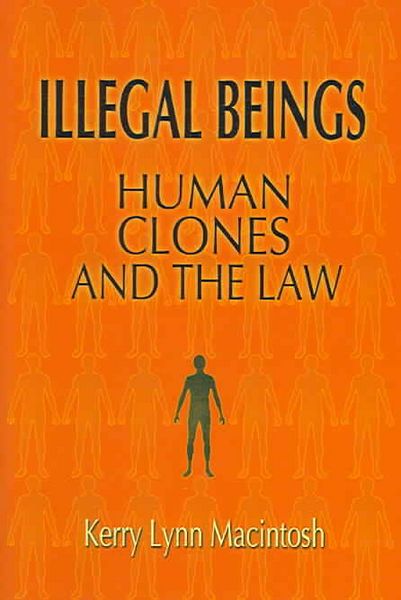
  • Produktbild: Illegal Beings
  • Produktbild: Illegal Beings

Illegal Beings

67,99 €

inkl. gesetzl. MwSt., Versandkostenfrei


Beschreibung

Many people think human reproductive cloning should be a crime. In America some states have already outlawed cloning and Congress is working to enact a national ban. Meanwhile, scientific research continues, both in America and abroad and soon reproductive cloning may become possible. If that happens,...

Beschreibung

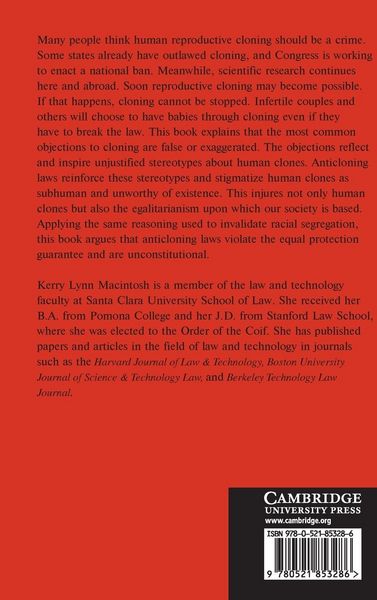
Many people think human reproductive cloning should be a crime. In America some states have already outlawed cloning and Congress is working to enact a national ban. Meanwhile, scientific research continues, both in America and abroad and soon reproductive cloning may become possible. If that happens, cloning cannot be stopped. Infertile couples and others will choose to have babies through cloning, even if they have to break the law. This book explains that the most common objections to cloning are false or exaggerated. The objections reflect and inspire unjustified stereotypes about human clones and anti-cloning laws reinforce these stereotypes and stigmatize human clones as subhuman and unworthy of existence. This injures not only human clones, but also the egalitarianism upon which our society is based. Applying the same reasoning used to invalidate racial segregation, this book argues that anti-cloning laws violate the equal protection guarantee and are unconstitutional.

Rezension

"Professor Kerry Macintosh's book is an intellectual tour de force that demolishes all the staid arguments against illegal cloning. Everyone should read this book; it is destined to be a classic." Gregory E. Pence, author, Who's Afraid of Human Cloning, Professor, School of Medicine and Department of Philosophy, University of Alabama at Birmingham

Produktdetails

Einband

Gebundene Ausgabe

Erscheinungsdatum

20.10.2005

Abbildungen

Worked examples or Exercises

Verlag Cambridge University Press

Produktdetails

Einband

Gebundene Ausgabe

Erscheinungsdatum

20.10.2005

Abbildungen

Worked examples or Exercises

Verlag Cambridge University Press
Seitenzahl

288

Maße (L/B/H)

23,5/15,7/2 cm

Gewicht

523 g

Sprache

Englisch

ISBN

978-0-521-85328-6

Herstelleradresse

Libri GmbH
Europaallee 1
36244 Bad Hersfeld
DE

Email: gpsr@libri.de

Ein neues Kapitel für Ihre Bücher

Ein neues Kapitel für Ihre Bücher

Schenken Sie Ihren alten Schätzen ein zweites Leben und erhalten Sie dafür eine Thalia Geschenkkarte.

Jetzt verkaufen
Jetzt verkaufen

Noch keine Bewertungen vorhanden

Verfassen Sie die erste Bewertung zu diesem Artikel

Helfen Sie anderen Kundinnen und Kunden durch Ihre Meinung.

Kundinnen und Kunden meinen

Bewertungen (0)

  • Produktbild: Illegal Beings
  • Produktbild: Illegal Beings
  • Introduction; Part I. Five Common Objections to Human Reproductive Cloning Reflect, Reinforce, and Inspire Stereotypes about Human Clones: 1. Does human reproductive cloning offend God and nature?; 2. Should children be begotten and not made?; 3. Do human clones lack individuality?; 4. Could human clones destroy humanity?; 5. Does human reproductive cloning harm participants and produce children with birth defects?; Part II. Anti-Cloning Laws Are Bad Public Policy: 6. What anti-cloning laws say and do; 7. The five objections have inspired anti-cloning laws; 8. Anti-cloning laws reflect a policy of existential segregation; 9. The costs of anti-cloning laws outweigh their benefits; Part III. Anti-Cloning Laws Violate the Equal Protection Guarantee and Are Unconstitutional: 10. Anti-cloning laws classify human clones and are subject to strict scrutiny; 11. Anti-cloning laws inflict judicially cognizable injuries that confer standing; 12. Anti-cloning laws violate the equal protection guarantee; Conclusion.