















































KI-Beratung Beta

Gutscheinbedingungen

Gültig bis 30.11.2026 | Gültig für nicht preisgebundene fremdsprachige Bücher | Einzelne Artikel können ausgeschlossen sein | Online auf thalia.de und in der Thalia App einlösbar | Click & Collect nur mit Online-Zahlung (Paypal/Kreditkarte) vorab | Nicht kombinierbar mit anderen Gutscheinen oder Preisaktionen | Nur einmal pro Einkauf einlösbar | Gutschein wird auf max. 500€ Bestellwert angerechnet | Keine Barauszahlung | Nicht gültig für Versandkosten und Services

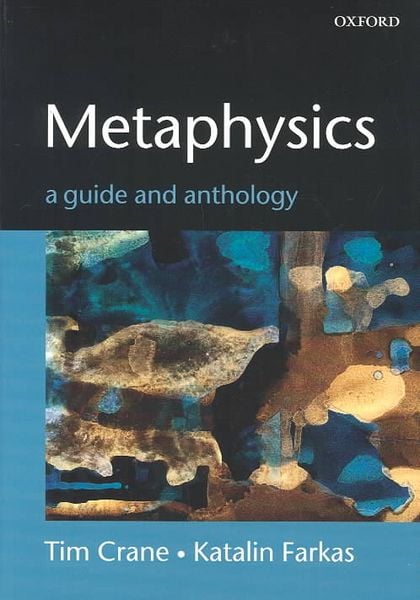
Produktbild: Metaphysics: A Guide and Anthology

Metaphysics: A Guide and Anthology

59,99 €

inkl. gesetzl. MwSt., Versandkostenfrei


Beschreibung

A complete and self-contained introduction to metaphysics, this anthology provides an extensive and varied collection of fifty-four of the best classical and contemporary readings on the subject. The readings are organized into ten sections: God, idealism and realism, being, universals and particulars,...

Beschreibung

A complete and self-contained introduction to metaphysics, this anthology provides an extensive and varied collection of fifty-four of the best classical and contemporary readings on the subject. The readings are organized into ten sections: God, idealism and realism, being, universals and particulars, necessity and contingency, causation, space and time, identity, mind and body, and freewill and determinism. It features a substantial general introduction and detailed section introductions that set the selections in context and guide readers through them. Discussion questions and detailed guides to further reading are also included.

Rezension

This is the best anthology of metaphysics that I know of. It covers all the right topics with a good mix of classic and contemporary articles. Especially useful are the simple, elegant introductions to the various sections of the anthology Peter Menzies, Macquarie University

Produktdetails

Einband

Taschenbuch

Erscheinungsdatum

15.01.2004

Herausgeber Katalin Farkas + weitere
Verlag Oxford University Press

Produktdetails

Einband

Taschenbuch

Erscheinungsdatum

15.01.2004

Herausgeber
Verlag Oxford University Press
Seitenzahl

792

Maße (L/B/H)

24,9/17,2/4,5 cm

Gewicht

1333 g

Sprache

Englisch

ISBN

978-0-19-926197-0

Herstelleradresse

Libri GmbH
Europaallee 1
36244 Bad Hersfeld
DE

Email: gpsr@libri.de

Ein neues Kapitel für Ihre Bücher

Ein neues Kapitel für Ihre Bücher

Schenken Sie Ihren alten Schätzen ein zweites Leben und erhalten Sie dafür eine Thalia Geschenkkarte.

Jetzt verkaufen
Jetzt verkaufen

Noch keine Bewertungen vorhanden

Verfassen Sie die erste Bewertung zu diesem Artikel

Helfen Sie anderen Kundinnen und Kunden durch Ihre Meinung.

Kundinnen und Kunden meinen

Bewertungen (0)

  • Produktbild: Metaphysics: A Guide and Anthology
    • I God
    • 1: Derek Parfit: Why Anything? Why This?
    • 2: Thomas Aquinas: The five ways
    • 3: William Paley: Extract from Natural Theology
    • 4: Anselm of Canterbury: Extract from Proslogion
    • 5: G.W. Leibniz: Extract from Monadology
    • 6: J.L. Mackie: Evil and omnipotence
    • II Realism and Idealism
    • Introduction
    • 7: John Locke: Selection from Essay Concerning Human Understanding
    • 8: George Berkeley: Selection from Three Dialogues
    • 9: Immanuel Kant: Selection from Critique of Pure Reason
    • 10: Selection from Matter and Sense
    • 11: Michael Dummett: Realism
    • III Being
    • Introduction
    • 12: Aristotle: Selection from Categories
    • 13: John Locke: Selection from Essay Concerning Human Understanding
    • 14: Robert Merrihew Adams: Primitive Thisness and Primitive Identity
    • 15: W.V. Quine: On what there is
    • 16: Peter van Inwagen: Selection from Material Beings
    • 17: Gareth Evans: Can there be vague objects?
    • 18: David Lewis: Vague Identity: Evans misunderstood
    • Part IV Universals and Particulars
    • Introduction
    • 19: Plato: Selections from Republic and Parmenides
    • 20: D.M. Armstrong: Selection from Universals: An Opinionated Introduction
    • 21: David Lewis: Selection from New work for a theory of universals
    • 22: Donald C. Williams: On the Elements of Being: I
    • 23: Sydney Shoemaker: Causality and Properties
    • Part V Necessity
    • Introduction
    • 24: Saul Kripke: Selection from Naming and Necessity
    • 25: David Lewis: Selection from On the Plurality of Worlds
    • 26: Alvin Plantinga: Actualism and Possible Worlds
    • 27: D.M. Armstrong: Selection from A Combinational Theory of Possibility
    • Part VI Causation
    • Introduction
    • 28: Aristotle: Selection from Metaphysics
    • 29: David Hume: Selection from Enquiy Concerning Human Understanding
    • 30: David Lewis: Causation
    • 31: Donald Davidson: Causal Relations
    • 32: D.H. Mellor: Selections from The Faces of Causation
    • VII Time and Space
    • Introduction
    • 33: Aristotle: Selection from Physics
    • 34: J.M.E McTaggart: Selection from The Nature of Existence
    • 35: Arthur N. Prior: Changes in Events and Changes in Things
    • 36: Paul Horwich: Selection from Asymmetries in Time
    • 37: Selection from The Leibniz-Clarke Correspondence
    • 38: J.J.C. Smart: The space-time world
    • 39: David Lewis: The Paradoxes of Time Travel
    • Part VIII Identity
    • Introduction
    • 40: Roderick M. Chisholm: Identity through Time
    • 41: David Lewis: Selection from On the Plurality of Worlds
    • 42: Derek Parfit: Personal Identity
    • 43: P.F. Snowdon: Persons, Animals, and Ourselves
    • Part IX Mind and Body
    • Introduction
    • 44: Rene Descartes: Selection from Meditations on First Philosophy
    • 45: G.W. Leibniz: Selection from New System of the Nature of Substances
    • 46: Gilbert Harman: Selections from Thought
    • 47: David Lewis: Psychophysical and theoretical identifications
    • 48: Donald Davidson: Selection from Thinking Causes
    • 49: Thomas Nagel: What is it like to be a bat?
    • X Freedom and Determinism
    • Introduction
    • 50: David Hume: Selection from Treatise of Human Nature
    • 51: Harry Frankfurt: Freedom of the will and the concept of a person
    • 52: Peter van Inwagen: The incompatibility of freewill and determinism
    • 53: Barry Loewer: Freedom from Physics: Quantum Mechanics and Free Will
    • 54: Roderick M. Chisholm: Human Freedom and the self