
• Produktbild: Upheavals of Thought
  • Produktbild: Upheavals of Thought

Upheavals of Thought The Intelligence of Emotions

224,99 €

inkl. gesetzl. MwSt., Versandkostenfrei


Beschreibung

Produktdetails

Einband

Gebundene Ausgabe

Erscheinungsdatum

12.01.2011

Verlag

Cambridge University Press

Seitenzahl

768

Maße (L/B/H)

23,5/15,7/4,9 cm

Gewicht

1377 g

Sprache

Englisch

ISBN

978-0-521-46202-0

Beschreibung

Rezension

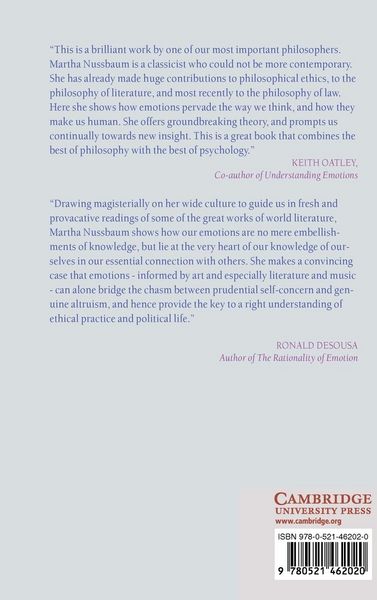
'... a staggering feat of synthesis...creates an argument for the dignity and moral efficacy of emotion that is not only an intellectual tour de force but a moving triumph of humanistic thinking.' New York Times Book Review

Produktdetails

Einband

Gebundene Ausgabe

Erscheinungsdatum

12.01.2011

Verlag

Cambridge University Press

Seitenzahl

768

Maße (L/B/H)

23,5/15,7/4,9 cm

Gewicht

1377 g

Sprache

Englisch

ISBN

978-0-521-46202-0

Herstelleradresse

Libri GmbH
Europaallee 1
36244 Bad Hersfeld
DE

Email: gpsr@libri.de

Ein neues Kapitel für Ihre Bücher

Ein neues Kapitel für Ihre Bücher

Schenken Sie Ihren alten Schätzen ein zweites Leben und erhalten dafür eine Thalia Geschenkkarte.

Jetzt verkaufen
Jetzt verkaufen

Noch keine Bewertungen vorhanden

Verfassen Sie die erste Bewertung zu diesem Artikel

Helfen Sie anderen Kundinnen und Kunden durch Ihre Meinung.

Kundinnen und Kunden meinen

Bewertungen (0)

Die Leseprobe wird geladen.
  • Produktbild: Upheavals of Thought
  • Produktbild: Upheavals of Thought
  • Part I. Need and Recognition: 1. Emotions as judgments of value; 2. Humans and other animals: the neo-stoic view revised; 3. Emotions and human societies; 4. Emotions and infancy; Interlude: 'things such as might happen'; 5. Music and emotion; Part II. Compassion: 6. Tragic predicaments; 7. Compassion: the philosophical debate; 8. Compassion and public life; Part III. Ascents of Love: 9. Ladders of love: an introduction; 10. Contemplative creativity: Plato, Spinoza, Proust; 11. The Christian ascent: Augustine; 12. The Christian ascent: Dante; 13. The Romantic ascent: Emily Brontë; 14. The Romantic ascent: Mahler; 15. Democratic desire: Walt Whitman; 16. The transfiguration of everyday life: Joyce.