















































KI-Beratung Beta

Gutscheinbedingungen

Gültig bis 30.11.2026 | Gültig für nicht preisgebundene fremdsprachige Bücher | Einzelne Artikel können ausgeschlossen sein | Online auf thalia.de und in der Thalia App einlösbar | Click & Collect nur mit Online-Zahlung (Paypal/Kreditkarte) vorab | Nicht kombinierbar mit anderen Gutscheinen oder Preisaktionen | Nur einmal pro Einkauf einlösbar | Gutschein wird auf max. 500€ Bestellwert angerechnet | Keine Barauszahlung | Nicht gültig für Versandkosten und Services

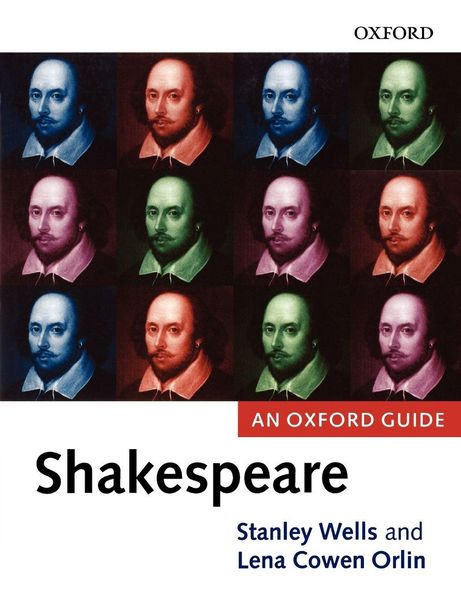
Produktbild: Shakespeare

Shakespeare An Oxford Guide

94,99 €

inkl. gesetzl. MwSt., Versandkostenfrei


Beschreibung

Edited by Stanley Wells and Lena Cowen Orlin, Shakespeare: An Oxford Guide provides a practical and stimulating guide to all aspects of Shakespeare studies. The volume comprises over 40 specially commissioned essays by an outstanding team of Shakespeare scholars; each essay is written in an accessible...

Beschreibung

Edited by Stanley Wells and Lena Cowen Orlin, Shakespeare: An Oxford Guide provides a practical and stimulating guide to all aspects of Shakespeare studies. The volume comprises over 40 specially commissioned essays by an outstanding team of Shakespeare scholars; each essay is written in an accessible and engaging style, and is followed by annotated suggestions for further reading. The volume is divided into four key parts, which as a whole offer a valuable balance of factual and critical content. In the first Part, chapters provide information about and discuss Shakespeare, the theatres of his time, the society in which he lived, the language of his period, the conventions of playwriting, and his contemporary impact. The second Part offers critical overviews of Shakespeare's achievement in the principal genres, and each overview is followed by a practical reading exploring Shakespeare's use of the traditions, scope and boundaries of that genre in one of his key works. Part Three offers guidance to the principal current critical approaches in the study of Shakespeare: each chapter outlines a particular critical approach, and is followed by a reading applying that approach to one of Shakespeare's works; and Part Four offers chapters on topics relating to Shakespeare's intellectual and cultural impact over the ages.

Produktdetails

Einband

Taschenbuch

Erscheinungsdatum

13.02.2003

Abbildungen

13 halftones

Herausgeber Wells Stanley + weitere

Produktdetails

Einband

Taschenbuch

Erscheinungsdatum

13.02.2003

Abbildungen

13 halftones

Herausgeber
Verlag Oxford University Press
Seitenzahl

742

Maße (L/B/H)

24,6/18,9/3,9 cm

Gewicht

1408 g

Sprache

Englisch

ISBN

978-0-19-924522-2

Herstelleradresse

Libri GmbH
Europaallee 1
36244 Bad Hersfeld
DE

Email: gpsr@libri.de

Ein neues Kapitel für Ihre Bücher

Ein neues Kapitel für Ihre Bücher

Schenken Sie Ihren alten Schätzen ein zweites Leben und erhalten Sie dafür eine Thalia Geschenkkarte.

Jetzt verkaufen
Jetzt verkaufen

Noch keine Bewertungen vorhanden

Verfassen Sie die erste Bewertung zu diesem Artikel

Helfen Sie anderen Kundinnen und Kunden durch Ihre Meinung.

Kundinnen und Kunden meinen

Bewertungen (0)

Die Leseprobe wird geladen.
  • Produktbild: Shakespeare
    • I. Shakespeare's life and times
    • 1: Stanley Wells: Why study Shakespeare?
    • 2: Lois Potter: Shakespeare's life and career
    • 3: Gabriel Egan: Theatre in London
    • 4: Margaret Jane Kidnie: Shakespeare's audiences
    • 5: Peter Thomson: Conventions of playwrighting
    • 6: A. R. Braunmuller: Shakespeare's fellow dramatists
    • 7: David Crystal: The language of Shakespeare
    • 8: Russ McDonald: Shakespeare's verse
    • 9: Carole Levin: The Society of Shakespeare's England
    • 10: Joan Thirsk: Daily life in town and country
    • 11: Martin Ingram: Love, sex, and marriage
    • 12: Peter Lake: Changing attitudes towards religion
    • 13: Lena Cowen Orlin: Ideas of order
    • 14: Emily C. Bartels: Shakespeare's view of the world
    • II. Shakespearian Genres
    • 15: Lena Cowen Orlin: Introduction
    • 16: William C. Carroll: Romantic comedies
    • Reading: Twelfth Night, or What You Will
    • 17: Phyllis Rackin: English history plays
    • Reading: Henry V
    • 18: Linda Woodbridge: Tragedies
    • Reading: Macbeth
    • 19: Alexander Leggatt: Roman plays
    • Reading: Julius Caesar
    • 20: Reginald Foakes: Romances
    • Reading: The Winter's Tale
    • 21: Paul Edmondson: Comical and tragical
    • Reading: Measure for Measure
    • 22: Lynne Magnusson: Non-dramatic poetry
    • Reading: Shakespeare's sonnets
    • 23: Alan Armstrong: Unfamiliar Shakespeare
    • III. Shakespeare criticism
    • 24: Michael Taylor: The critical tradition
    • 25: Michael D. Bristol: Humanist interpretations
    • Reading: King Lear
    • 26: Christy Desmet: Character criticism
    • Reading: Hamlet
    • 27: Leah Scragg: Source study
    • Reading: As You Like It
    • 28: Inga-Stina Ewbank: Close reading
    • Reading: Richard III
    • 29: Jean E. Howard: Feminist criticism
    • Reading: Othello
    • 30: Bruce R. Smith: Studies in sexuality
    • Reading: The Merchant of Venice
    • 31: Lynne Enterline: Psychoanalytic criticisms
    • Reading: Venus and Adonis
    • 32: Jonathan Gil Harris: Materialist criticisms
    • Reading: Henry IV, Part One
    • 33: Jyotsna Singh: Postcolonial criticisms
    • Reading: The Tempest
    • 34: Kiernan Ryan: Deconstruction
    • Reading: Romeo and Juliet
    • 35: Patricia Tatspaugh: Performance history: Shakespeare on the stage: 1660-2001
    • Reading: A Midsummer Night's Dream
    • 36: Miriam Gilbert: Performance criticism
    • Reading: The Taming of the Shrew
    • IV. Shakespeare's afterlife
    • 37: Terence Hawkes: Introduction
    • 38: Laurie Maguire: Shakespeare published
    • 39: Michael Billington: Shakespeare and the modern British theatre
    • 40: Tony Howard: Shakespeare on film and video
    • 41: David Kathman: The question of authorship
    • 42: John Gross: Shakespeare's influence
    • 43: Ton Hoenselaars: Shakespeare and translation
    • 44: Georgiana Ziegler: Commemorating Shakespeare
    • 45: Michael Best: Internet and CD-Rom resources