















































KI-Beratung Beta

Gutscheinbedingungen

Gültig bis 30.11.2026 | Gültig für nicht preisgebundene fremdsprachige Bücher | Einzelne Artikel können ausgeschlossen sein | Online auf thalia.de und in der Thalia App einlösbar | Click & Collect nur mit Online-Zahlung (Paypal/Kreditkarte) vorab | Nicht kombinierbar mit anderen Gutscheinen oder Preisaktionen | Nur einmal pro Einkauf einlösbar | Gutschein wird auf max. 500€ Bestellwert angerechnet | Keine Barauszahlung | Nicht gültig für Versandkosten und Services

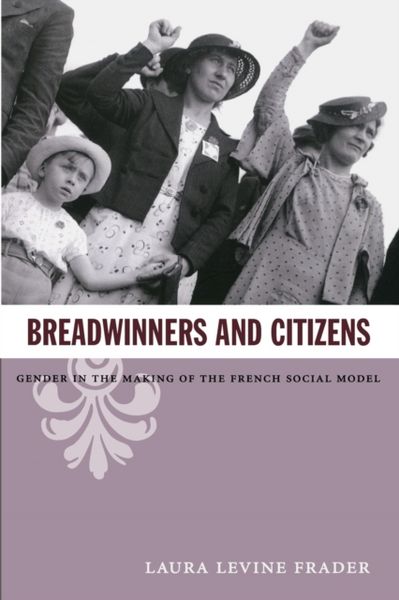
Produktbild: Breadwinners and Citizens

Breadwinners and Citizens Gender in the Making of the French Social Model

39,99 €

inkl. gesetzl. MwSt., Versandkostenfrei


Beschreibung

Laura Levine Frader’s synthesis of labor history and gender history brings to the fore failures in realizing the French social model of equality for all citizens. Challenging previous scholarship, she argues that the male breadwinner ideal was stronger in France in the interwar years than scholars...

Beschreibung

Laura Levine Frader’s synthesis of labor history and gender history brings to the fore failures in realizing the French social model of equality for all citizens. Challenging previous scholarship, she argues that the male breadwinner ideal was stronger in France in the interwar years than scholars have typically recognized, and that it had negative consequences for women’s claims to the full benefits of citizenship. She describes how ideas about masculinity, femininity, family, and work affected post–World War I reconstruction, policies designed to address France’s postwar population deficit, and efforts to redefine citizenship in the 1920s and 1930s. She demonstrates that gender divisions and the male breadwinner ideal were reaffirmed through the policies and practices of labor, management, and government. The social model that France implemented in the 1920s and 1930s incorporated fundamental social inequalities.

Frader’s analysis moves between the everyday lives of ordinary working women and men and the actions of national policymakers, political parties, and political movements, including feminists, pro-natalists, and trade unionists. In the years following World War I, the many women and an increasing number of immigrant men in the labor force competed for employment and pay. Family policy was used not only to encourage reproduction but also to regulate wages and the size of the workforce. Policies to promote married women’s and immigrants’ departure from the labor force were more common when jobs were scarce, as they were during the Depression. Frader contends that gender and ethnicity exerted a powerful and unacknowledged influence on French social policy during the Depression era and for decades afterward.

Produktdetails

Einband

Taschenbuch

Erscheinungsdatum

28.03.2008

Verlag Duke University Press
Seitenzahl

360

Produktdetails

Einband

Taschenbuch

Erscheinungsdatum

28.03.2008

Verlag Duke University Press
Seitenzahl

360

Maße (L/B/H)

23,3/16,1/2,1 cm

Gewicht

490 g

Sprache

Englisch

ISBN

978-0-8223-4198-7

Herstelleradresse

Libri GmbH
Europaallee 1
36244 Bad Hersfeld
DE

Email: gpsr@libri.de

Ein neues Kapitel für Ihre Bücher

Ein neues Kapitel für Ihre Bücher

Schenken Sie Ihren alten Schätzen ein zweites Leben und erhalten Sie dafür eine Thalia Geschenkkarte.

Jetzt verkaufen
Jetzt verkaufen

Noch keine Bewertungen vorhanden

Verfassen Sie die erste Bewertung zu diesem Artikel

Helfen Sie anderen Kundinnen und Kunden durch Ihre Meinung.

Kundinnen und Kunden meinen

Bewertungen (0)

  • Produktbild: Breadwinners and Citizens
  • Acknowledgments vii
    Introduction: Gender in the Making of the French Social Model 1
    1. Reconstruction and Regeneration after World War I 15
    2. Gender Division, the Family, and the Citizen-Worker 51
    3. Managing the Human Factor 103
    4. Organized Labor, Rationalization, and Breadwinners 139
    5. Toward the Social Model: Citizenship, Rights, and Social Provision 169
    6. Economic Rights and the Gender of Breadwinners: The Depression of the 1930s 193
    Conclusion 229
    Notes 241
    Bibliography 301
    Index 335