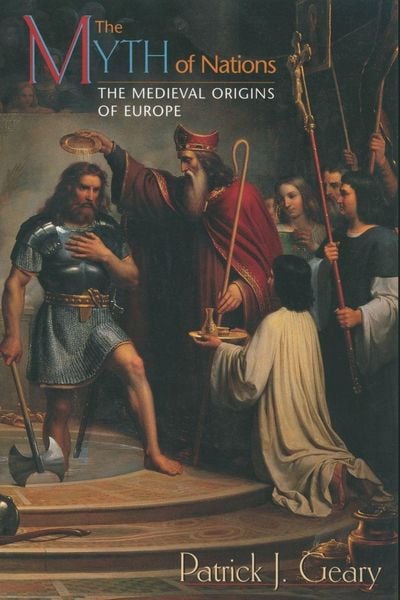
The Myth of Nations The Medieval Origins of Europe
-
- Englisch ausgewählt
36,99 €
inkl. gesetzl. MwSt.,
Beschreibung
Produktdetails
Einband
Taschenbuch
Erscheinungsdatum
02.02.2003
Verlag
University PressesSeitenzahl
212
Maße (L/B/H)
23,4/15,6/1,3 cm
Gewicht
369 g
Sprache
Englisch
ISBN
978-0-691-11481-1
Modern-day Europeans by the millions proudly trace back their national identities to the Celts, Franks, Gauls, Goths, Huns, or Serbs--or some combination of the various peoples who inhabited, traversed, or pillaged their continent more than a thousand years ago. According to Patrick Geary, this is historical nonsense. The idea that national character is fixed for all time in a simpler, distant past is groundless, he argues in this unflinching reconsideration of European nationhood. Few of the peoples that many Europeans honor as sharing their sense of ''nation'' had comparably homogeneous identities; even the Huns, he points out, were firmly united only under Attila's ten-year reign. Geary dismantles the nationalist myths about how the nations of Europe were born. Through rigorous analysis set in lucid prose, he contrasts the myths with the actual history of Europe's transformation between the fourth and ninth centuries--the period of grand migrations that nationalists hold dear. The nationalist sentiments today increasingly taken for granted in Europe emerged, he argues, only in the nineteenth century. Ironically, this phenomenon was kept alive not just by responsive populations--but by complicit scholars. Ultimately, Geary concludes, the actual formation of European peoples must be seen as an extended process that began in antiquity and continues in the present. The resulting image is a challenge to those who anchor contemporary antagonisms in ancient myths--to those who claim that immigration and tolerance toward minorities despoil ''nationhood.'' As Geary shows, such ideologues--whether Le Pens who champion ''the French people born with the baptism of Clovis in 496'' or Milosevics who cite early Serbian history to claim rebellious regions--know their myths but not their history. The Myth of Nations will be intensely debated by all who understood that a history that does not change, that reduces the complexities of many centuries to a single, eternal moment, isn't history at all.
Ein neues Kapitel für Ihre Bücher
Ein neues Kapitel für Ihre Bücher
Schenken Sie Ihren alten Schätzen ein zweites Leben und erhalten dafür eine Thalia Geschenkkarte.
Noch keine Bewertungen vorhanden
Verfassen Sie die erste Bewertung zu diesem Artikel
Helfen Sie anderen Kundinnen und Kunden durch Ihre Meinung.
Kurze Frage zu unserer Seite
Vielen Dank für Ihr Feedback
Wir nutzen Ihr Feedback, um unsere Produktseiten zu verbessern. Bitte haben Sie Verständnis, dass wir Ihnen keine Rückmeldung geben können. Falls Sie Kontakt mit uns aufnehmen möchten, können Sie sich aber gerne an unseren Kund*innenservice wenden.
zum Kundenservice