















































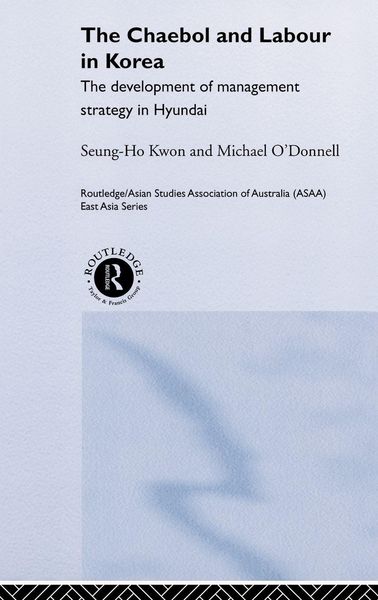
The Cheabol and Labour in Korea The Development of Management Strategy in Hyundai
255,99 €
inkl. gesetzl. MwSt.,
Beschreibung
This important new study argues that an historical analysis of the labour-management policies of the Korean family conglomerates, or chaebol, is essential for a complete understanding of the dynamics of South Korean industrial relations. Focusing on the labour-management strategies of the Hyundai Business...
Produktdetails
| Einband |
Gebundene Ausgabe |
|---|---|
| Erscheinungsdatum |
26.04.2001 |
| Verlag | Taylor and Francis |
| Seitenzahl |
240 |
Ein neues Kapitel für Ihre Bücher
Ein neues Kapitel für Ihre Bücher
Schenken Sie Ihren alten Schätzen ein zweites Leben und erhalten Sie dafür eine Thalia Geschenkkarte.
Noch keine Bewertungen vorhanden
Verfassen Sie die erste Bewertung zu diesem Artikel
Helfen Sie anderen Kundinnen und Kunden durch Ihre Meinung.
Kurze Frage zu unserer Seite
Vielen Dank für Ihr Feedback
Wir nutzen Ihr Feedback, um unsere Produktseiten zu verbessern. Bitte haben Sie Verständnis, dass wir Ihnen keine Rückmeldung geben können. Falls Sie Kontakt mit uns aufnehmen möchten, können Sie sich aber gerne an unseren Kund*innenservice wenden.
zum Kundenservice