















































KI-Beratung Beta

Produktbild: Compassion and Meditation

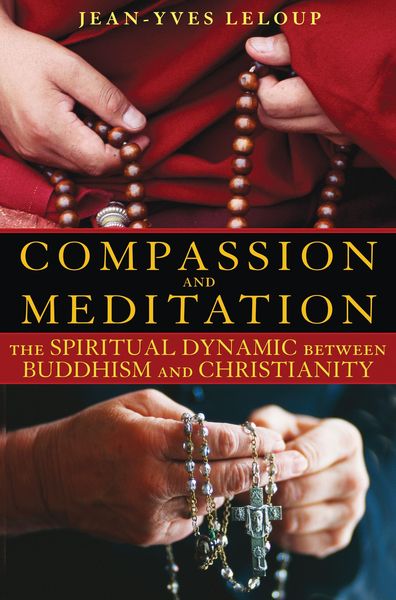
Compassion and Meditation The Spiritual Dynamic Between Buddhism and Christianity

14,99 €

inkl. gesetzl. MwSt., Versandkostenfrei


Beschreibung

COMPARATIVE RELIGION "Jean-Yves Leloup is that rare Christian who has mined the spiritual depths and mysteries of Christianity. His Christianity is neither staid nor boring, but alive and deep, fresh and ancient. Buddhism takes on new meaning in this context so that we learn how the wisdom of each tradition,...

Beschreibung

COMPARATIVE RELIGION "Jean-Yves Leloup is that rare Christian who has mined the spiritual depths and mysteries of Christianity. His Christianity is neither staid nor boring, but alive and deep, fresh and ancient. Buddhism takes on new meaning in this context so that we learn how the wisdom of each tradition, East and West, allows the Great Mystery to become grounded in our own being and from there into active compassion to our broken world." --Matthew Fox, author of Original Blessing, A New Reformation, and One River, Many Wells: Wisdom Springing from Global Faiths In Asian spiritual traditions the mountain traditionally symbolizes meditation while the ocean signifies compassion. Jean-Yves Leloup uses this metaphor to compare Buddhist and Christian approaches to meditation and compassion to reveal the similarities and divergences of these profound practices. Emphasizing their complementary nature, Leloup describes how Jesus and Buddha are necessary to one another and how together they form a complete system: Jesus as awakening through love, and Buddha as awakening through meditation. Where Buddha represents the forests, Jesus represents the trees. Buddha is brother to the universe, whereas Jesus is brother to humanity. Nevertheless, these two religious traditions have a profound common ground. Compassion is, in fact, central to Buddhism, and meditation practices have been central to many Christian traditions. Both view murder, theft, and the destructive use of sexuality as great barriers to realizing our essential being, and both agree on the need to rise above them. Here, however, Leloup suggests that both faiths could benefit from the precepts of the other. The complementary aspects of Christianity and Buddhism offer the possibility for a truly profound ecumenical religion whose interfaith relations are based on deep understanding of the true meaning and practice of meditation and compassion and not merely shared goodwill. JEAN-YVES LELOUP is a theologian, French Orthodox priest, Coptic translator, and founder of the Institute of Other Civilization Studies and the International College of Therapists. His other books in English include the bestselling The Gospel of Mary Magdalene, The Gospel of Thomas, The Gospel of Philip, Judas and Jesus, and The Sacred Embrace of Jesus and Mary. He lives in France.

Produktdetails

Einband

Taschenbuch

Erscheinungsdatum

01.07.2009

Verlag Inner Traditions/Bear & Company
Seitenzahl

176

Produktdetails

Einband

Taschenbuch

Erscheinungsdatum

01.07.2009

Verlag Inner Traditions/Bear & Company
Seitenzahl

176

Maße (L/B/H)

22,9/15,4/2,2 cm

Gewicht

289 g

Farbe

Dunkelbraun / Messing

Sprache

Englisch

ISBN

978-1-59477-277-1

Herstelleradresse

Libri GmbH
Europaallee 1
36244 Bad Hersfeld
DE

Email: gpsr@libri.de

Ein neues Kapitel für Ihre Bücher

Ein neues Kapitel für Ihre Bücher

Schenken Sie Ihren alten Schätzen ein zweites Leben und erhalten Sie dafür eine Thalia Geschenkkarte.

Jetzt verkaufen
Jetzt verkaufen

Noch keine Bewertungen vorhanden

Verfassen Sie die erste Bewertung zu diesem Artikel

Helfen Sie anderen Kundinnen und Kunden durch Ihre Meinung.

Kundinnen und Kunden meinen

Bewertungen (0)

Weitere Artikel finden Sie in

Die Leseprobe wird geladen.
  • Produktbild: Compassion and Meditation

  • Introduction


    Part One
    The Way of Meditation


    1 Zen and Hesychasm

    2 Transmission
    The Samaritan Woman

    3 The Practice of Hesychast Meditation
    Posture • Orientation • Breathing • Invocation •
    Centered in the Heart

    Part Two
    The Way of Compassion


    4 What Is a Bodhisattva?

    5 The Dhammapada and the Gospels

    6 The Vow of Compassion

    7 The Practice of Compassion

    8 Impurities of the Mind

    9 The Five Motivations
    The “Desire for the God-Realms” • The Desire for Awakening • “Disinterested” Desire • Gratuity • Sharing

    10 The Four Considerations Taught by the Buddha
    The Same Family • A Community of Destiny • Impermanence • Buddha-Nature

    11 The Three Attitudes: The King, the Ferryman, the Shepherd

    12 The Six Perfections, or the Six Paramitas

    13 Giving
    The Gift of Material Things • The Gift of Protection • The Gift of Love • The Gift of Loving-Kindness • The Gift of Truth

    14 Discipline

    15 Three Negative Actions of the Body
    Killing • Taking What Is Not Ours (Theft) • Misuse of Sexuality

    16 Three Positive Actions of the Body
    Protection • Giving • Good Use of Sexuality (Chastity)

    17 Four Negative Actions of Speech
    Lying • Ill Will • Insult • Chatter

    18 Four Positive Actions of Speech
    Speaking Honestly • Speaking for the Good • Maintaining a Space of Listening • Speaking Clearly and Concisely

    19 Three Negative Actions of the Mind
    Possessiveness • Antagonism • Fixating on Concepts

    20 Three Positive Actions of the Mind
    Satisfaction • Goodwill • Flexibility of Mind

    21 Patience

    22 Energy

    23 Meditation

    24 Wisdom

    Epilogue--Between Us: Nothing

    Notes

    Index