

































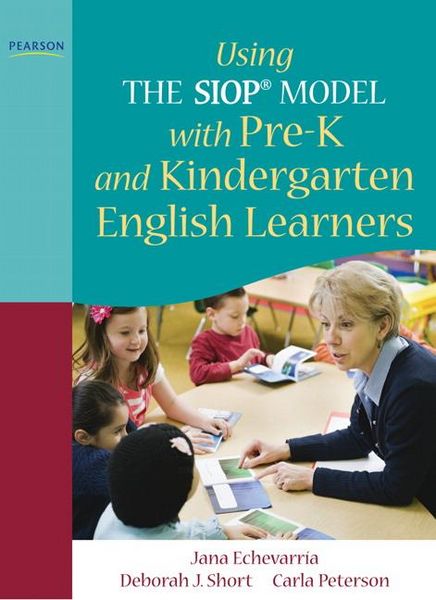
Using THE SIOP MODEL with Pre-K and Kindergarten English Learners
-
- Englisch ausgewählt
91,99 €
inkl. gesetzl. MwSt.,
Beschreibung
Produktdetails
ISBN
978-0-13-708523-1
Auflage
1. Auflage
Erscheinungsdatum
01.03.2011
Einband
Taschenbuch
Verlag
Pearson AcademicSeitenzahl
144
Maße (L/B/H)
27,8/21,7/1,2 cm
Gewicht
345 g
Sprache
Englisch
This new addition to the best-selling SIOP® Model series shows how to use the SIOP® Model with pre-K and kindergarten English learners so they can fully participate in all aspects of early schooling.
Understand the young English learner and language development, learn all eight components of the SIOP Model (lesson preparation, building background, comprehensible input and strategies, interaction and lesson delivery, practice & application and review & assessment), and see how other programs have used the SIOP Model to create an optimal learning environment for their young students.
- Focuses on preschool-aged children and kindergarteners—and shows how to create an effective and developmentally appropriate instructional setting for these young English learners.
- Provides an overview of the SIOP Model—and explains its research support and application to early childhood programs.
- Describes the young English learner, current demographic trends and the fundamentals of language development early in the book—to provide a context for later material (Chapters 2 and 3).
- Devotes four chapters to the eight components of the SIOP Model—so educators learn how to use lesson preparation, building background, comprehensible input and strategies, interaction and lesson delivery, practice & application and review & assessment with their young English learners (Chapters 4-7).
- Provides a sample lesson plan and highlights three sample programs—so educators can see how to implement the framework in different settings and circumstances.
- Includes a comprehensive version of the SIOP protocol and an abbreviated version—so educators learn how to use the tool to observe lessons, provide feedback, and support other teachers (Chapter 9 and Appendix A).
Ein neues Kapitel für Ihre Bücher
Ein neues Kapitel für Ihre Bücher
Schenken Sie Ihren alten Schätzen ein zweites Leben und erhalten Sie dafür eine Thalia Geschenkkarte.
Noch keine Bewertungen vorhanden
Verfassen Sie die erste Bewertung zu diesem Artikel
Helfen Sie anderen Kundinnen und Kunden durch Ihre Meinung.
Kurze Frage zu unserer Seite
Vielen Dank für Ihr Feedback
Wir nutzen Ihr Feedback, um unsere Produktseiten zu verbessern. Bitte haben Sie Verständnis, dass wir Ihnen keine Rückmeldung geben können. Falls Sie Kontakt mit uns aufnehmen möchten, können Sie sich aber gerne an unseren Kund*innenservice wenden.
zum Kundenservice