
















































KI-Beratung Beta

  • Produktbild: Ethics and Self-Knowledge
  • Produktbild: Ethics and Self-Knowledge
Band 26

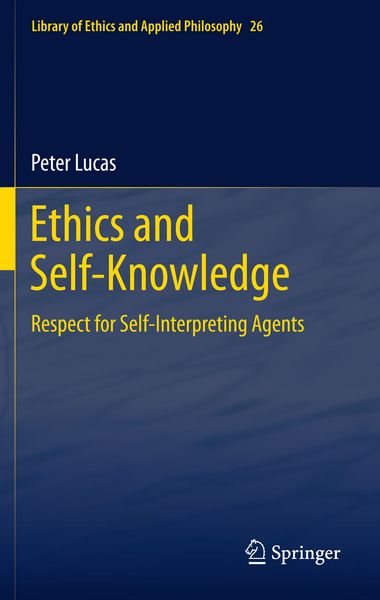
Ethics and Self-Knowledge Respect for Self-Interpreting Agents

97,99 €

inkl. gesetzl. MwSt., Versandkostenfrei


Beschreibung

This book explores the theoretical basis of our ethical obligations to others as self-knowing beings - this task being envisaged as an essential supplement to a traditional ethic of respect for persons. Authoritative knowledge of others brings with it certain obligations, which are reflected in (inter...

Beschreibung

This book explores the theoretical basis of our ethical obligations to others as self-knowing beings - this task being envisaged as an essential supplement to a traditional ethic of respect for persons. Authoritative knowledge of others brings with it certain obligations, which are reflected in (inter alia) the moral and legal safeguards designed to ensure that certain information is ‘put out of play’ for job selection purposes etc. However, the theoretical basis for such obligations has never been fully clarified. This book begins by identifying a distinctive class of ‘interpretive’ moral wrongs (including stereotyping, discrimination and objectification). It then shows how our obligations in respect of these wrongs can be understood, drawing on insights from the tradition of philosophical reflection on recognition . The book will be of interest to anyone concerned with the adequacy of a modern ethic of respect for persons – particularly in applied and professional ethics.

Produktdetails

Einband

Gebundene Ausgabe

Erscheinungsdatum

22.06.2011

Abbildungen

XII, 208 p.

Verlag Springer Netherland

Produktdetails

Einband

Gebundene Ausgabe

Erscheinungsdatum

22.06.2011

Abbildungen

XII, 208 p.

Verlag Springer Netherland
Seitenzahl

208

Maße (L/B/H)

24,1/16/1,6 cm

Gewicht

448 g

Auflage

1. Auflage

Sprache

Englisch

ISBN

978-94-007-1559-2

Herstelleradresse

Springer-Verlag KG
Sachsenplatz 4-6
1201 Wien
AT

Email: ProductSafety@springernature.com

Ein neues Kapitel für Ihre Bücher

Ein neues Kapitel für Ihre Bücher

Schenken Sie Ihren alten Schätzen ein zweites Leben und erhalten Sie dafür eine Thalia Geschenkkarte.

Jetzt verkaufen
Jetzt verkaufen

Noch keine Bewertungen vorhanden

Verfassen Sie die erste Bewertung zu diesem Artikel

Helfen Sie anderen Kundinnen und Kunden durch Ihre Meinung.

Kundinnen und Kunden meinen

Bewertungen (0)

  • Produktbild: Ethics and Self-Knowledge
  • Produktbild: Ethics and Self-Knowledge


  • Preface Fragmentation.-         

    1.1 Respect for persons, and persons as ends.-    

    1.2 The essence of ‘respect for persons’.-      

    1.3 Contemporary challenges.-       

    1.3.1 The problem of integration.-    

    1.3.2 The problem of ‘personhood’.-    

    1.3.3 The problem of Objectification.-    

    1.4  The aftermath.-        

    2. Discrimination.-        

    2.1  Introductory remarks.-       

    2.2  Discrimination and procedural unfairness.-     

    2.3  Discrimination and intentionality.-      

    2.4  Discrimination as an interpretive moral wrong.-    

    3. Stereotyping.-         

    3.1  A potential counterexample.-       

    3.2   Injustice and stereotyping.-      

    3.3  Ideological stereotyping.-       

    4. Objectification.-         

    4.1  Introduction.-        

    4.1.1 First stage objectification: instrumentalisation.-   

    4.1.2 Second stage objectification: adoption of alien ends.-  

    4.1.3 Third stage objectification: ‘Reduction’ and reflection.-  

    4.2 Objectification as an interpretive moral wrong.-    

    4.3 Objectification, stereotyping and scientific self-knowledge.-   

    4.3.1 Marx and commodification.-     

    4.3.2 Objectification in genetic research     

    5. Recognition.-          

    5.1 Hegel on recognition.-       

    5.2 Dignity and universal self-consciousness.-     

    5.3 Essentialism and political liberalism.-      

    6. Inauthenticity.-         

    6.1 Liberalism, essentialism and positivism.-      

    6.2 Phenomenological essentialism.-     

    6.3 Dasein, intelligibility and alienation.-      

    6.4 Inauthenticity and objectification.-     

    7. Sadism.-         

    7.1 Duality andIntentionality.-       

    7.2 Being-with-others, the ‘look’.-     

    7.3 Modes of instrumentalisation.-       

    7.3.1 Indifference.-       

    7.3.2 Love, and love’s fragility.-      

    7.3.3 Sadism and sexual desire.-      

    7.4 Non-complementarity.-      

    8. Subjection.-         

    8.1 Knowledge, power and recognition.-      

    8.2 Self-knowledge and the abuse of power.-     

    9. Honesty.-          

    10. Conclusion and implications.