















































KI-Beratung Beta

Gutscheinbedingungen

Gültig bis 11.11.2026 | Gültig für Spielzeug, Filme, Musik, Software, Games, Geschenke & Trends, Schreibwaren, Hörbücher und Hörbuch-Downloads (außer Abo & Shelfies), gebrauchte Bücher, nicht preisgebundene Bücher und Kalender | Einlösbar unter thalia.de und in der Thalia App | Click & Collect nur mit Online-Zahlung (Paypal/Kreditkarte) vorab | Einzelne Artikel können ausgeschlossen sein | Nicht kombinierbar mit anderen Gutscheinen oder Preisaktionen | Nur einmal pro Einkauf einlösbar | Gutschein wird auf max. 500€ Bestellwert angerechnet | Keine Barauszahlung | Digitale Hörbücher nur für Android  | Nicht gültig für preisgebundene Artikel (aufgrund der Buchpreisbindung sind Gutscheine nicht auf Bücher, eBooks, Presse einlösbar), tolino eReader & Zubehör, Abonnements & Flatrates, Geschenkkarten, Versandkosten und Services

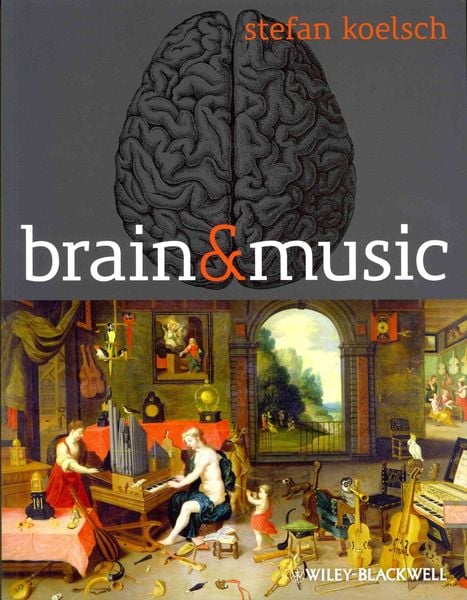
Produktbild: Brain and Music

Brain and Music

61,99 €

inkl. gesetzl. MwSt., Versandkostenfrei


Beschreibung

Produktdetails

Einband

Taschenbuch

Erscheinungsdatum

07.05.2012

Verlag

John Wiley & Sons

Seitenzahl

336

Maße (L/B/H)

24,6/18,9/1,8 cm

Gewicht

629 g

Auflage

1. Auflage

Sprache

Englisch

ISBN

978-0-470-68339-2

Beschreibung

Produktdetails

Einband

Taschenbuch

Erscheinungsdatum

07.05.2012

Verlag

John Wiley & Sons

Seitenzahl

336

Maße (L/B/H)

24,6/18,9/1,8 cm

Gewicht

629 g

Auflage

1. Auflage

Sprache

Englisch

ISBN

978-0-470-68339-2

Herstelleradresse

Libri GmbH
Europaallee 1
36244 Bad Hersfeld
DE

Email: gpsr@libri.de

Ein neues Kapitel für Ihre Bücher

Ein neues Kapitel für Ihre Bücher

Schenken Sie Ihren alten Schätzen ein zweites Leben und erhalten Sie dafür eine Thalia Geschenkkarte.

Jetzt verkaufen
Jetzt verkaufen

Noch keine Bewertungen vorhanden

Verfassen Sie die erste Bewertung zu diesem Artikel

Helfen Sie anderen Kundinnen und Kunden durch Ihre Meinung.

Kundinnen und Kunden meinen

Bewertungen (0)

Die Leseprobe wird geladen.
  • Produktbild: Brain and Music
  • Preface ix
     
    Part I Introductory Chapters 1
     
    1 Ear and Hearing 3
     
    1.1 The ear 3
     
    1.2 Auditory brainstem and thalamus 6
     
    1.3 Place and time information 8
     
    1.4 Beats, roughness, consonance and dissonance 9
     
    1.5 Acoustical equivalency of timbre and phoneme 11
     
    1.6 Auditory cortex 12
     
    2 Music-theoretical Background 17
     
    2.1 How major keys are related 17
     
    2.2 The basic in-key functions in major 20
     
    2.3 Chord inversions and Neapolitan sixth chords 21
     
    2.4 Secondary dominants and double dominants 21
     
    3 Perception of Pitch and Harmony 23
     
    3.1 Context-dependent representation of pitch 23
     
    3.2 The representation of key-relatedness 26
     
    3.3 The developing and changing sense of key 29
     
    3.4 The representation of chord-functions 30
     
    3.5 Hierarchy of harmonic stability 31
     
    3.6 Musical expectancies 35
     
    3.7 Chord sequence paradigms 36
     
    4 From Electric Brain Activity to ERPs and ERFs 40
     
    4.1 Electro-encephalography (EEG) 43
     
    4.1.1 The 10-20 system 43
     
    4.1.2 Referencing 45
     
    4.2 Obtaining event-related brain potentials (ERPs) 45
     
    4.3 Magnetoencephalography (MEG) 48
     
    4.3.1 Forward solution and inverse problem 49
     
    4.3.2 Comparison between MEG and EEG 49
     
    5 ERP Components 51
     
    5.1 Auditory P1, N1, P2 51
     
    5.2 Frequency-following response (FFR) 53
     
    5.3 Mismatch negativity 54
     
    5.3.1 MMN in neonates 57
     
    5.3.2 MMN and music 57
     
    5.4 N2b and P300 59
     
    5.5 ERP-correlates of language processing 59
     
    5.5.1 Semantic processes: N400 60
     
    5.5.2 Syntactic processes: (E)LAN and P600 63
     
    5.5.3 Prosodic processes: Closure Positive Shift 67
     
    6 A Brief Historical Account of ERP Studies of Music Processing 70
     
    6.1 The beginnings: Studies with melodic stimuli 70
     
    6.2 Studies with chords 74
     
    6.3 MMN studies 75
     
    6.4 Processing of musical meaning 76
     
    6.5 Processing of musical phrase boundaries 77
     
    6.6 Music and action 77
     
    7 Functional Neuroimaging Methods: fMRI and PET 79
     
    7.1 Analysis of fMRI data 81
     
    7.2 Sparse temporal sampling in fMRI 84
     
    7.3 Interleaved silent steady state fMRI 85
     
    7.4 'Activation' vs. 'activity change' 85
     
    Part II Towards a New Theory of Music Psychology 87
     
    8 Music Perception: A Generative Framework 89
     
    9 Musical Syntax 98
     
    9.1 What is musical syntax? 98
     
    9.2 Cognitive processes 102
     
    9.3 The early right anterior negativity (ERAN) 109
     
    9.3.1 The problem of confounding acoustics and possible solutions 113
     
    9.3.2 Effects of task-relevance 120
     
    9.3.3 Polyphonic stimuli 121
     
    9.3.4 Latency of the ERAN 127
     
    9.3.5 Melodies 127
     
    9.3.6 Lateralization of the ERAN 129
     
    9.4 Neuroanatomical correlates 131
     
    9.5 Processing of acoustic vs. music-syntactic irregularities 133
     
    9.6 Interactions between music- and language-syntactic processing 138
     
    9.6.1 The Syntactic Equivalence Hypothesis 145
     
    9.7 Attention and automaticity 147
     
    9.8 Effects of musical training 149
     
    9.9 Development 151
     
    10 Musical Semantics 156
     
    10.1 What is musical semantics? 156
     
    10.2 Extra-musical meaning 158
     
    10.2.1 Iconic musical meaning 158
     
    10.2.2 Indexical musical meaning 159
     
    Excursion: Decoding of intentions during musinc listening 161
     
    10.2.3 Symbolic musical meaning 162