















































KI-Beratung Beta

Gutscheinbedingungen

Gültig bis 11.11.2026 | Gültig für Spielzeug, Filme, Musik, Software, Games, Geschenke & Trends, Schreibwaren, Hörbücher und Hörbuch-Downloads (außer Abo & Shelfies), gebrauchte Bücher, nicht preisgebundene Bücher und Kalender | Einlösbar unter thalia.de und in der Thalia App | Click & Collect nur mit Online-Zahlung (Paypal/Kreditkarte) vorab | Einzelne Artikel können ausgeschlossen sein | Nicht kombinierbar mit anderen Gutscheinen oder Preisaktionen | Nur einmal pro Einkauf einlösbar | Gutschein wird auf max. 500€ Bestellwert angerechnet | Keine Barauszahlung | Digitale Hörbücher nur für Android  | Nicht gültig für preisgebundene Artikel (aufgrund der Buchpreisbindung sind Gutscheine nicht auf Bücher, eBooks, Presse einlösbar), tolino eReader & Zubehör, Abonnements & Flatrates, Geschenkkarten, Versandkosten und Services

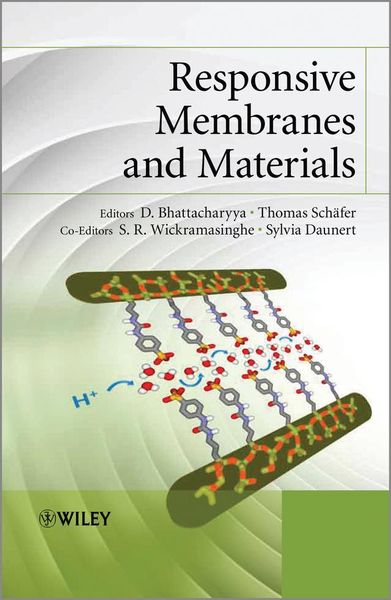
Produktbild: Responsive Membranes and Materials

Responsive Membranes and Materials

178,99 €

inkl. gesetzl. MwSt., Versandkostenfrei


Beschreibung

Produktdetails

Einband

Gebundene Ausgabe

Erscheinungsdatum

18.02.2013

Herausgeber

D. Bhattacharyya + weitere

Verlag

John Wiley & Sons

Seitenzahl

432

Maße (L/B/H)

25,1/17,2/2,5 cm

Gewicht

933 g

Auflage

1. Auflage

Sprache

Englisch

ISBN

978-0-470-97430-8

Beschreibung

Produktdetails

Einband

Gebundene Ausgabe

Erscheinungsdatum

18.02.2013

Herausgeber

Verlag

John Wiley & Sons

Seitenzahl

432

Maße (L/B/H)

25,1/17,2/2,5 cm

Gewicht

933 g

Auflage

1. Auflage

Sprache

Englisch

ISBN

978-0-470-97430-8

Herstelleradresse

Libri GmbH
Europaallee 1
36244 Bad Hersfeld
DE

Email: gpsr@libri.de

Ein neues Kapitel für Ihre Bücher

Ein neues Kapitel für Ihre Bücher

Schenken Sie Ihren alten Schätzen ein zweites Leben und erhalten Sie dafür eine Thalia Geschenkkarte.

Jetzt verkaufen
Jetzt verkaufen

Noch keine Bewertungen vorhanden

Verfassen Sie die erste Bewertung zu diesem Artikel

Helfen Sie anderen Kundinnen und Kunden durch Ihre Meinung.

Kundinnen und Kunden meinen

Bewertungen (0)

Weitere Artikel finden Sie in

Die Leseprobe wird geladen.
  • Produktbild: Responsive Membranes and Materials
  • Preface xv

    List of Contributors xxi

    1 Oligonucleic Acids ("Aptamers") for DesigningStimuli-Responsive Membranes 1
    Veli Cengiz O¨ zalp, Mar'ýa Bele'nSerrano-Santos and Thomas Scha¨fer

    1.1 Introduction 1

    1.2 Aptamers - Structure, Function, Incorporation, andSelection 4

    1.3 Characterization Techniques for Aptamer-Target Interactions7

    1.3.1 Measuring Overall Structural Changes of Aptamers UsingQCM-D 8

    1.3.2 Measuring Overall Structural Changes of Aptamers Using DPI13

    1.4 Aptamers - Applications 17

    1.4.1 Electromechanical Gates 17

    1.4.2 Stimuli-Responsive Nucleic Acid Gates in Nanoparticles17

    1.4.3 Stimuli-Responsive Aptamer Gates in Nanoparticles 20

    1.4.4 Stimuli-Responsive Aptamer-Based Gating Membranes 22

    1.5 Outlook 25

    Acknowledgements 26

    References 26

    2 Emerging Membrane Nanomaterials - Towards NaturalSelection of Functions 31
    Mihail Barboiu

    2.1 Introduction 31

    2.2 Ion-Pair Conduction Pathways in Liquid and Hybrid Membranes32

    2.3 Dynamic Insidepore Resolution Towards Emergent MembraneFunctions 36

    2.4 Dynameric Membranes and Materials 39

    2.4.1 Constitutional Hybrid Materials 39

    2.4.2 Dynameric Membranes Displaying Tunable Properties onConstitutional Exchange 41

    2.5 Conclusion 46

    Acknowledgements 47

    References 47

    3 Carbon Nanotube Membranes as an Idealized Platform forProtein Channel Mimetic Pumps 51
    Bruce Hinds

    3.1 Introduction 51

    3.2 Experimental Understanding of Mass Transport Through CNTs56

    3.2.1 Ionic Diffusion and Gatekeeper Activity 57

    3.2.2 Gas and Fluid Flow 57

    3.3 Electrostatic Gatekeeping and Electro-osmotic Pumping 59

    3.3.1 Biological Gating 62

    3.4 CNT Membrane Applications 63

    3.5 Conclusion and Future Prospects 66

    Acknowledgements 67

    References 67

    4 Synthesis Aspects in the Design of Responsive Membranes73
    Scott M. Husson

    4.1 Introduction 73

    4.2 Responsive Mechanisms 74

    4.3 Responsive Polymers 75

    4.3.1 Temperature-Responsive Polymers 75

    4.3.2 Polymers that Respond to pH, Ionic Strength, Light 76

    4.4 Preparation of Responsive Membranes 77

    4.5 Polymer Processing into Membranes 78

    4.5.1 Solvent Casting 78

    4.5.2 Phase Inversion 78

    4.6 In Situ Polymerization 78

    4.6.1 Radiation-Based Methods 78

    4.6.2 Interpenetrating Polymer Networks (IPNs) 79

    4.7 Surface Modification Using Stimuli-Responsive Polymers79

    4.8 "Grafting to" Methods 81

    4.8.1 Physical Adsorption - Non-covalent 81

    4.8.2 Chemical Grafting - Covalent 81

    4.8.3 Surface Entrapment - Non-covalent, PhysicallyEntangled 82

    4.9 "Grafting from" - a.k.a. Surface-InitiatedPolymerization 83

    4.9.1 Photo-Initiated Polymerization 83

    4.9.2 Atom Transfer Radical Polymerization 85

    4.9.3 Reversible Addition-Fragmentation Chain TransferPolymerization 87

    4.9.4 Other Grafting Methods 91

    4.9.5 Summary of "Grafting from" Methods 91

    4.10 Future Directions 91

    References 92

    5 Tunable Separations, Reactions, and Nanoparticle Synthesisin Functionalized Membranes 97
    Scott R. Lewis, Vasile Smuleac, Li Xiao and D.Bhattacharyya

    5.1 Introduction 97

    5.2 Membrane Functionalization 98

    5.2.1 Chemical Modification 98

    5.2.2 Surface Initiated Membrane Modification 101

    5.2.3 Cross-Linked Hydrogel (Pore Filled) Membranes 102

    5.2.4 Layer by Layer Assemblies 103

    5.3 Applications 104

    5.3.1 Water Flux Tunability 104

    5.3.2 Tunable Separation of Salts 109

    5.3.3 Charged-Polymer Multilayer Assemblies for EnvironmentalApplications 113

    5.4 Responsive Membranes and Materials for Catalysis andReactions 115

    5.4.1 Iron-Functionalized Responsive Membranes 116

    5.4.2 Responsive Membranes for Enzymatic Catalysis 127

    Acknowledgements 132

    References 132

    6 Responsive Membranes for Water Treatment 143
    Qian Yang and S. R. Wickramasinghe

    6.1 Introduction 143

    6.2 Fabrication of Responsive Membranes 144

    6.2.1 Functionalization by Incubation in Liquids 145

    6.2.2 Func