















































KI-Beratung Beta

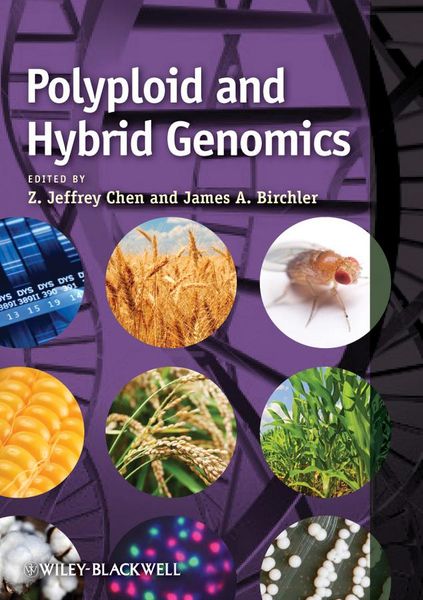
Produktbild: Polyploid and Hybrid Genomics

Polyploid and Hybrid Genomics

264,99 €

inkl. gesetzl. MwSt., Versandkostenfrei


Beschreibung

Produktdetails

Einband

Gebundene Ausgabe

Erscheinungsdatum

10.06.2013

Herausgeber

James A. Birchler + weitere

Verlag

John Wiley & Sons

Seitenzahl

384

Maße (L/B/H)

25,1/17,7/2,5 cm

Gewicht

934 g

Auflage

1. Auflage

Sprache

Englisch

ISBN

978-0-470-96037-0

Beschreibung

Produktdetails

Einband

Gebundene Ausgabe

Erscheinungsdatum

10.06.2013

Herausgeber

Verlag

John Wiley & Sons

Seitenzahl

384

Maße (L/B/H)

25,1/17,7/2,5 cm

Gewicht

934 g

Auflage

1. Auflage

Sprache

Englisch

ISBN

978-0-470-96037-0

Herstelleradresse

Libri GmbH
Europaallee 1
36244 Bad Hersfeld
DE

Email: gpsr@libri.de

Ein neues Kapitel für Ihre Bücher

Ein neues Kapitel für Ihre Bücher

Schenken Sie Ihren alten Schätzen ein zweites Leben und erhalten Sie dafür eine Thalia Geschenkkarte.

Jetzt verkaufen
Jetzt verkaufen

Noch keine Bewertungen vorhanden

Verfassen Sie die erste Bewertung zu diesem Artikel

Helfen Sie anderen Kundinnen und Kunden durch Ihre Meinung.

Kundinnen und Kunden meinen

Bewertungen (0)

Die Leseprobe wird geladen.
  • Produktbild: Polyploid and Hybrid Genomics
  • Contributors
     
    Preface
     
    Section I Genomics of Hybrids
     
    1 Yeast Hybrids and Polyploids as Models in Evolutionary Studies
     
    Avraham A. Levy, Itay Tirosh, Sharon Reikhav, Yasmin Bloch, and Naama Barkai
     
    Introduction
     
    Experimental Advantages of Budding Yeasts
     
    Yeast Hybrids
     
    Yeast Polyploids
     
    Paleopolyploidy and Duplicated Genes Retention
     
    Ploidy and Evolution--Theory and Experiments
     
    Genomic Response to Polyploidy and Hybridity
     
    Yeast Hybrids as a Tool for Studying Genomic Regulation
     
    Conclusions
     
    Acknowledgments
     
    References
     
    2 Transcriptome Profiling of Drosophila Interspecific Hybrids: Insights into Mechanisms of Regulatory Divergence and Hybrid Dysfunction
     
    Jos´e M. Ranz, Shu-Dan Yeh, Kevin G. Nyberg, and Carlos A. Machado
     
    Introduction
     
    Gene Expression
     
    Drosophila Hybrids as a Model to Study Transcriptome Divergence
     
    Outlook
     
    References
     
    3 cis- and trans-Regulation in Drosophila Interspecific Hybrids
     
    Joseph D. Coolon and Patricia J. Wittkopp
     
    Introduction
     
    Distinguishing between cis- and trans-Regulatory Changes Using eQTL, GWAS, and ASE
     
    Methods Used to Quantify ASE
     
    Studies of cis- and trans-Regulation in Interspecific Hybrids of Drosophila
     
    Insights into Regulatory Evolution
     
    cis- and trans-Regulatory Evolution in Drosophila: A Look Ahead
     
    References
     
    4 Gene Expression and Heterosis in Maize Hybrids
     
    Mei Guo and J. Antoni Rafalski
     
    Introduction
     
    Gene Expression in Maize Hybrids--Transcript Abundance Relative to Inbred Parents
     
    Allele-Specific Gene Regulation in the Maize Hybrid
     
    Modes of Gene Regulation in the Hybrid
     
    Genetic and Structural Diversities That Contribute to Regulatory Variation
     
    Understanding Heterosis--Various Models
     
    Perspectives
     
    Acknowledgments
     
    References
     
    5 Integrating "Omics" Data and Expression QTL to Understand Maize Heterosis

    Camille Rustenholz and Patrick S. Schnable
     
    Introduction
     
    Experimental Design and eQTL Analysis
     
    eQTL and the Mechanisms Underlying Gene Regulation
     
    Building Networks and Integrating "omics" to Understand How Variants, in Particular eQTL, Can Result in Phenotypic Variation
     
    Conclusion and Future Prospects
     
    Acknowledgments
     
    References
     
    6 Genomics and Heterosis in Hexaploid Wheat
     
    Zhongfu Ni, Yingyin Yao, Huiru Peng, Zhaorong Hu, and Qixin Sun
     
    Introduction
     
    Genetic Dissection of Wheat Heterosis
     
    Transcriptome and Proteome Analysis between Wheat Hybrids and Parents
     
    Some Differentially Expressed Patterns are Correlated with Wheat Heterosis
     
    Function Analysis of Differentially Expressed Genes between Wheat Hybrids and Their Parental Lines
     
    Possible Regulatory Mechanism Contributing to Differential Gene Expression in Wheat
     
    Physiological Basis of Heterosis for Grain Yield in Wheat
     
    Concluding Remarks
     
    Acknowledgments
     
    References
     
    7 Progress of Genomics and Heterosis Studies in Hybrid Rice
     
    Lei Zhang, Yonggang Peng, Yang Dong, Hongtao Li, Wen Wang, and Zhen Zhu
     
    Introduction
     
    Progress in the Study of Rice Genomics
     
    Heterosis and Transcriptomics in Hybrid Rice
     
    Epigenetic Modification and Heterosis in Hybrid Rice

    Molecular Mechanism behind Heterosis
     
    Perspectives
     
    Acknowledgments
     
    References
     
    8 Heterosis