















































KI-Beratung Beta

Gutscheinbedingungen

Gültig bis 11.11.2026 | Gültig für Spielzeug, Filme, Musik, Software, Games, Geschenke & Trends, Schreibwaren, Hörbücher und Hörbuch-Downloads (außer Abo & Shelfies), gebrauchte Bücher, nicht preisgebundene Bücher und Kalender | Einlösbar unter thalia.de und in der Thalia App | Click & Collect nur mit Online-Zahlung (Paypal/Kreditkarte) vorab | Einzelne Artikel können ausgeschlossen sein | Nicht kombinierbar mit anderen Gutscheinen oder Preisaktionen | Nur einmal pro Einkauf einlösbar | Gutschein wird auf max. 500€ Bestellwert angerechnet | Keine Barauszahlung | Digitale Hörbücher nur für Android  | Nicht gültig für preisgebundene Artikel (aufgrund der Buchpreisbindung sind Gutscheine nicht auf Bücher, eBooks, Presse einlösbar), tolino eReader & Zubehör, Abonnements & Flatrates, Geschenkkarten, Versandkosten und Services

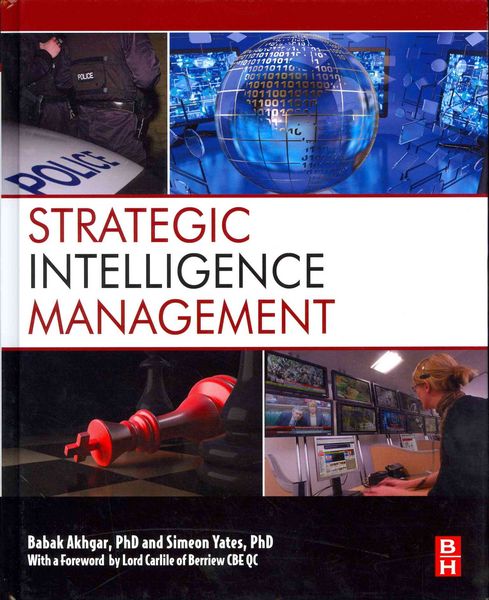
Produktbild: Strategic Intelligence Management

Strategic Intelligence Management National Security Imperatives and Information and Communications Technologies

77,99 €

inkl. gesetzl. MwSt., Versandkostenfrei


Beschreibung

Strategic Intelligence Management introduces both academic researchers and law enforcement professionals to contemporary issues of national security and information management and analysis. This contributed volume draws on state-of-the-art expertise from academics and law enforcement practitioners across...

Beschreibung

Strategic Intelligence Management introduces both academic researchers and law enforcement professionals to contemporary issues of national security and information management and analysis. This contributed volume draws on state-of-the-art expertise from academics and law enforcement practitioners across the globe. The chapter authors provide background, analysis, and insight on specific topics and case studies. Strategic Intelligent Management explores the technological and social aspects of managing information for contemporary national security imperatives.

Academic researchers and graduate students in computer science, information studies, social science, law, terrorism studies, and politics, as well as professionals in the police, law enforcement, security agencies, and government policy organizations will welcome this authoritative and wide-ranging discussion of emerging threats.

Rezension

"...an important work and should be of interest to public officials, executives in the private sector, and others who have a serious appetite for a broader and deeper understanding of the security challenges we are all facing." --Security Management

"International contributors in computing, communications systems, criminology, and emergency medicine provide a detailed overview for scholars, policy makers, and those in law, security, government, and business. The book examines current issues of national security strategy in the context of new global communication networks and global connections among regions and resources." --Reference & Research Book News, December 2013

Produktdetails

Einband

Gebundene Ausgabe

Erscheinungsdatum

14.03.2013

Herausgeber Babak Akhgar + weitere
Verlag Elsevier Science & Technology

Produktdetails

Einband

Gebundene Ausgabe

Erscheinungsdatum

14.03.2013

Herausgeber
Verlag Elsevier Science & Technology
Seitenzahl

340

Maße (L/B/H)

24,3/19,7/2,5 cm

Gewicht

909 g

Sprache

Englisch

ISBN

978-0-12-407191-9

EU-Ansprechpartner

Elsevier B.V.
Radarweg 29
1043 NX Amsterdam
NL
productsafety@elsevier.com

Herstelleradresse

Elsevier Science & Technology
London Wall 125
EC2Y 5AS London
GB
tradeorders@elsevier.com

Ein neues Kapitel für Ihre Bücher

Ein neues Kapitel für Ihre Bücher

Schenken Sie Ihren alten Schätzen ein zweites Leben und erhalten Sie dafür eine Thalia Geschenkkarte.

Jetzt verkaufen
Jetzt verkaufen

Noch keine Bewertungen vorhanden

Verfassen Sie die erste Bewertung zu diesem Artikel

Helfen Sie anderen Kundinnen und Kunden durch Ihre Meinung.

Kundinnen und Kunden meinen

Bewertungen (0)

Die Leseprobe wird geladen.
  • Produktbild: Strategic Intelligence Management
  • Foreword (Lord Carlile of Berriew CBE, QC)

    Part 1: National Security Strategies and Issues
    1 Introduction: Strategy Formation in a Globalized and Networked Age-A Review of the Concept and its Definition
    2 Securing the State: Strategic Responses for an Interdependent World
    3 We Have Met the Enemy and They Are Us: Insider Threat and Its Challenge to National Security
    4 An Age of Asymmetric Challenges-4th Generation Warfare at Sea
    5 Port and Border Security: The First and Last Line of National Security Defense

    Part 2: The Public, Communication, Risk, and National Security
    6 Risk Communication, Risk Perception and Behavior as Foundations of Effective National Security Practices
    7 Promoting Public Resilience against Chemical, Biological, Radiological and Nuclear Terrorism
    8 From Local to Global: Community-based Policing and National Security
    9 The Role of Social Media in Crisis: A European Holistic Approach to the Adoption of Online and Mobile Communications in Crisis Response and Search and Rescue Efforts
    10 Emerging Technologies and the Human Rights Challenge of Rapidly Expanding State Surveillance Capacities

    Part 3: Technologies, Information, and Knowledge for National Security
    11 User Requirements and Training Needs within Security Applications: Methods for Capture and Communication
    12 Exploring the Crisis Management/Knowledge Management Nexus
    13 A Semantic Approach to Security Policy Reasoning
    14 The ATHENA Project: Using Formal Concept Analysis to Facilitate the Actions of Responders in a Crisis Situation
    15 Exploiting Intelligence for National Security
    16 Re-thinking Standardization for Interagency Information Sharing

    Part 4: Future Threats and Cyber Security
    17 Securing Cyberspace: Strategic Responses for a Digital Age
    18 National Cyber Defense Strategy
    19 From Cyber Terrorism to State Actors' Covert Cyber Operations
    20 Cyber Security Countermeasures to Combat Cyber Terrorism
    21 Developing a Model to Reduce and/or Prevent Cybercrime Victimization among the User Individuals

    Concluding remarks