















































KI-Beratung Beta

Gutscheinbedingungen

Gültig bis 30.11.2026 | Gültig für nicht preisgebundene fremdsprachige Bücher | Einzelne Artikel können ausgeschlossen sein | Online auf thalia.de und in der Thalia App einlösbar | Click & Collect nur mit Online-Zahlung (Paypal/Kreditkarte) vorab | Nicht kombinierbar mit anderen Gutscheinen oder Preisaktionen | Nur einmal pro Einkauf einlösbar | Gutschein wird auf max. 500€ Bestellwert angerechnet | Keine Barauszahlung | Nicht gültig für Versandkosten und Services

  • Produktbild: New Trends in Allergy V
  • Produktbild: New Trends in Allergy V

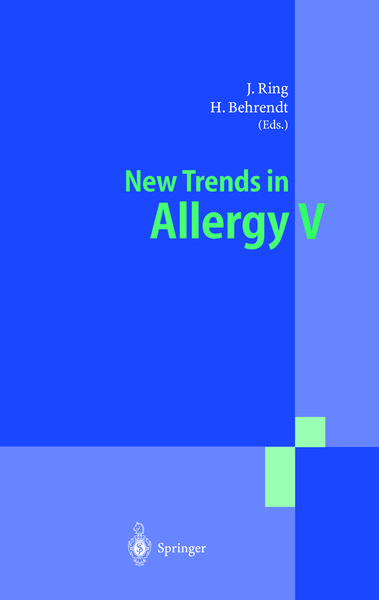
New Trends in Allergy V

146,99 €

inkl. gesetzl. MwSt., Versandkostenfrei


Beschreibung

New Trends in Allergy V' is the fifth volume of a series focussing on new trends in experimental and clinical allergology. The interdisciplinary character is documented by articles from such different fields as basic immunology, chemistry, molecular biology, pharmacology, epidemiology, pneumology, dermatology,...

Beschreibung

New Trends in Allergy V' is the fifth volume of a series focussing on new trends in experimental and clinical allergology. The interdisciplinary character is documented by articles from such different fields as basic immunology, chemistry, molecular biology, pharmacology, epidemiology, pneumology, dermatology, otolaryngology, pediatrics and psychosomatic medicine. Special emphasis is given to the role of both anthropogenic (pollutants) as well as natural environmental factors in the development of allergy. Among new pathophysiological concepts, dendritic cells, lymphocyte interactions, mast cells, eosinophils and neutrophils as well as psycho-neuro-immunological influences are featured. Practical aspects focus on asthma, rhinoconjunctivitis, atopic eczema, occupational and food allergy as well as anaphylaxis. The most recent therapeutic strategies comprise novel pharmacotherapy and allergen-specific as well as unspecific (e. g. anti-IgE) immunotherapy.

Portrait

Johannes Ring ist Direktor der Klinik und Poliklinik für Dermatologie und Allergologie am Biederstein der TU München.

Produktdetails

Einband

Taschenbuch

Erscheinungsdatum

13.10.2012

Abbildungen

XVI, 301 p.

Herausgeber Johannes Ring + weitere

Produktdetails

Einband

Taschenbuch

Erscheinungsdatum

13.10.2012

Abbildungen

XVI, 301 p.

Herausgeber
Verlag Springer Berlin
Seitenzahl

301

Maße (L/B/H)

23,5/15,5/1,8 cm

Gewicht

487 g

Auflage

Softcover reprint of the original 1st ed. 2002

Sprache

Englisch

ISBN

978-3-642-62768-2

Herstelleradresse

Springer-Verlag KG
Sachsenplatz 4-6
1201 Wien
AT

Email: ProductSafety@springernature.com

Ein neues Kapitel für Ihre Bücher

Ein neues Kapitel für Ihre Bücher

Schenken Sie Ihren alten Schätzen ein zweites Leben und erhalten Sie dafür eine Thalia Geschenkkarte.

Jetzt verkaufen
Jetzt verkaufen

Noch keine Bewertungen vorhanden

Verfassen Sie die erste Bewertung zu diesem Artikel

Helfen Sie anderen Kundinnen und Kunden durch Ihre Meinung.

Kundinnen und Kunden meinen

Bewertungen (0)

  • Produktbild: New Trends in Allergy V
  • Produktbild: New Trends in Allergy V
  • 1 Pollen Grains Contain and Release Not Only Allergens, but Also Eicosanoid-Like Substances with Neutrophil Chemotactic Activity: A New Step in the Initiation of Allergie Sensitization?.- 2 House Dust Mites in Stuffed Toys as a Cause of Allergy in Lithuania.- 3 Pharmacogenetics of ?2-Adrenoceptor and Asthmatic Phenotypes.- 4 Pertussis Vaccination Is Not Associated with a Higher Prevalence of Allergies in Six-Year-Old Children from West Germany.- 5 Human Allergogeneticists Should Listen to Their Dog’s Barking.- 6 Neuro-Immune Interaction in Allergy and Asthma.- 7 Cadherin Biology of Langerhans Cells.- 8 CD8 T Cell-Dendritic Cell (DC) Interaction in the Regulation of IgE.- 9 MHC Class II-Restricted T Cell Activation by Mouse and Human Mast Cells: Potential Clinical Implications.- 10 T Cell Reactivity Against Timothy Grass Pollen Allergens in Allergie Versus Non-Allergie Human Donors: Epitope Recognition and Cytokine Profile.- 11 ?1,3-Fucosyltransferase VII mRNA Expression Is Induced by Superantigens and Blocked by Inhibitors of NF-?B.- 12 Dendritic Cells and Tolerance.- 13 Eosinophils Maintain Their Capacity to Degranulate upon Repetitive Stimulation with the Same Agonist.- 14 Mast Cells as Initiators and Effectors of Allergie Inflammation.- 15 Modulation of Skin Barrier Function.- 16 T Cells and Effector Mechanisms in Atopic Dermatitis.- 17 Material-Odor Analysis as a Prerequisite for the Allergological Evaluation of Outgassing Odoractive Volatile Compounds.- 18 The Atopy Patch Test: Use and Perspectives.- 19 The Intrinsic Type of Atopic Dermatitis Is Characterised by a Low Expression of the High-Affinity IgE Receptor F??RI on Epidermal Dendritic Cells.- 20 Staphylococcal Exotoxins as Trigger Factors of Atopic Dermatitis.- 21 Peanut Allergy: Are Clinical SymptomsAssociated with IgE-Reactivity to Certain (Recombinant) Peanut Allergens?.- 22 Challenge Tests with Food Additives and Aspirin in the Diagnostics of Chronic Urticaria. A Case of Immediate Cutaneous Hypersensitivity to Sodium Bisulphite (E-222) Confirmed by Patch Testing.- 23 Serum Sickness as a Clinical Model for Food Intolerance.- 24 Role of Tryptase in Anaphylaxis.- 25 Practical Approach to Adverse Food Reactions.- 26 Multiple Chemical Sensitivity and Others: Allergological, Environmentaland Psychological Investigations in Individuals with Indoor Air-Related Complaints.- 27 Latex Allergens and Latex Allergy.- 28 Long-Term Course of Natural Rubber Latex Sensitization and Allergy.- 29 Long-Term Continuous Antiallergic Treatment Reduces Symptoms and Controls Allergie Inflammation Better than Symptomatic Treatment.- 30 Rapid Onset and Sustained Efficacy of Desloratadine in Treatment of Chronic Idiopathic Urticaria.- 31 Preclinical Efficacy and Antiallergic Profile of Desloratadine, a Potent Histamine H1-Receptor Antagonist.- 32 Desloratadine Is Effective at Relieving Nasal Congestion, as Demonstrated in Three Placebo-Controlled Trials in Patients with Seasonal Allergie Rhinitis.- 33 Novel Concepts on Allergie Rhinitis: From Pathogenesis to Treatment.- 34 CpG Oligodeoxynucleotides and Their Potential Role in the Immunotherapy of Allergie Diseases.- 35 Allergen 3-D Structure-Based Design of Future Vaccines for Specific Allergy Vaccination.- 36 Immunological Mechanisms of Anti-IgE Treatment.