















































KI-Beratung Beta

Gutscheinbedingungen

Gültig bis 30.11.2026 | Gültig für nicht preisgebundene fremdsprachige Bücher | Einzelne Artikel können ausgeschlossen sein | Online auf thalia.de und in der Thalia App einlösbar | Click & Collect nur mit Online-Zahlung (Paypal/Kreditkarte) vorab | Nicht kombinierbar mit anderen Gutscheinen oder Preisaktionen | Nur einmal pro Einkauf einlösbar | Gutschein wird auf max. 500€ Bestellwert angerechnet | Keine Barauszahlung | Nicht gültig für Versandkosten und Services

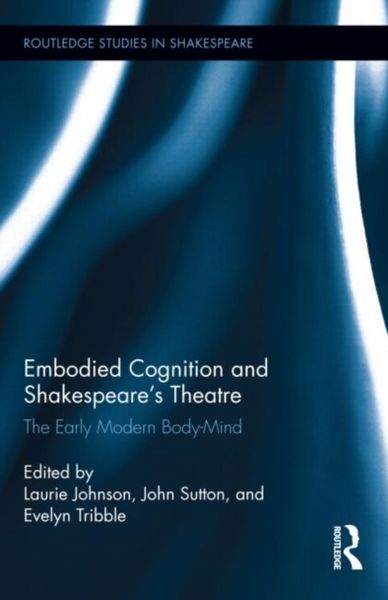
Produktbild: Embodied Cognition and Shakespeare's Theatre

Embodied Cognition and Shakespeare's Theatre The Early Modern Body-Mind

237,99 €

inkl. gesetzl. MwSt., Versandkostenfrei


Beschreibung

This collection considers issues that have emerged in Early Modern Studies in the past fifteen years relating to understandings of mind and body in Shakespeare's world. Informed by The Body in Parts, the essays in this book respond also to the notion of an early modern 'body-mind' in which Shakespeare...

Beschreibung

This collection considers issues that have emerged in Early Modern Studies in the past fifteen years relating to understandings of mind and body in Shakespeare's world. Informed by The Body in Parts, the essays in this book respond also to the notion of an early modern 'body-mind' in which Shakespeare and his contemporaries are understood in terms of bodily parts and cognitive processes. What might the impact of such understandings be on our picture of Shakespeare's theatre or on our histories of the early modern period, broadly speaking? This book provides a wide range of approaches to this challenge, covering histories of cognition, studies of early modern stage practices, textual studies, and historical phenomenology, as well as new cultural histories by some of the key proponents of this approach at the present time. Because of the breadth of material covered, full weight is given to issues that are hotly debated at the present time within Shakespeare Studies: presentist scholarship is presented alongside more historically-focused studies, for example, and phenomenological studies of material culture are included along with close readings of texts. What the contributors have in common is a refusal to read the work of Shakespeare and his contemporaries either psychologically or materially; instead, these essays address a willingness to study early modern phenomena (like the Elizabethan stage) as manifesting an early modern belief in the embodiment of cognition.

Produktdetails

Einband

Gebundene Ausgabe

Erscheinungsdatum

06.03.2014

Abbildungen

9 SW-Fotos

Herausgeber Laurie Johnson + weitere

Produktdetails

Einband

Gebundene Ausgabe

Erscheinungsdatum

06.03.2014

Abbildungen

9 SW-Fotos

Herausgeber
Verlag Taylor & Francis
Seitenzahl

280

Maße (L/B/H)

23,4/15,7/2 cm

Gewicht

499 g

Sprache

Englisch

ISBN

978-1-138-00075-9

Herstelleradresse

Libri GmbH
Europaallee 1
36244 Bad Hersfeld
DE

Email: gpsr@libri.de

Ein neues Kapitel für Ihre Bücher

Ein neues Kapitel für Ihre Bücher

Schenken Sie Ihren alten Schätzen ein zweites Leben und erhalten Sie dafür eine Thalia Geschenkkarte.

Jetzt verkaufen
Jetzt verkaufen

Noch keine Bewertungen vorhanden

Verfassen Sie die erste Bewertung zu diesem Artikel

Helfen Sie anderen Kundinnen und Kunden durch Ihre Meinung.

Kundinnen und Kunden meinen

Bewertungen (0)

Die Leseprobe wird geladen.
  • Produktbild: Embodied Cognition and Shakespeare's Theatre
  • Introduction: Re-cognising the Body-Mind in Shakespeare's Theatre Laurie Johnson, John Sutton, and Evelyn Tribble 1. Proteus Agonistes: Shakespeare, Bacon, and the "Torture" of Nature David Hawkes 2. Plays, Playing, and Make-believe: Thinking and Feeling in Shakespearean Drama Ros King 3. Warmth and Affection in 1 Henry IV: Why No One Likes Prince Hal Emma Firestone First Link: Subjectivity and the Mind-Body: Extending the Self on the Renaissance Stage Garrett A. Sullivan, Jr. 4. "Some Fury Pricks Me On": Satanic Thinking in Thomas Heywood's A Woman Killed with Kindness Mary Floyd-Wilson 5. Mental Bodies in Much Ado About Nothing James A. Knapp Second Link: The Unbearable Permeability of Bodies and Minds Michael Schoenfeldt 6. "Make Me Not Sighted Like the Basilisk": Vision and Contagion in The Winter's Tale Darryl Chalk 7. Singularity in The Winter's Tale Hardin Aasand Third Link: Seeing the Spider: Cognitive Ecologies in The Winter's Tale Gail Kern Paster 8. "There's magic in the web of it": Skin, Mind, and Webs of Touch in Othello Jennifer Rae McDermott 9. Coriolanus's Blush Tiffany Hoffman Fourth Link: The Play of Time in Cognition Katherine Rowe 10. Altered States: Hamlet and Early Modern Head Trauma Lianne Habinek 11. Cogito Ergo Theatrum: Redistributing Cognition on the Early Modern Stage Laurie Johnson 12. The Belly-Mind Relationship in Early Modern Culture: Digestion, Ventriloquism, and the Second Brain Jan Purnis Postscriptum David Hillman and Carla Mazzio