















































KI-Beratung Beta

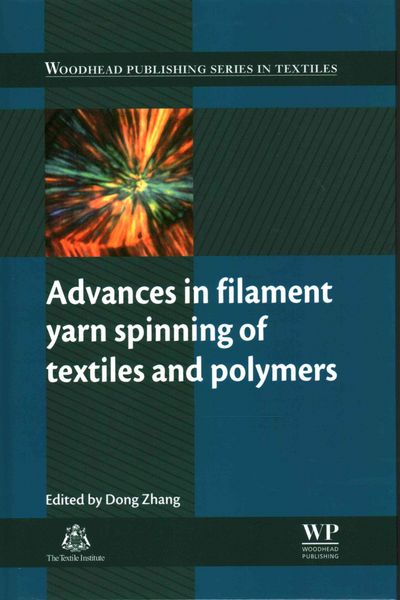
Produktbild: Advances in Filament Yarn Spinning of Textiles and Polymers

Advances in Filament Yarn Spinning of Textiles and Polymers

192,99 €

inkl. gesetzl. MwSt., Versandkostenfrei


Beschreibung

Produktdetails

Einband

Gebundene Ausgabe

Erscheinungsdatum

12.02.2014

Herausgeber

Dong Zhang

Verlag

Woodhead Publishing

Seitenzahl

230

Maße (L/B/H)

24,1/16,4/2,2 cm

Gewicht

490 g

Sprache

Englisch

ISBN

978-0-85709-499-5

Beschreibung

Rezension

"Textile researchers explain recent developments and current practices in spinning synthetic polymers into fibers for use in textiles.

Produktdetails

Einband

Gebundene Ausgabe

Erscheinungsdatum

12.02.2014

Herausgeber

Dong Zhang

Verlag

Woodhead Publishing

Seitenzahl

230

Maße (L/B/H)

24,1/16,4/2,2 cm

Gewicht

490 g

Sprache

Englisch

ISBN

978-0-85709-499-5

EU-Ansprechpartner

Elsevier B.V.
Radarweg 29
1043 NX Amsterdam
NL
productsafety@elsevier.com

Herstelleradresse

Elsevier Science & Technology
London Wall 125
EC2Y 5AS London
GB
tradeorders@elsevier.com

Ein neues Kapitel für Ihre Bücher

Ein neues Kapitel für Ihre Bücher

Schenken Sie Ihren alten Schätzen ein zweites Leben und erhalten Sie dafür eine Thalia Geschenkkarte.

Jetzt verkaufen
Jetzt verkaufen

Noch keine Bewertungen vorhanden

Verfassen Sie die erste Bewertung zu diesem Artikel

Helfen Sie anderen Kundinnen und Kunden durch Ihre Meinung.

Kundinnen und Kunden meinen

Bewertungen (0)

Die Leseprobe wird geladen.
  • Produktbild: Advances in Filament Yarn Spinning of Textiles and Polymers
  • Contributor contact details

    Woodhead Publishing Series in Textiles

    Introduction

    Part I: General issues

    1. Synthetic polymer fibers and their processing requirements

    Abstract:

    1.1 Introduction

    1.2 Chemistry of fiber-forming polymers

    1.3 Polymerization processes

    1.4 Influence of chemical structure on the physical properties of chemicals and fibers

    1.5 Effects of molecular weight on fiber spinnability, structure and properties

    1.6 Flow properties of polymers

    1.7 Principles of solidification during fiber formation

    1.8 Fiber formation techniques

    1.9 Post-fiber formation treatments

    1.10 Current trends

    1.11 Conclusion

    1.12 References

    2. Understanding the behaviour of synthetic polymer fibres during spinning

    Abstract:

    2.1 Introduction

    2.2 Molten state rheology of thermoplastic polymers

    2.3 Polymer behaviour during cooling and resulting fibre structure

    2.4 Polymer behaviour during filament spinning

    2.5 The die swell phenomenon

    2.6 Drawing of polymers: changes in morphology and properties of filaments

    2.7 References

    3. Technologies for the manufacture of synthetic polymer fibers

    Abstract:

    3.1 Introduction

    3.2 Textile filament and bulk continuous fiber (BCF) spinning

    3.3 Staple fiber spinning

    3.4 Industrial fiber spinning equipment

    3.5 Monofilament fiber equipment

    3.6 Bicomponent fiber equipment

    3.7 Spunbond lines

    3.8 Melt blown processes

    3.9 Solvent spinning lines

    3.10 Hollow fiber membranes

    3.11 Gel spinning

    3.12 Nano-fiber spinning

    3.13 Conclusion

    3.14 References

    Part II: Spinning techniques

    4. Melt spinning of synthetic polymeric filaments

    Abstract:

    4.1 Introduction

    4.2 Fundamentals of melt spinning

    4.3 Modeling of polymer flows in melt spinning

    4.4 Filament interaction with the environment in melt spinning

    4.5 Limitations of melt spinning

    4.6 Developments in melt spinning

    4.7 Future trends

    4.8 Conclusion

    4.9 Sources of further information and advice

    4.10 References

    5. Gel spinning of synthetic polymer fibres

    Abstract:

    5.1 Introduction

    5.2 Factors affecting the spinning of polymers: entanglement

    5.3 Factors affecting fibre strength

    5.4 Gel spinning technologies

    5.5 Types of fibres produced using gel spinning

    5.6 Factors affecting gel spinning

    5.7 Gel spun textile products

    5.8 Conclusion and future trends

    5.9 References

    6. Bi-component and bi-constituent spinning of synthetic polymer fibres

    Abstract:

    6.1 Introduction

    6.2 Classification of bi-component fibres

    6.3 Spinning technologies

    6.4 Factors affecting bi-component and bi-constituent spinning

    6.5 Applications of bi-component fibres

    6.6 Future trends

    6.7 References

    7. Electrospinning, processing and characterization of polymer-based nano-composite fibers

    Abstract:

    7.1 Introduction

    7.2 Principles of electrospinning

    7.3 Electrospinning technology

    7.4 Electrospinning of nanofibers

    7.5 Properties of electrospun nanofibers

    7.6 Conclusion

    7.7 References

    8. Integrated composite spinning (ICS)

    Abstract:

    8.1 Introduction

    8.2 The background and history of integrated composite spinning (ICS)

    8.3 The development of ICS technology

    8.4 The impact of material selection and processing parameters on ICS yarn properties

    8.5 Commercialization of the process

    8.6 Assessing the advantages and disadvantages of ICS technology

    8.7 Future trends

    8.8 Conclusion

    8.9 References

    9. Wet spinning of synthetic polymer fibers

    Abstract:

    9.1 Introduction

    9.2 Principles of wet spinning

    9.3 Types of fibers used

    9.4 Fiber properties

    9.5 Factors affecting wet spinning

    9.6 Applications and future trends

    9.7 References

    10. Dry spinning of synthetic polymer fibers

    Abstract:

    10.1 Introduction

    10.2 The dry spinning process

    10.3 Characteristics of dry spun fibers

    10.4 Variables in dry spinning

    10.5 Dry spinning of acrylic fibers

    10.6 Dry spinning of cellulose acetate and triacetate

    10.7 Dry spinning of other fibers: polybenzimidazole (PBI), spandex and polyvinyl chloride (PVC)

    10.8 Conclusion and future trends

    10.9 References

    Index