















































KI-Beratung Beta

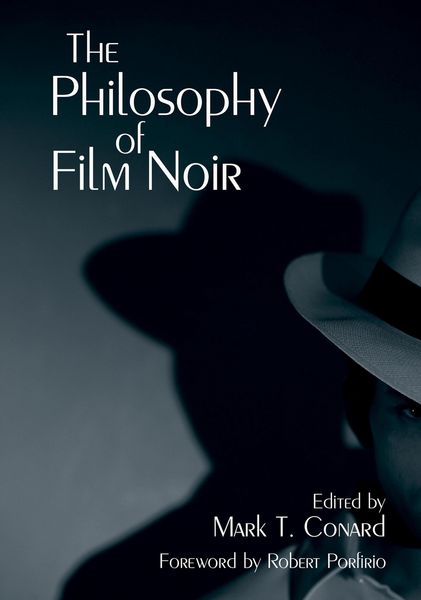
Produktbild: The Philosophy of Film Noir

The Philosophy of Film Noir

  • Form:Einzelkauf Download
  • Sprache:Englisch

18,18 €

inkl. gesetzl. MwSt.

Beschreibung

An essay collection examining the philosophical elements of select films in noir cinema, as well as the genre's legacy in film and culture. A drifter with no name and no past, driven purely by desire, is convinced by a beautiful woman to murder her husband. A hard-drinking detective down on his luck becomes...

Beschreibung

An essay collection examining the philosophical elements of select films in noir cinema, as well as the genre's legacy in film and culture.
A drifter with no name and no past, driven purely by desire, is convinced by a beautiful woman to murder her husband. A hard-drinking detective down on his luck becomes involved with a gang of criminals in pursuit of a priceless artifact. The stories are at once romantic, pessimistic, filled with anxiety and a sense of alienation, and they define the essence of film noir. Noir emerged as a prominent American film genre in the early 1940s, distinguishable by its use of unusual lighting, sinister plots, mysterious characters, and dark themes. From
The Maltese Falcon (1941) to
Touch of Evil (1958), films from this classic period reflect an atmosphere of corruption and social decay that attracted such accomplished directors as John Huston, Alfred Hitchcock, Billy Wilder, and Orson Welles.
The Philosophy of Film Noir is the first volume to focus exclusively on the philosophical underpinnings of these iconic films. Drawing on the work of diverse thinkers, from the French existentialist Albert Camus to the Frankurt school theorists Max Horkheimer and Theodor Adorno, the volume connects film noir to the philosophical questions of a modern, often nihilistic, world. Opening with an examination of what constitutes noir cinema, the book interprets the philosophical elements consistently present in the films-themes such as moral ambiguity, reason versus passion, and pessimism. The contributors to the volume also argue that the essence and elements of noir have fundamentally influenced movies outside of the traditional noir period. Neo-noir films such as
Pulp Fiction (1994),
Fight Club (1999), and
Memento (2000) have reintroduced the genre to a contemporary audience. As they assess the concepts present in individual films, the contributors also illuminate and explore the philosophical themes that surface in popular culture.
A close examination of one of the most significant artistic movements of the twentieth century,
The Philosophy of Film Noir reinvigorates an intellectual discussion at the intersection of popular culture and philosophy.
Praise for
The Philosophy of Film Noir
"The essays work both as solid primers into philosophy, stretching from Aristotle to Schopenhauer, and as lucid excursions into the genre's dark, mean streets.... A fascinating, readable, and provocative book.... Highly recommended." -
Choice
"Dense and intriguing, the book suggests noir is best perceived as a slightly warped mirror held up to contemporary society." -
Publishers Weekly

Produktdetails

Format

ePUB

Kopierschutz

Nein

Family Sharing

Nein

Text-to-Speech

Ja

Produktdetails

Format

ePUB

Format

eBooks im ePUB-Format erlauben eine dynamische Anpassung des Inhalts an die jeweilige Display-Größe des Lesegeräts. Das Format eignet sich daher besonders für das Lesen auf mobilen Geräten, wie z.B. Ihrem tolino, Tablets oder Smartphones.

Kopierschutz

Nein

Kopierschutz

Dieses eBook können Sie uneingeschränkt auf allen Geräten der tolino Familie, allen sonstigen eReadern und am PC lesen. Das eBook ist nicht kopiergeschützt und kann ein personalisiertes Wasserzeichen enthalten. Weitere Hinweise zum Lesen von eBooks mit einem personalisierten Wasserzeichen finden Sie unter Hilfe/Downloads.

Family Sharing

Nein

Family Sharing

Mit Family Sharing können Sie eBooks innerhalb Ihrer Familie (max. sechs Mitglieder im gleichen Haushalt) teilen. Sie entscheiden selbst, welches Buch Sie mit welchem Familienmitglied teilen möchten. Auch das parallele Lesen durch verschiedene Familienmitglieder ist durch Family Sharing möglich. Um eBooks zu teilen oder geteilt zu bekommen, muss jedes Familienmitglied ein Konto bei Thalia oder einem anderen tolino-Buchhändler haben. Weitere Informationen finden Sie unter Hilfe/Family-Sharing.

Text-to-Speech

Ja

Text-to-Speech

Bedeutet Ihnen Stimme mehr als Text? Mit der Funktion Text-to-Speech können Sie sich im tolino webReader und in der aktuellen Thalia – Lesen & Hören App das eBook vorlesen lassen. Weitere Informationen finden Sie unter Hilfe/Text-to-Speech.

Erscheinungsdatum

27.01.2005

Herausgeber Mark T. Conard
Verlag The University Press of Kentucky
Seitenzahl

268 (Printausgabe)

Dateigröße

895 KB

Sprache

Englisch

EAN

9780813137155

Barrierefreiheit
  • keine Information zur Barrierefreiheit bekannt

Noch keine Bewertungen vorhanden

Verfassen Sie die erste Bewertung zu diesem Artikel

Helfen Sie anderen Kundinnen und Kunden durch Ihre Meinung.

Kundinnen und Kunden meinen

Bewertungen (0)

Weitere Artikel finden Sie in

Die Leseprobe wird geladen.
  • Produktbild: The Philosophy of Film Noir