















































KI-Beratung Beta

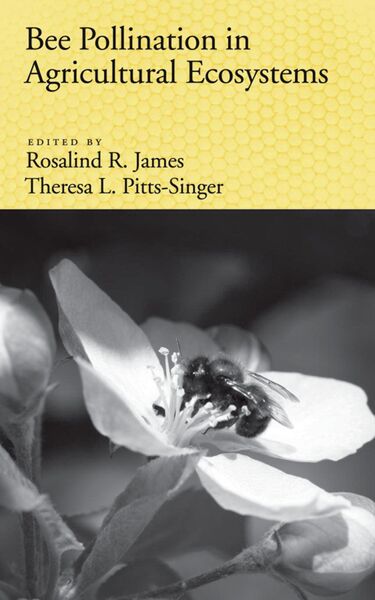
Produktbild: Bee Pollination in Agricultural Ecosystems

Bee Pollination in Agricultural Ecosystems

96,99 €

inkl. gesetzl. MwSt.

Beschreibung

For many agricultural crops, bees play a vital role as pollinators, and this book discusses the interplay among bees, agriculture, and the environment. Although honey bees are well recognized as pollinators, managed bumble bees and solitary bees are also critical for the successful pollination of certain...

Beschreibung

For many agricultural crops, bees play a vital role as pollinators, and this book discusses the interplay among bees, agriculture, and the environment. Although honey bees are well recognized as pollinators, managed bumble bees and solitary bees are also critical for the successful pollination of certain crops, while wild bees provide a free service. As bees liberally pass pollen from one plant to the next, they also impact the broader ecosystem, and not always to the benefit of humankind. Bees can enhance the unintentional spread of genes from genetically engineered plants, and may increase the spread of invasive weeds. Conversely, genetically engineered plants can impact pollinators, and invasive weeds can supply new sources of food for these insects. Bees' flower-visiting activities also can be exploited to help spread biological control agents that control crop pests, and they are important for native plant reproduction. Managing bees for pollination is complex and the factors that must be taken into consideration are treated here, including bee natural history, physiology, pathology, and behavior. Furthermore, transporting bees from native ranges to new areas for pollination services can be controversial, and needs to be done only after assuring that it will not disrupt various ecosystems. Even though bees are small, unobtrusive creatures, they play large roles in the ecosystem. The connection between bees and humankind also is symbolic of a broader interconnection between humans and the natural world.

Produktdetails

Format

PDF

Kopierschutz

Ja

Family Sharing

Nein

Text-to-Speech

Nein

Produktdetails

Format

PDF

Format

eBooks im PDF-Format haben eine festgelegte Seitengröße und eignen sich daher nur bedingt zum Lesen auf einem tolino eReader oder Smartphone. Für den vollen Lesegenuss empfehlen wir Ihnen bei PDF-eBooks die Verwendung eines Tablets oder Computers.

Kopierschutz

Ja

Kopierschutz

Zum Lesen dieses eBooks auf Geräten der tolino Familie sowie auf sonstigen eReadern und am PC benötigen Sie eine ByteBook-ID. Weitere Hinweise zum Lesen von kopiergeschützten eBooks finden Sie unter Hilfe/Downloads.

Family Sharing

Nein

Family Sharing

Mit Family Sharing können Sie eBooks innerhalb Ihrer Familie (max. sechs Mitglieder im gleichen Haushalt) teilen. Sie entscheiden selbst, welches Buch Sie mit welchem Familienmitglied teilen möchten. Auch das parallele Lesen durch verschiedene Familienmitglieder ist durch Family Sharing möglich. Um eBooks zu teilen oder geteilt zu bekommen, muss jedes Familienmitglied ein Konto bei Thalia oder einem anderen tolino-Buchhändler haben. Weitere Informationen finden Sie unter Hilfe/Family-Sharing.

Text-to-Speech

Nein

Text-to-Speech

Bedeutet Ihnen Stimme mehr als Text? Mit der Funktion Text-to-Speech können Sie sich im tolino webReader und in der aktuellen Thalia – Lesen & Hören App das eBook vorlesen lassen. Weitere Informationen finden Sie unter Hilfe/Text-to-Speech.

Erscheinungsdatum

09.09.2008

Herausgeber
Verlag Oxford University Press
Seitenzahl

(Printausgabe)

Dateigröße

3082 KB

Sprache

Englisch

EAN

9780199717873

Barrierefreiheit
  • keine Information zur Barrierefreiheit bekannt

Noch keine Bewertungen vorhanden

Verfassen Sie die erste Bewertung zu diesem Artikel

Helfen Sie anderen Kundinnen und Kunden durch Ihre Meinung.

Kundinnen und Kunden meinen

Bewertungen (0)

Weitere Artikel finden Sie in

Die Leseprobe wird geladen.
  • Produktbild: Bee Pollination in Agricultural Ecosystems