















































KI-Beratung Beta

Gutscheinbedingungen

Gültig bis 11.11.2026 | Gültig für Spielzeug, Filme, Musik, Software, Games, Geschenke & Trends, Schreibwaren, Hörbücher und Hörbuch-Downloads (außer Abo & Shelfies), gebrauchte Bücher, nicht preisgebundene Bücher und Kalender | Einlösbar unter thalia.de und in der Thalia App | Click & Collect nur mit Online-Zahlung (Paypal/Kreditkarte) vorab | Einzelne Artikel können ausgeschlossen sein | Nicht kombinierbar mit anderen Gutscheinen oder Preisaktionen | Nur einmal pro Einkauf einlösbar | Gutschein wird auf max. 500€ Bestellwert angerechnet | Keine Barauszahlung | Digitale Hörbücher nur für Android  | Nicht gültig für preisgebundene Artikel (aufgrund der Buchpreisbindung sind Gutscheine nicht auf Bücher, eBooks, Presse einlösbar), tolino eReader & Zubehör, Abonnements & Flatrates, Geschenkkarten, Versandkosten und Services

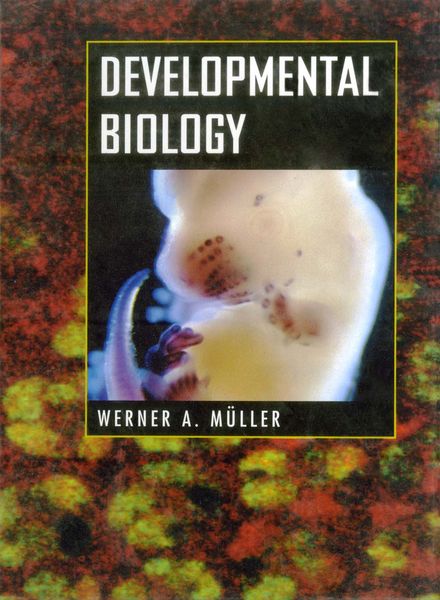
  • Produktbild: Developmental Biology
  • Produktbild: Developmental Biology

Developmental Biology

49,99 €

inkl. gesetzl. MwSt., Versandkostenfrei


Beschreibung

Produktdetails

Einband

Taschenbuch

Erscheinungsdatum

26.09.2011

Abbildungen

IX, 328 p.

Verlag

Springer Us

Seitenzahl

328

Maße (L/B/H)

24,4/17/2,2 cm

Gewicht

681 g

Auflage

Softcover reprint of the original 1st ed. 1997

Sprache

Englisch

ISBN

978-1-4612-7472-8

Beschreibung

Produktdetails

Einband

Taschenbuch

Erscheinungsdatum

26.09.2011

Abbildungen

IX, 328 p.

Verlag

Springer Us

Seitenzahl

328

Maße (L/B/H)

24,4/17/2,2 cm

Gewicht

681 g

Auflage

Softcover reprint of the original 1st ed. 1997

Sprache

Englisch

ISBN

978-1-4612-7472-8

Herstelleradresse

Springer-Verlag KG
Sachsenplatz 4-6
1201 Wien
AT

Email: ProductSafety@springernature.com

Ein neues Kapitel für Ihre Bücher

Ein neues Kapitel für Ihre Bücher

Schenken Sie Ihren alten Schätzen ein zweites Leben und erhalten Sie dafür eine Thalia Geschenkkarte.

Jetzt verkaufen
Jetzt verkaufen

Noch keine Bewertungen vorhanden

Verfassen Sie die erste Bewertung zu diesem Artikel

Helfen Sie anderen Kundinnen und Kunden durch Ihre Meinung.

Kundinnen und Kunden meinen

Bewertungen (0)

  • Produktbild: Developmental Biology
  • Produktbild: Developmental Biology
  • 1. Development: Organisms Construct and Organize Themselves on the Basis of Inherited Information.- 2. Basic Stages, Principles, and Terms of Developmental Biology.- 3. Model Organisms in Developmental Biology.- 4. Comparative Review: The Phylotypic Stage of Vertebrates, Common versus Distinct Features, and Aspects of Evolution.- 5. The Egg Cell and the Sperm Get a Dowry.- 6. The Start: Fertilization and Activation of the Egg.- 7. Precisely Patterned Cleavage Divisions Are Driven by an Oscillator.- 8. Determination: Cells Are Programmed and Committed to Their Fates.- 9. Epigenetic Pattern Formation: New Patterns Are Created During Development.- 10. Differentiation Is Based upon Differential Gene Expression that Is Programmed during Determination.- 11. Cell Differentiation Frequently Is Irreversible and Causes Cell Death; Early Cell Death Can Be Programmed.- 12. Animal Morphogenesis Is Shaped Actively by Adhesion and Cell Migration.- 13. Cell Journeys: Even Germ Cells and Cells of the Peripheral Nervous System Originate from Emigrant Precursors.- 14. Development of the Nervous System: Cell Migration, Pathfinding, and Self-Organization.- 15. Heart and Blood Vessels: Divergent Developmental Roads but One System in the End.- 16. Stem Cells Enable Continuous Growth and Renewal.- 17. Signal Molecules Control Development and Growth.- 18. Cancer Comes from Disturbed Growth and Differentiation Control.- 19. Metamorphosis: A Second Embryogenesis Creates a Second Phenotype.- 20. Sex and the Single Gene.- 21. Regeneration and Renewal versus Loss and Death.- 22. Life and Death: What Is the Major Mystery?.- Boxes.- Box 1 History: From the Soul to Information.- Box 2 Famous Experiments with Eggs and Embryos: Cloning, Chimeras, Teratomas, and Transgenic Mice.- Box 3 The PI Signal Transduction System.- Box 4 Models of Biological Pattern Formation.- Box 5 Signal Molecules Acting through Nuclear Receptors.- Box 6 How Cells Communicate and Interact.- Box 7 Contemporary Techniques in Developmental Biology.