
















































KI-Beratung Beta

  • Produktbild: Rodents in Desert Environments
  • Produktbild: Rodents in Desert Environments
Band 28

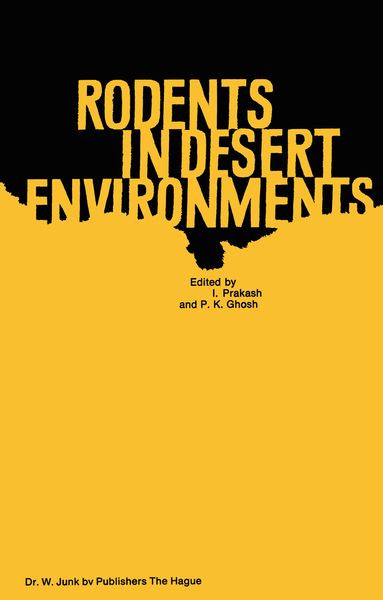
Rodents in Desert Environments

Aus der Reihe Monographiae Biologicae

48,99 €

inkl. gesetzl. MwSt., Versandkostenfrei


Beschreibung

The Evolution of Desert Adaptations. 190 A Comparison of Behavior Patterns. . 196 A Comparison of Behavior Patterns in: Meriones, Gerbillus and Perognathus . . . . . 210 Spacing and Communication 217 Acknowledgements 221 References . . . . . . . . 221 XI. Activity Patterns ofa Desert Rodent by N. R....

Beschreibung

The Evolution of Desert Adaptations. 190 A Comparison of Behavior Patterns. . 196 A Comparison of Behavior Patterns in: Meriones, Gerbillus and Perognathus . . . . . 210 Spacing and Communication 217 Acknowledgements 221 References . . . . . . . . 221 XI. Activity Patterns ofa Desert Rodent by N. R. FRENCH 225 Introduction . . . . . . . . . . . . . . . 225 Methods. . . . . . . . . . . . . . . . . 226 The Microdosimeter and the Index of Activity. 227 Variation in Activity. . . . . . . . . . . . 229 Climatological Variables and Animal Activity . 229 Analysis . 232 Discussion 237 Summary 238 References 239 XII. Patterns of Food, Space and Diversity by M. L. ROSENZWEIG, BARBARA SMIGEL & A. KRAFT. 241 Introduction . . . . . . . . . . . 241 Resource Allocation by Seed Selection 242 Habitat Selection in Space . . . . . 251 The Pattern of Local Species Diversity 260 Acknowledgements 266 References . . . . . . . . . . . . 266 XIII. Desert Coloration in Rodents by D. L. HARRISON. 269 Introduction . . . 269 Desert Coloration . 269 Acknowledgements 275 References . . . . 275 XIV. The Biology of so:me Desert-Dwelling Ground Squ- rels by A. C. HA WBECKER . 277 Introduction . 277 Reproduction. . . . . . 279 Food Habits . . . . . . 288 Population Characteristics 294 Habitat Factors . 297 References . . . . . . . 302 IX xv. Reproductive Biology of North ADlerican Desert Rodents by H. D. SMITH & C. D. JORGENSEN. 305 Introduction . . . . . . . . . . . . . 305 Reproductive Biology: Species Summaries. . . 308 References . . . . . . . . . . . . . . . . 328 XVI. Rodent Faunas and EnvironDlental Changes in the Pleistocene of Israel by E. TCHERNOV . . . . . . . 331 Introduction . . . . . . . . . . . . . . . . . . . 331 The Main Biogeographical Changes in the Near-East since the Miocene . . . .. . . . . . . . . . . . . . . 331 The Composition of the Rodents Faunas in the Pleistocene of Israel . . . . . . . . . . . . . . . . . . . . . 336 The Main Ecological Changes in the Quarternary of Israel . . . . . . . . . . . . . . . . . . . . . .

Produktdetails

Einband

Taschenbuch

Erscheinungsdatum

09.11.2011

Abbildungen

XVI, 624 p.

Herausgeber I. Prakash + weitere

Produktdetails

Einband

Taschenbuch

Erscheinungsdatum

09.11.2011

Abbildungen

XVI, 624 p.

Herausgeber
Verlag Springer Netherland
Seitenzahl

624

Maße (L/B/H)

24,4/15,6/3,5 cm

Gewicht

1010 g

Auflage

Softcover reprint of the original 1st ed. 1975

Sprache

Englisch

ISBN

978-94-010-1946-0

Herstelleradresse

Springer-Verlag KG
Sachsenplatz 4-6
1201 Wien
AT

Email: ProductSafety@springernature.com

Ein neues Kapitel für Ihre Bücher

Ein neues Kapitel für Ihre Bücher

Schenken Sie Ihren alten Schätzen ein zweites Leben und erhalten Sie dafür eine Thalia Geschenkkarte.

Jetzt verkaufen
Jetzt verkaufen

Noch keine Bewertungen vorhanden

Verfassen Sie die erste Bewertung zu diesem Artikel

Helfen Sie anderen Kundinnen und Kunden durch Ihre Meinung.

Kundinnen und Kunden meinen

Bewertungen (0)

  • Produktbild: Rodents in Desert Environments
  • Produktbild: Rodents in Desert Environments
  • I. The Desert as a Habitat.- Distribution.- Soils.- Climate.- Vegetation.- References.- II. The Ecology of Rodents in the northern Sudan.- Desert Species.- Jebel Species.- Riverine Species.- Commensal Species.- Reproduction.- Other Adaptations for Life in the Desert.- Discussion.- Acknowledgements.- References.- III. The Rodents of the Iranian Deserts.- The Rodents: northern and southern Types.- Annual Rhythm.- Population Densities.- Some Peculiarities.- References.- IV. Comparative Ecological Notes on Afghan Rodents.- Results.- Discussion.- Summary.- References.- V. The Population Ecology of the Rodents of the Rajasthan Desert, India.- Population Structure.- Ranges of Movements.- Food.- Predator-Prey Relationship.- Breeding Season and Litter Size.- References.- VI. Outbreaks of Rodents in Semi-Arid and Arid Australia: Causes, Preventions, and Evolutionary Considerations.- Climates in Central Australia.- The Study-Area: Habitats and Rodents.- Populations.- Conclusions and Discussion.- Acknowledgements.- References.- VII Observations of Argentine Desert Rodent Ecology, with Emphasis on Water Relations of Eligmodontia typus.- The Argentine Monte and some of its Rodents.- Methods and Materials.- Results and Discussion.- Acknowledgements.- References.- VIII. La diversité des Gerbillidés.- IX. Some Observations on Ecological Adaptations of Desert Rodents and Suggestions for further Research work.- The Desert Environment.- Ecological Adaptations.- Need for further Research.- References.- X. The Behavior Patterns of Desert Rodents.- The Evolution of Desert Adaptations.- A Comparison of Behavior Patterns.- A Comparison of Behavior Patterns in : Meriones, Gerbillus and Perognathus.- Spacing and Communication.- Acknowledgements.- References.- XI Activity Patterns of a DesertRodent.- Methods.- The Microdosimeter and the Index of Activity.- Variation in Activity.- Climatological Variables and Animal Activity.- Analysis.- Discussion.- Summary.- References.- XII. Patterns of Food, Space and Diversity.- Resource Allocation by Seed Selection.- Habitat Selection in Space.- The Pattern of Local Species Diversity.- Acknowledgements.- References.- XIII. Desert Coloration in Rodents.- Desert Coloration.- Acknowledgements.- References.- XIV. The Biology of some Desert-Dwelling Ground Squirrels.- Reproduction.- Food Habits.- Population Characteristics.- Habitat Factors.- References.- XV. Reproductive Biology of North American Desert Rodents.- Reproductive Biology: Species Summaries.- References.- XVI. Rodent Faunas and Environmental Changes in the Pleistocene of Israel.- The Main Biogeographical Changes in the Near-East since the Miocene.- The Composition of the Rodents Faunas in the Pleistocene of Israel.- The Main Ecological Changes in the Quarternary of Israel.- Analysis of the Main Habitats Occupied by the Pleistocene Rodents of Israel.- Note on the Origin of the Israeli Desert Rodents.- References.- XVII. Prehistoric Rodents of the Middle East.- Prehistoric Rodents.- Discussion.- Acknowledgements.- References.- Addenda.- XVIII. Desert Rodents : Physiological Problems of Desert Life.- Problems of Temperature Regulation.- Water Balance, Intake and Loss.- References.- XIX. Ecophysiology of Water and Energy in Desert Marsupials and Rodents.- Methods.- Ecophysiology of Water and Energy.- Discussion.- References.- XX. Thermo-Regulation and Water Economy in Indian Desert Rodents.- Methods.- Thermo-Regulation.- Water Economy.- Conclusion.- References.- XXI. The Physiological Adaptations of Desert Rodents.- Water Conservation in Desert Rodents.- Structureand Concentrating Mechanisms in the Desert Rodent Kidney.- Tolerance to Heat and Thermo-Regulation of Desert Rodents.- Reproduction in Desert Rodents.- References.- XXII. Nematode Parasites of the Indian Desert Rodents.- Material and Methods.- Nematode Parasites of the Indian Desert Rodents.- Discussion.- References.- XXIII. Ecology of the Desert Rodents of the U.S.S.R. (Jerboas and Gerbils).- Jerboas.- Gerbils.- References.- Author Index.- Genus and Species Index.