















































KI-Beratung Beta

  • Produktbild: Thirst
  • Produktbild: Thirst

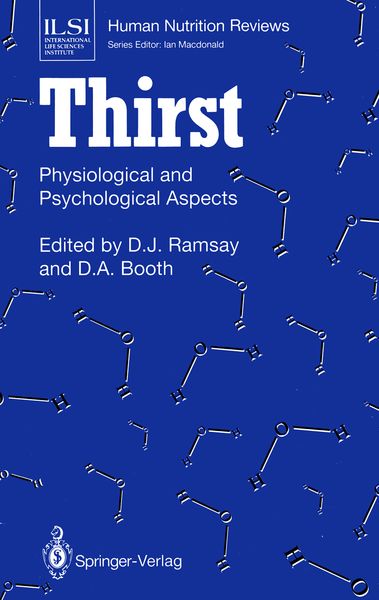
Thirst Physiological and Psychological Aspects

97,99 €

inkl. gesetzl. MwSt., Versandkostenfrei


Beschreibung

Produktdetails

Einband

Taschenbuch

Erscheinungsdatum

08.12.2011

Abbildungen

XXVI, 509 p.

Herausgeber

David J. Ramsay + weitere

Verlag

Springer London

Seitenzahl

509

Maße (L/B/H)

24,2/17/2,9 cm

Gewicht

913 g

Auflage

Softcover reprint of the original 1st ed. 1991

Sprache

Englisch

ISBN

978-1-4471-1819-0

Beschreibung

Produktdetails

Einband

Taschenbuch

Erscheinungsdatum

08.12.2011

Abbildungen

XXVI, 509 p.

Herausgeber

Verlag

Springer London

Seitenzahl

509

Maße (L/B/H)

24,2/17/2,9 cm

Gewicht

913 g

Auflage

Softcover reprint of the original 1st ed. 1991

Sprache

Englisch

ISBN

978-1-4471-1819-0

Herstelleradresse

Springer-Verlag KG
Sachsenplatz 4-6
1201 Wien
AT

Email: ProductSafety@springernature.com

Ein neues Kapitel für Ihre Bücher

Ein neues Kapitel für Ihre Bücher

Schenken Sie Ihren alten Schätzen ein zweites Leben und erhalten Sie dafür eine Thalia Geschenkkarte.

Jetzt verkaufen
Jetzt verkaufen

Noch keine Bewertungen vorhanden

Verfassen Sie die erste Bewertung zu diesem Artikel

Helfen Sie anderen Kundinnen und Kunden durch Ihre Meinung.

Kundinnen und Kunden meinen

Bewertungen (0)

  • Produktbild: Thirst
  • Produktbild: Thirst
  • Section I. Perspectives on Thirst.- 1. Evolution of Physiological and Behavioural Mechanisms in Vertebrate Body Fluid Homeostasis.- 2. Water: Distribution Between Compartments and its Relationship to Thirst.- 3. The Ontogeny of Drinking.- 4. Influences on Human Fluid Consumption.- Section II. Physiological Influences on Drinking.- 5. Osmoreceptors for Thirst.- 6. Volume Receptors and the Stimulation of Water Intake.- 7. Hormonal Inputs to Thirst.- 8. Mineral Appetite: An Overview.- Section III. Neural Pathways of Water Deficit Signals.- 9. Central Projections of Osmotic and Hypovolaemic Signals in Homeostatic Thirst.- 10. Neurochemistry of the Circuitry Subserving Thirst.- 11. Central Control of Water and Sodium Chloride Intake in Rats During Hypovolaemia.- 12. Rostro-Sagittal Brain: Site of Integration of Hydrational Signals in Body Fluid Regulation and Drinking.- Section IV. Neural Organization of Drinking Behaviour.- 13. Sensory Detection of Water.- 14. Neostriatal Mechanisms Affecting Drinking.- 15. Drinking in Mammals: Functional Morphology, Orosensory Modulation and Motor Control.- 16. Drinking: Hindbrain Sensorimotor Neural Organization.- Section V. Behavioural Organization of Drinking.- 17. Learning, Thirst and Drinking.- 18. Effects of Eating on Drinking.- 19. Inhibitory Controls of Drinking: Satiation of Thirst.- 20. Social Influences on Fluid Intake: Laboratory Experiments with Rats, Field Observations of Primates.- Section VI. Determinants of Human Fluid Intake.- 21. Bout Pattern Analysis of Ad Libitum Fluid Intake.- 22. Individual and Cultural Factors in the Consumption of Beverages.- 23. Alcohol- and Caffeine-Beverage Consumption: Causes Other Than Water Deficit.- 24. Environmental and Sensory Modulation of Fluid Intake in Humans.- 25. Physiological Determinants of Fluid Intake in Humans.- Section VII. Variations in Human Fluid Intake.- 26. Thirst and Fluid Intake in the Elderly.- 27. The Consequences of Exercise on Thirst and Fluid Intake.- 28. Effects of Environmental Stresses and Privations on Thirst.- 29. Effect of Changes in Reproductive Status on Fluid Intake and Thirst.- 30. Disorders of Thirst in Man.- Section VIII. A Concluding View.- 31. Thirst and Salt Intake: A Personal Review and Some Suggestions.