















































KI-Beratung Beta

Gutscheinbedingungen

Gültig bis 11.11.2026 | Gültig für Spielzeug, Filme, Musik, Software, Games, Geschenke & Trends, Schreibwaren, Hörbücher und Hörbuch-Downloads (außer Abo & Shelfies), gebrauchte Bücher, nicht preisgebundene Bücher und Kalender | Einlösbar unter thalia.de und in der Thalia App | Click & Collect nur mit Online-Zahlung (Paypal/Kreditkarte) vorab | Einzelne Artikel können ausgeschlossen sein | Nicht kombinierbar mit anderen Gutscheinen oder Preisaktionen | Nur einmal pro Einkauf einlösbar | Gutschein wird auf max. 500€ Bestellwert angerechnet | Keine Barauszahlung | Digitale Hörbücher nur für Android  | Nicht gültig für preisgebundene Artikel (aufgrund der Buchpreisbindung sind Gutscheine nicht auf Bücher, eBooks, Presse einlösbar), tolino eReader & Zubehör, Abonnements & Flatrates, Geschenkkarten, Versandkosten und Services

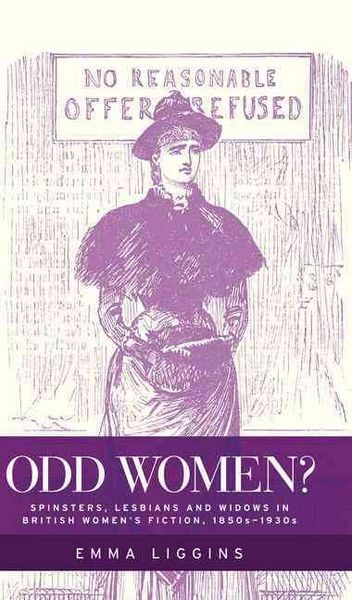
Produktbild: Odd Women?

Odd Women? Spinsters, Lesbians and Widows in British Women's Fiction, 1850s-1930s

137,99 €

inkl. gesetzl. MwSt., Versandkostenfrei


Beschreibung

Were spinsters, lesbians and widows always stigmatised or ignored in women's writing from 1850 to the Second World War? Women outside heterosexual marriage in this period were seen as abnormal, superfluous, incomplete and threatening, whilst also being hailed as 'women of the future'. Before 1850 odd...

Beschreibung

Were spinsters, lesbians and widows always stigmatised or ignored in women's writing from 1850 to the Second World War? Women outside heterosexual marriage in this period were seen as abnormal, superfluous, incomplete and threatening, whilst also being hailed as 'women of the future'. Before 1850 odd women were marginalised, minor characters, yet by the 1930s spinsters, lesbians and widows had become heroines. This book considers how Victorian and modernist women's writing challenged the heterosexual plot and reconfigured conceptualisations of public and private space in order to valorise female oddity. It offers queer readings of novels and stories by women writers, from Charlotte Brontë, Elisabeth Gaskell, Ella Hepworth Dixon, and Netta Syrett, to May Sinclair, E.H. Young, Radclyffe Hall, Clemence Dane, Winifred Holtby and Virginia Woolf. This wide-ranging interdisciplinary study tracks diverse representations of the odd woman in fiction and autobiographical accounts in relation to the rise of feminism. It illuminates singleness in the context of the suffrage campaign, women's work, sexual inversion, and birth control, as well as assessing the impact of the First World War. It draws on advice literature, medical texts, feminist polemic and articles from the new women's magazines. Developing debates within queer theory about gender nonconformity, heteronormativity and relationships between women, this genealogy of the odd woman shows how new conceptualisations of female singleness and lesbianism troubled, and ultimately transformed, social norms. It will be essential to those working on Victorianism and modernism, and appeal to readers interested in female autobiography, modernity and the family.

Produktdetails

Einband

Gebundene Ausgabe

Erscheinungsdatum

31.07.2014

Verlag Ingram Publishers Services
Seitenzahl

288

Produktdetails

Einband

Gebundene Ausgabe

Erscheinungsdatum

31.07.2014

Verlag Ingram Publishers Services
Seitenzahl

288

Maße (L/B/H)

21,6/14/2,8 cm

Gewicht

476 g

Sprache

Englisch

ISBN

978-0-7190-8756-1

Herstelleradresse

Libri GmbH
Europaallee 1
36244 Bad Hersfeld
DE

Email: gpsr@libri.de

Ein neues Kapitel für Ihre Bücher

Ein neues Kapitel für Ihre Bücher

Schenken Sie Ihren alten Schätzen ein zweites Leben und erhalten Sie dafür eine Thalia Geschenkkarte.

Jetzt verkaufen
Jetzt verkaufen

Noch keine Bewertungen vorhanden

Verfassen Sie die erste Bewertung zu diesem Artikel

Helfen Sie anderen Kundinnen und Kunden durch Ihre Meinung.

Kundinnen und Kunden meinen

Bewertungen (0)

Die Leseprobe wird geladen.
  • Produktbild: Odd Women?
  • Introduction 1. Female redundancy, widowhood and the mid-Victorian heroine 2. Bachelor girls, mistresses and the New Woman heroine 3. Spinster heroines, aunts and widowed mothers, 1910-39 4. The misfit lesbian heroine of interwar fiction 5. Professional spinsters, older women and widowed heroines in the 1930s Conclusion Index