















































KI-Beratung Beta

Gutscheinbedingungen

Gültig bis 11.11.2026 | Gültig für Spielzeug, Filme, Musik, Software, Games, Geschenke & Trends, Schreibwaren, Hörbücher und Hörbuch-Downloads (außer Abo & Shelfies), gebrauchte Bücher, nicht preisgebundene Bücher und Kalender | Einlösbar unter thalia.de und in der Thalia App | Click & Collect nur mit Online-Zahlung (Paypal/Kreditkarte) vorab | Einzelne Artikel können ausgeschlossen sein | Nicht kombinierbar mit anderen Gutscheinen oder Preisaktionen | Nur einmal pro Einkauf einlösbar | Gutschein wird auf max. 500€ Bestellwert angerechnet | Keine Barauszahlung | Digitale Hörbücher nur für Android  | Nicht gültig für preisgebundene Artikel (aufgrund der Buchpreisbindung sind Gutscheine nicht auf Bücher, eBooks, Presse einlösbar), tolino eReader & Zubehör, Abonnements & Flatrates, Geschenkkarten, Versandkosten und Services

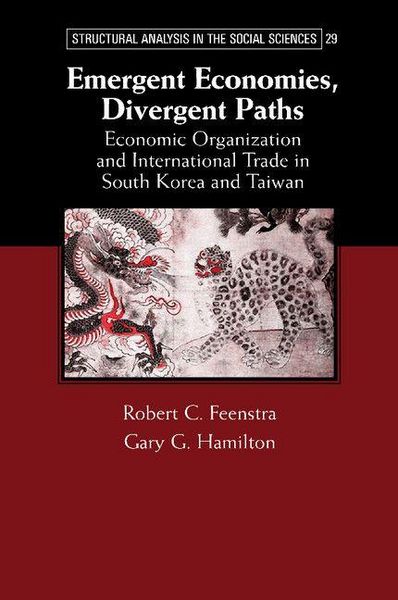
  • Produktbild: Emergent Economies, Divergent Paths
  • Produktbild: Emergent Economies, Divergent Paths

Emergent Economies, Divergent Paths Economic Organization and International Trade in South Korea and Taiwan

69,99 €

inkl. gesetzl. MwSt., Versandkostenfrei


Beschreibung

The economies of South Korea and Taiwan in the second half of the twentieth century are to scholars of economic development what the economy of Britain in the late eighteenth and early nineteeth centuries is to economic historians. This book, first published in 2006, is a collaboration between a leading...

Beschreibung

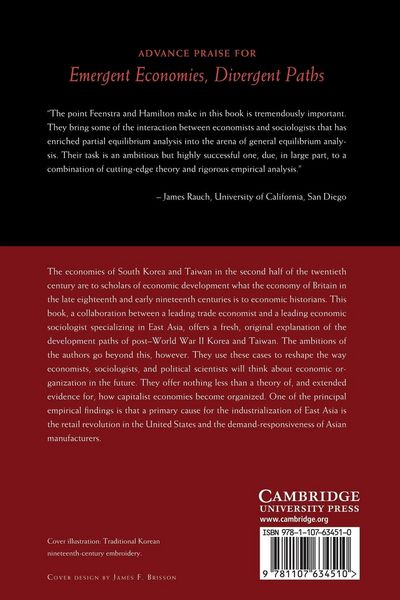
The economies of South Korea and Taiwan in the second half of the twentieth century are to scholars of economic development what the economy of Britain in the late eighteenth and early nineteeth centuries is to economic historians. This book, first published in 2006, is a collaboration between a leading trade economist and a leading economic sociologist specializing in East Asia, and offers an explanation of the development paths of post-World War II Korea and Taiwan. The ambitions of the authors go beyond this, however. They use these cases to reshape the way economists, sociologists, and political scientists will think about economic organization in the future. They offer nothing less than a theory of, and extended evidence for, how capitalist economies become organized. One of the principal empirical findings is that a primary cause for the industrialization of East Asia is the retail revolution in the United States and the demand-responsiveness of Asian manufacturers.

Produktdetails

Einband

Taschenbuch

Erscheinungsdatum

08.10.2013

Verlag Cambridge University Press
Seitenzahl

476

Produktdetails

Einband

Taschenbuch

Erscheinungsdatum

08.10.2013

Verlag Cambridge University Press
Seitenzahl

476

Maße (L/B/H)

22,9/15,2/2,5 cm

Gewicht

630 g

Sprache

Englisch

ISBN

978-1-107-63451-0

Ein neues Kapitel für Ihre Bücher

Ein neues Kapitel für Ihre Bücher

Schenken Sie Ihren alten Schätzen ein zweites Leben und erhalten Sie dafür eine Thalia Geschenkkarte.

Jetzt verkaufen
Jetzt verkaufen

Noch keine Bewertungen vorhanden

Verfassen Sie die erste Bewertung zu diesem Artikel

Helfen Sie anderen Kundinnen und Kunden durch Ihre Meinung.

Kundinnen und Kunden meinen

Bewertungen (0)

  • Produktbild: Emergent Economies, Divergent Paths
  • Produktbild: Emergent Economies, Divergent Paths
  • Acknowledgments; Introduction; Part I. Business Groups and Economic Organization: 1. The problem of economic organization; 2. Interpreting business groups in South Korea and Taiwan; 3. A model of business groups: the interaction of authority and market power in the context of competitive economic activity; 4. Economic organization in South Korea and Taiwan: a first test of the model; Part II. Emergence and Divergence of the Economies: 5. The origins of capitalist economic organization; 6. The rise of intermediary demand: a reassessment of the 'Asian miracle'; 7. Global matching, demand responsiveness, and the emergence of divergent economies; 8. Trade performance of South Korea and Taiwan: a second test of the model; Conclusions; Appendix A. Mathematical model of business groups; Appendix B. Examples of differential pricing practices of Korean groups; Appendix C. Hypothesis tests of the model; Appendix D. The role of debt in the Korean financial crisis, 1997; References; Index.