















































KI-Beratung Beta

Gutscheinbedingungen

Gültig bis 30.11.2026 | Gültig für nicht preisgebundene fremdsprachige Bücher | Einzelne Artikel können ausgeschlossen sein | Online auf thalia.de und in der Thalia App einlösbar | Click & Collect nur mit Online-Zahlung (Paypal/Kreditkarte) vorab | Nicht kombinierbar mit anderen Gutscheinen oder Preisaktionen | Nur einmal pro Einkauf einlösbar | Gutschein wird auf max. 500€ Bestellwert angerechnet | Keine Barauszahlung | Nicht gültig für Versandkosten und Services

Produktbild: Burned Bridge

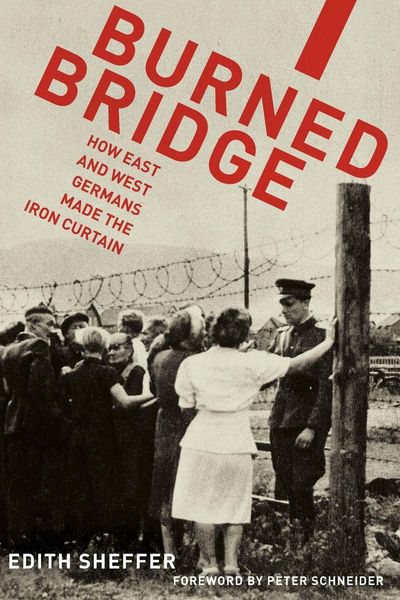
Burned Bridge How East and West Germans Made the Iron Curtain

71,82 €

inkl. gesetzl. MwSt., Versandkostenfrei


Beschreibung

The building of the Berlin Wall in 1961 shocked the world. Ever since, the image of this impenetrable barrier between East and West, imposed by communism, has been a central symbol of the Cold War. Based on vast research in untapped archival, oral, and private sources, Burned Bridge reveals the hidden...

Beschreibung

The building of the Berlin Wall in 1961 shocked the world. Ever since, the image of this impenetrable barrier between East and West, imposed by communism, has been a central symbol of the Cold War.
Based on vast research in untapped archival, oral, and private sources, Burned Bridge reveals the hidden origins of the Iron Curtain, presenting it in a startling new light. Historian Edith Sheffer's unprecedented, in-depth account focuses on Burned Bridge-the intersection between two sister cities, Sonneberg and Neustadt bei Coburg, Germany's largest divided population outside Berlin. Sheffer demonstrates that as Soviet and American forces occupied each city after the Second World
War, townspeople who historically had much in common quickly formed opposing interests and identities. The border walled off irreconcilable realities: the differences of freedom and captivity, rich and poor, peace and bloodshed, and past and present. Sheffer describes how smuggling, kidnapping, rape, and killing
in the early postwar years led citizens to demand greater border control on both sides-long before East Germany fortified its 1,393 kilometer border with West Germany. It was in fact the American military that built the first barriers at Burned Bridge, which preceded East Germany's borderland crackdown by many years. Indeed, Sheffer shows that the physical border between East and West was not simply imposed by Cold War superpowers, but was in some part an improvised outgrowth of an anxious
postwar society.
Ultimately, a wall of the mind shaped the wall on the ground. East and West Germans became part of, and helped perpetuate, the barriers that divided them. From the end of World War II through two decades of reunification, Sheffer traces divisions at Burned Bridge with sharp insight and compassion, presenting a stunning portrait of the Cold War on a human scale.

Rezension

A vast amount of research. Military History Monthly

Produktdetails

Einband

Taschenbuch

Erscheinungsdatum

01.02.2014

Abbildungen

34 halftones

Verlag KNV Besorgung

Produktdetails

Einband

Taschenbuch

Erscheinungsdatum

01.02.2014

Abbildungen

34 halftones

Verlag KNV Besorgung
Seitenzahl

380

Maße (L/B/H)

23,4/15,6/2,2 cm

Gewicht

646 g

Sprache

Englisch

ISBN

978-0-19-931461-4

Herstelleradresse

Libri GmbH
Europaallee 1
36244 Bad Hersfeld
DE

Email: gpsr@libri.de

Ein neues Kapitel für Ihre Bücher

Ein neues Kapitel für Ihre Bücher

Schenken Sie Ihren alten Schätzen ein zweites Leben und erhalten Sie dafür eine Thalia Geschenkkarte.

Jetzt verkaufen
Jetzt verkaufen

Noch keine Bewertungen vorhanden

Verfassen Sie die erste Bewertung zu diesem Artikel

Helfen Sie anderen Kundinnen und Kunden durch Ihre Meinung.

Kundinnen und Kunden meinen

Bewertungen (0)

  • Produktbild: Burned Bridge
    • Foreword by Peter Schneider
    • Introduction
    • Part One: Demarcation Line, 1945-1952
    • 1. Foundations: Burned Bridge
    • 2. Insecurity: Border Mayhem
    • 3. Inequality: Economic Divides
    • 4. Kickoff: Political Skirmishing
    • Part Two: "Living Wall," 1952-1961
    • 5. Shock: Border Closure and Deportation
    • 6. Shift: Everyday Boundaries
    • 7. Surveillance: Individual Controls
    • Part Three: Iron Curtain, 1961-1989
    • 8. Home: Life in the Prohibited Zone
    • 9. Fault Line: Life in the Fortifications
    • 10. Disconnect: East-West Relations
    • Epilogue: New Divides
    • Notes
    • Bibliography
    • Appendices