















































KI-Beratung Beta

Gutscheinbedingungen

Gültig bis 11.11.2026 | Gültig für Spielzeug, Filme, Musik, Software, Games, Geschenke & Trends, Schreibwaren, Hörbücher und Hörbuch-Downloads (außer Abo & Shelfies), gebrauchte Bücher, nicht preisgebundene Bücher und Kalender | Einlösbar unter thalia.de und in der Thalia App | Click & Collect nur mit Online-Zahlung (Paypal/Kreditkarte) vorab | Einzelne Artikel können ausgeschlossen sein | Nicht kombinierbar mit anderen Gutscheinen oder Preisaktionen | Nur einmal pro Einkauf einlösbar | Gutschein wird auf max. 500€ Bestellwert angerechnet | Keine Barauszahlung | Digitale Hörbücher nur für Android  | Nicht gültig für preisgebundene Artikel (aufgrund der Buchpreisbindung sind Gutscheine nicht auf Bücher, eBooks, Presse einlösbar), tolino eReader & Zubehör, Abonnements & Flatrates, Geschenkkarten, Versandkosten und Services

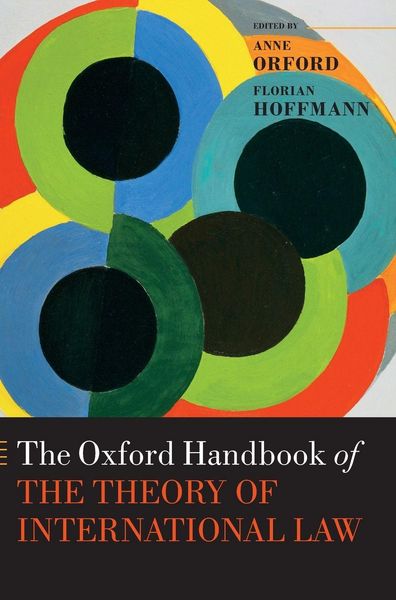
Produktbild: Oxford Handbook of the Theory of International Law

Oxford Handbook of the Theory of International Law

282,99 €

inkl. gesetzl. MwSt., Versandkostenfrei


Beschreibung

The Oxford Handbook of International Legal Theory provides an accessible and authoritative guide to the major thinkers, concepts, approaches, and debates that have shaped contemporary international legal theory. The Handbook features 48 original essays by leading international scholars from a wide range...

Beschreibung

The Oxford Handbook of International Legal Theory provides an accessible and authoritative guide to the major thinkers, concepts, approaches, and debates that have shaped contemporary international legal theory. The Handbook features 48 original essays by leading international scholars from a wide range of traditions, nationalities, and perspectives, reflecting the richness and diversity of this dynamic field.
The collection explores key questions and debates in international legal theory, offers new intellectual histories for the discipline, and provides fresh interpretations of significant historical figures, texts, and theoretical approaches. It provides a much-needed map of the field of international legal theory, and a guide to the main themes and debates that have driven theoretical work in international law. The Handbook will be an indispensable reference work for students, scholars, and practitioners seeking to gain an overview of current theoretical debates about the nature, function, foundations, and future role of international law.

Rezension

a must-have for everyone ready to go beyond the mere application of the law. ... the Oxford Handbook's chapters certainly provide a valuable reading experience. Ralph Janik, Austrian Review of International and European Law

Produktdetails

Einband

Gebundene Ausgabe

Erscheinungsdatum

01.08.2016

Herausgeber Orford Anne + weitere
Verlag Oxford University Press

Produktdetails

Einband

Gebundene Ausgabe

Erscheinungsdatum

01.08.2016

Herausgeber
Verlag Oxford University Press
Seitenzahl

1088

Maße (L/B/H)

25/17,5/6,2 cm

Gewicht

2013 g

Sprache

Englisch

ISBN

978-0-19-870195-8

Herstelleradresse

Libri GmbH
Europaallee 1
36244 Bad Hersfeld
DE

Email: gpsr@libri.de

Ein neues Kapitel für Ihre Bücher

Ein neues Kapitel für Ihre Bücher

Schenken Sie Ihren alten Schätzen ein zweites Leben und erhalten Sie dafür eine Thalia Geschenkkarte.

Jetzt verkaufen
Jetzt verkaufen

Noch keine Bewertungen vorhanden

Verfassen Sie die erste Bewertung zu diesem Artikel

Helfen Sie anderen Kundinnen und Kunden durch Ihre Meinung.

Kundinnen und Kunden meinen

Bewertungen (0)

Die Leseprobe wird geladen.
  • Produktbild: Oxford Handbook of the Theory of International Law

    • Introduction


    • Theorizing International Law


    • Part I: Histories


    • 1: Matthew Craven: Theorizing the Turn to History in International Law


    • 2: Randall Lesaffer: Roman Law and the Intellectual History of International Law


    • 3: Martti Koskenniemi: Transformations of Natural Law: Germany 1648-1815


    • 4: Martine Julia Van Ittersum: Hugo Grotius: The Making of a Founding Father of International Law


    • 5: Emmanuelle Tourme-Jouannet: The Critique Of Classical Thought During the Interwar Period: Vattel And Van Vollenhoven


    • 6: Umut Özsu: The Ottoman Empire, the Origins of Extraterritoriality, and International Legal Theory


    • 7: Teemu Ruskola: China in the Age of the World Picture


    • 8: Antony Anghie: Imperialism And International Legal Theory


    • 9: Mónica García-Salmones: Early Twentieth Century Positivism Revisited


    • 10: Jochen von Bersnstorff: Hans Kelsen and the Return of Universalism


    • 11: Robert Howse: Schmitt, Schmitteanism and contemporary International Legal Theory


    • 12: Deborah Whitehall: Hannah Arendt and International Legal Theory


    • 13: Lauri Mälksoo: International Legal Theory in Russia: A Civilizational Perspective, or can Individuals be Subjects of International Law?


    • Part II: Approaches


    • 14: Geoff Gordon: Natural Law in International Legal Theory: Linear and Dialectical Presentations


    • 15: Robert Knox: Marxist Approaches to International Law


    • 16: Oliver Jütersonke: Realist Approaches to International Law


    • 17: Oliver Kessler: Constructivism and the Politics of International Law


    • 18: Peter Goodrich: The International Signs Law


    • 19: Samantha Besson: Moral Philosophy and International Law


    • 20: Jörg Kammerhofer: International Legal Positivism


    • 21: Hengameh Saberi: Yale's Policy Science and International Law: Between Legal Formalism and the Policy Conceptualism


    • 22: Dan Danielsen: International Law and Economics: Letting Go of 'The Normal' in Pursuit of an Ever-Elusive Real


    • 23: Daniel Joyce: Liberal Internationalism


    • 24: Dianne Otto: Feminist Approaches to International Law


    • 25: Wouter Werner and Geoff Gordon: Kant, Cosmopolitanism, and International Law


    • 26: Benedict Kingsbury, Megan Donaldson And Rodrigo Vallejo: Global Administrative Law And Deliberative Democracy


    • Part III: Regimes and Doctrines


    • 27: Jean d'Aspremont: Towards a New Theory of Sources in International Law


    • 28: Gerry Simpson: Something to do With States


    • 29: Rose Parfitt: Theorizing Recognition and International Personality


    • 30: Gregor Noll: Theorizing Jurisdiction


    • 31: Jan Klabbers: Theorizing International Organizations


    • 32: Fleur Johns: Theorizing The Corporation In International Law


    • 33: Dino Kritsiotis: Theorizing International Law on force and intervention


    • 34: Ben Golder: Theorizing Human Rights


    • 35: Anne Orford: Theorizing Free Trade


    • 36: Sarah Nouwen: International Criminal Law: Theory All Over The Place


    • 37: Frédéric Mégret: Theorizing The Laws of War


    • 38: Vasuki Nesiah: Theorizing Transitional Justice: Cashing in the Blue Chips


    • 39: Stephen Humphreys and Yoriko Otomo,: Theorizing International Environmental Law


    • 40: Kerry Rittich: Theorizing International Law and Development


    • 41: Outi Korhonen and Toni Selkälä: Theorizing Responsibility


    • 42: Horatia Muir Watt: Theorizing Private International Law


    • 43: Chantal Thomas: Transnational Migration, Globalization, and Governance: Theorizing a Crisis


    • Part IV: Debates


    • 44: Reut Paz: Religion, Secularism, and International Law


    • 45: Thomas Skouterist: The Idea of Progress


    • 46: Florian Hoffmann: International Legalism and International Politics


    • 47: Jason Beckett: Creating Poverty


    • 48: Anne Peters: Fragmentation and Constitutionalization