















































KI-Beratung Beta

Gutscheinbedingungen

Gültig bis 30.11.2026 | Gültig für nicht preisgebundene fremdsprachige Bücher | Einzelne Artikel können ausgeschlossen sein | Online auf thalia.de und in der Thalia App einlösbar | Click & Collect nur mit Online-Zahlung (Paypal/Kreditkarte) vorab | Nicht kombinierbar mit anderen Gutscheinen oder Preisaktionen | Nur einmal pro Einkauf einlösbar | Gutschein wird auf max. 500€ Bestellwert angerechnet | Keine Barauszahlung | Nicht gültig für Versandkosten und Services

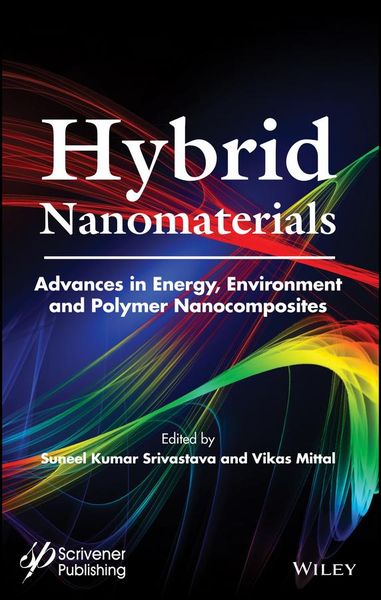
Produktbild: Hybrid Nanomaterials

Hybrid Nanomaterials Advances in Energy, Environment, and Polymer Nanocomposites

279,99 €

inkl. gesetzl. MwSt., Versandkostenfrei


Beschreibung

A hybrid material is defined as a material composed of an intimate mixture of inorganic components, organic components, or both types of components. In the last few years, a tremendous amount of attention has been given towards the development of materials for efficient energy harvesting; nanostructured...

Beschreibung

A hybrid material is defined as a material composed of an intimate mixture of inorganic components, organic components, or both types of components. In the last few years, a tremendous amount of attention has been given towards the development of materials for efficient energy harvesting; nanostructured hybrid materials have also been gaining significant advances to provide pollutant free drinking water, sensing of environmental pollutants, energy storage and conservation. Separately, intensive work on high performing polymer nanocomposites for applications in the automotive, aerospace and construction industries has been carried out, but the aggregation of many fillers, such as clay, LDH, CNT, graphene, represented a major barrier in their development. Only very recently has this problem been overcome by fabrication and applications of 3D hybrid nanomaterials as nanofillers in a variety of polymers.
 
This book, Hybrid Nanomaterials, examines all the recent developments in the research and specially covers the following subjects:
* Hybrid nanostructured materials for development of advanced lithium batteries
* High performing hybrid nanomaterials for supercapacitor applications
* Nanohybrid materials in the development of solar energy applications
* Application of hybrid nanomaterials in water purification
* Advanced nanostructured materials in electromagnetic shielding of radiations
* Preparation, properties and application of hybrid nanomaterials in sensing of environmental pollutants
* Development of hybrid fillers/polymer nanocomposites for electronic applications
* High performance hybrid filler reinforced epoxy nanocomposites
* State-of-the-art overview of elastomer/hybrid filler nanocomposites

Produktdetails

Einband

Gebundene Ausgabe

Erscheinungsdatum

19.06.2017

Herausgeber Suneel Kumar Srivastava + weitere
Verlag John Wiley & Sons Inc

Produktdetails

Einband

Gebundene Ausgabe

Erscheinungsdatum

19.06.2017

Herausgeber
Verlag John Wiley & Sons Inc
Seitenzahl

528

Maße (L/B/H)

23,1/15,5/3 cm

Gewicht

839 g

Auflage

1. Auflage

Sprache

Englisch

ISBN

978-1-119-16034-2

Herstelleradresse

Libri GmbH
Europaallee 1
36244 Bad Hersfeld
DE

Email: gpsr@libri.de

Ein neues Kapitel für Ihre Bücher

Ein neues Kapitel für Ihre Bücher

Schenken Sie Ihren alten Schätzen ein zweites Leben und erhalten Sie dafür eine Thalia Geschenkkarte.

Jetzt verkaufen
Jetzt verkaufen

Noch keine Bewertungen vorhanden

Verfassen Sie die erste Bewertung zu diesem Artikel

Helfen Sie anderen Kundinnen und Kunden durch Ihre Meinung.

Kundinnen und Kunden meinen

Bewertungen (0)

Die Leseprobe wird geladen.
  • Produktbild: Hybrid Nanomaterials
  • Preface xiii
     
    1 Hybrid Nanostructured Materials for Advanced Lithium Batteries 1
    Soumyadip Choudhury and Manfred Stamm
     
    1.1 Introduction 1
     
    1.2 Battery Requirements 4
     
    1.3 Survey of Rechargeable Batteries 7
     
    1.4 Advanced Materials for Electrodes 9
     
    1.5 Future Battery Strategies 38
     
    1.6 Limitations of Existing Strategies 59
     
    1.7 Conclusions 62
     
    Acknowledgments 63
     
    References 63
     
    2 High Performing Hybrid Nanomaterials for Supercapacitor Applications 79
    Sanjit Saha, Milan Jana and Tapas Kuila
     
    2.1 Introduction 80
     
    2.2 Scope of the Chapter 82
     
    2.3 Characterization of Hybrid Nanomaterials 82
     
    2.4 Hybrid Nanomaterials as Electrodes for Supercapacitor 91
     
    2.5 Applications of Supercapacitor 130
     
    2.6 Conclusions 134
     
    References 135
     
    3 Nanohybrid Materials in the Development of Solar Energy Applications 147
    Poulomi Roy
     
    3.1 Introduction 147
     
    3.2 Significance of Nanohybrid Materials 148
     
    3.3 Synthetic Strategies 162
     
    3.4 Application in Solar Energy Conversion 167
     
    3.5 Summary 175
     
    References 176
     
    4 Hybrid Nanoadsorbents for Drinking Water Treatment: A Critical Review 199
    Ashok K. Gupta, Partha S. Ghosal and Brajesh K. Dubey
     
    4.1 Introduction 199
     
    4.2 Status and Health Effects of Different Pollutants 201
     
    4.3 Removal Technologies 203
     
    4.4 Hybrid Nanoadsorbent 208
     
    4.5 Issues and Challenges 217
     
    4.6 Conclusions 224
     
    References 225
     
    5 Advanced Nanostructured Materials in Electromagnetic Interference Shielding 241
    Suneel Kumar Srivastava and Vikas Mittal
     
    5.1 Introduction 241
     
    5.2 Theoretical Aspect of EMI Shielding 243
     
    5.3 Experimental Methods in Measuring Shielding Effectiveness 247
     
    5.4 Carbon Allotrope-Based Polymer Nanocomposites 248
     
    Fillers-Based Polymer Nanocomposites 265
     
    5.5 Intrinsically Conducting Polymer (ICP) Derived Nanocomposites 276
     
    5.6 Summary 300
     
    6 Preparation, Properties and the Application of Hybrid Nanomaterials in Sensing Environmental Pollutants 321
    R. Ajay Rakkesh, D. Durgalakshmi and S. Balakumar
     
    6.1 Introduction 321
     
    6.2 Hybrid Nanomaterials: Smart Material for Sensing Environmental Pollutants 323
     
    6.3 Synthesis Methods of Hybrid Nanomaterials 326
     
    6.4 Basic Mechanism of Gas Sensors Using Hybrid Nanomaterials 330
     
    6.5 Hybrid Nanomaterials-Based Conductometric Gas Sensors for Environmental Monitoring 331
     
    6.6 Conclusion 342
     
    References 342
     
    7 Development of Hybrid Fillers/Polymer Nanocomposites for Electronic Applications 349
    Mariatti Jaafar
     
    7.1 Introduction 350
     
    7.2 Factors Influencing the Properties of Filler/Polymer Composite 353
     
    7.3 Hybridization of Fillers in Polymer Composites 355
     
    7.4 Hybrid Fillers in Polymer Nanocomposites 358
     
    7.5 Fabrication Methods of Hybrid Fillers/Polymer Composites 362
     
    7.6 Applications of Hybrid Fillers/Polymer Composites 365
     
    References 366
     
    8 High Performance Hybrid Filler Reinforced Epoxy Nanocomposites 371
    Suman Chhetri, Tapas Kuila and Suneel Kumar Srivastava
     
    8.1 Introduction 372
     
    8.2 Reinforcing Fillers 373
     
    8.3 Necessity of Hybrid Filler Systems 376
     
    8.4 Epoxy Resin 379
     
    8.5 Preparation of Hybrid Filler/Epoxy Nanocomposites 380
     
    8.6 Characterization of Hybrid Filler/Epoxy Polymer Composites 381
     
    8.7 Properties of the Hybrid Filler/Epoxy Nanocomposites 383
     
    8.8 Summary a