















































KI-Beratung Beta

Gutscheinbedingungen

Gültig bis 11.11.2026 | Gültig für Spielzeug, Filme, Musik, Software, Games, Geschenke & Trends, Schreibwaren, Hörbücher und Hörbuch-Downloads (außer Abo & Shelfies), gebrauchte Bücher, nicht preisgebundene Bücher und Kalender | Einlösbar unter thalia.de und in der Thalia App | Click & Collect nur mit Online-Zahlung (Paypal/Kreditkarte) vorab | Einzelne Artikel können ausgeschlossen sein | Nicht kombinierbar mit anderen Gutscheinen oder Preisaktionen | Nur einmal pro Einkauf einlösbar | Gutschein wird auf max. 500€ Bestellwert angerechnet | Keine Barauszahlung | Digitale Hörbücher nur für Android  | Nicht gültig für preisgebundene Artikel (aufgrund der Buchpreisbindung sind Gutscheine nicht auf Bücher, eBooks, Presse einlösbar), tolino eReader & Zubehör, Abonnements & Flatrates, Geschenkkarten, Versandkosten und Services

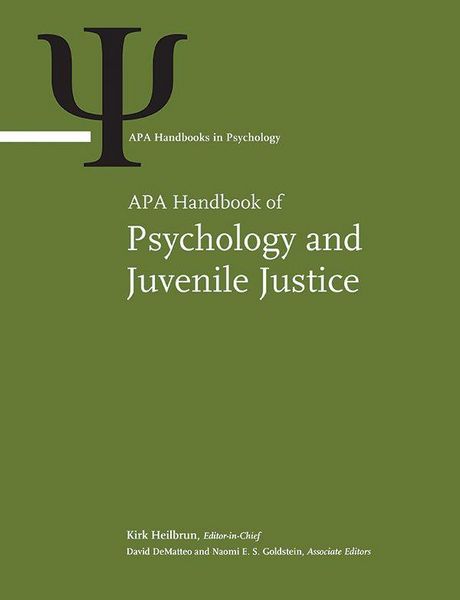
Produktbild: APA Handbook of Psychology and Juvenile Justice

APA Handbook of Psychology and Juvenile Justice

237,99 €

inkl. gesetzl. MwSt., Versandkostenfrei


Beschreibung

Produktdetails

Einband

Gebundene Ausgabe

Erscheinungsdatum

17.08.2015

Herausgeber

Kirk Heilbrun + weitere

Verlag

American Psychological Association

Seitenzahl

735

Maße (L/B/H)

28,7/22,1/4,3 cm

Gewicht

1905 g

Sprache

Englisch

ISBN

978-1-4338-1967-4

Beschreibung

Produktdetails

Einband

Gebundene Ausgabe

Erscheinungsdatum

17.08.2015

Herausgeber

Verlag

American Psychological Association

Seitenzahl

735

Maße (L/B/H)

28,7/22,1/4,3 cm

Gewicht

1905 g

Sprache

Englisch

ISBN

978-1-4338-1967-4

Herstelleradresse

Libri GmbH
Europaallee 1
36244 Bad Hersfeld
DE

Email: gpsr@libri.de

Ein neues Kapitel für Ihre Bücher

Ein neues Kapitel für Ihre Bücher

Schenken Sie Ihren alten Schätzen ein zweites Leben und erhalten Sie dafür eine Thalia Geschenkkarte.

Jetzt verkaufen
Jetzt verkaufen

Noch keine Bewertungen vorhanden

Verfassen Sie die erste Bewertung zu diesem Artikel

Helfen Sie anderen Kundinnen und Kunden durch Ihre Meinung.

Kundinnen und Kunden meinen

Bewertungen (0)

  • Produktbild: APA Handbook of Psychology and Juvenile Justice
  • Editorial Board

    About the Editor-in-Chief

    Contributors

    Series Preface

    Introduction

    I. Overview

    1. Psychology and Juvenile Justice: Human Development, Law, Science, and Practice
      Kirk Heilbrun, David DeMatteo, Naomi E. S. Goldstein, Benjamin Locklair, Megan Murphy, and Christy Giallella

    II. Law

    1. Children in the Justice System: The Legal Framework
      Marsha Levick and Jessica Feierman
    2. Preventive Justice for Adolescents
      Christopher Slobogin

    III. Human Development

    1. Human Development and Juvenile Justice
      Elizabeth P. Shulman and Laurence Steinberg
    2. Adolescent Brain Development: Implications to the Juvenile Criminal Justice System
      Beatriz Luna and Catherine Wright
    3. Adolescent Development, Mental Disorder, and Decision-Making in Delinquent Youths
      Alison G. Nagel, Lucy A. Guarnera, and N. Dickon Reppucci

    IV. Patterns of Offending

    1. Serious Questions About Serious Juvenile Offenders: Patterns of Offending and Offenses
      Jennifer L. Woolard and Erika Fountain
    2. Desistance and Life-Course Persistence: Findings From Longitudinal Studies Using Group-Based Trajectory Modeling of Antisocial Behavior
      Michael A. Russell and Candice L. Odgers

    V. Risk Factors for Offending

    1. Risk, Need, and Responsivity in Juveniles
      Robert D. Hoge
    2. Juvenile Psychopathy: Appropriate and Inappropriate Uses in Legal Proceedings
      Gina M. Vincent, Eva R. Kimonis, and Alisa Clark
    3. School-Based Risk Factors, Bullying, and Threat Assessment
      Dewey Cornell and Anna Heilbrun
    4. Disrupting the School-to-Prison Pipeline: Strategies to Reduce the Risk of School-Based Zero Tolerance Policies Resulting in Juvenile Justice Involvement
      Brian P. Daly, Aimee K. Hildenbrand, Emily Haney-Caron, Naomi E. S. Goldstein, Meghann Galloway, and David DeMatteo
    5. Substance Use and Substance Use Disorders as Risk Factors for Juvenile Offending
      Laurie Chassin, Andre D. Mansion, Brandon Nichter, and Danielle Pandika
    6. Gangs
      Wesley G. Jennings and Jennifer M. Reingle Gonzalez
    7. Trauma, Adverse Experience, and Offending
      Amanda D. Zelechoski

    VI. Forensic Assessment

    1. Forensic Assessment of Juveniles
      Kirk Heilbrun and Benjamin Locklair
    2. Risk Assessment With Juveniles
      David DeMatteo, Melinda Wolbransky, and Casey LaDuke
    3. Distinguishing and Assessing Treatment Needs and Amenability to Rehabilitation
      Robert T. Kinscherff
    4. Developmental Maturity and Sophistication amp ndash Maturity: Learning More About Its Purpose and Assessment
      Randall T. Salekin, Emily A. M. MacDougall, and Natalie A. Harrison
    5. Forensic Uses of Clinical Assessment Instruments
      Robert P. Archer and Linda J. Baum
    6. Transfer and Commitment of Youth in the United States: Law, Policy, and Forensic Practice
      Kimberly Larson and Thomas Grisso
    7. Evaluation of Miranda Waiver Capacity
      Naomi E. S. Goldstein, Sharon Messenheimer Kelley, Lindsey Peterson, Leah Brogan, Heather Zelle, and Christina Riggs Romaine
    8. Evaluation and Restoration of Competency to Stand Trial
      Janet I. Warren, Shelly L. Jackson, and Jessica Jones Coburn

    VII. Interventions and Costs

    1. Risk Reduction Interventions for Adolescent Offenders
      Jodi L. Viljoen, Etta Brodersen, Catherine Shaffer, and Robert J. McMahon
    2. Trauma-Informed Juvenile Justice Systems and Approaches
      Jessica Feierman and Julian D. Ford
    3. Community-Based Interventions for Juvenile Offenders
      Scott W. Henggeler
    4. Intervening in the Community to Treat Trauma in Young Men of Color
      John Rich, Erica J. Harris, Sandra L. Bloom, Linda Rich, and Theodore Corbin
    5. Residential Interventions With Justice-Involved Youth
      Keith R. Cruise, Samantha L. Morin, and Katelyn Affleck
    6. Sexual Offending: Assessment and Intervention
      Robert A. Prentky, Sue Righthand, and Raina Lamade

    VIII. Training and Ethics

    1. Training Mental Health and Juvenile Justice Professionals in Juvenile Screening, Assessment, and Evaluation
      Lourdes M. Rosado and Mary Ann Scali
    2. Ethical Issues in Psychology and Juvenile Justice
      Gerald P. Koocher and Robert T. Kinscherff

    Index