















































KI-Beratung Beta

Gutscheinbedingungen

Gültig bis 30.11.2026 | Gültig für nicht preisgebundene fremdsprachige Bücher | Einzelne Artikel können ausgeschlossen sein | Online auf thalia.de und in der Thalia App einlösbar | Click & Collect nur mit Online-Zahlung (Paypal/Kreditkarte) vorab | Nicht kombinierbar mit anderen Gutscheinen oder Preisaktionen | Nur einmal pro Einkauf einlösbar | Gutschein wird auf max. 500€ Bestellwert angerechnet | Keine Barauszahlung | Nicht gültig für Versandkosten und Services

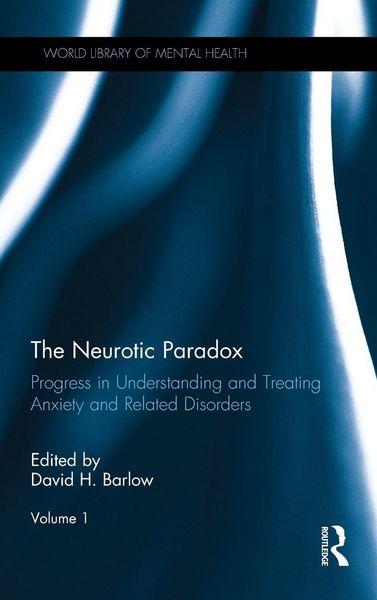
Produktbild: The Neurotic Paradox, Volume 1

The Neurotic Paradox, Volume 1 Progress in Understanding and Treating Anxiety and Related Disorders

256,99 €

inkl. gesetzl. MwSt., Versandkostenfrei


Beschreibung

This collection of David H. Barlow's key papers are a testimony to the collaborative research that he engendered and directed with associates who now stand with him at the forefront of experimental psychopathology research and in the treatment of anxiety and related disorders. His research on the nature...

Beschreibung

This collection of David H. Barlow's key papers are a testimony to the collaborative research that he engendered and directed with associates who now stand with him at the forefront of experimental psychopathology research and in the treatment of anxiety and related disorders. His research on the nature of anxiety and mood disorders resulted in new conceptualizations of etiology and classification. This research led new treatments for anxiety and related emotional disorders, most notably a new transdiagnostic psychological approach that has been positively evaluated and widely accepted. Clinical psychology will benefit from this collection of papers with connecting commentary.

Rezension

What a wonderful overview of a program of research that carries with it much of the history of behavior therapy together with the development of an outstanding career. This volume makes for interesting reading for anyone at any level with an interest in clinical psychology and the development of behavior therapy. Moreover, there is a wide range of subject matter and of older papers that still merit reading.-W. Stewart Agras, M.D., Professor of Psychiatry Emeritus, Stanford University

Assembled in one place, here, is a collection of papers by Barlow and colleagues outlining the next paradigm in the psychological science of anxiety disorders. The Neurotic Paradox reflects one important way out of the proliferation of treatment manuals that plagues the dissemination of evidence based practice in clinical psychology. The impact of this work will be as profound as it will be broad based.-Terry M. Keane, PhD, Professor of Psychiatry & Psychology, Boston University School of Medicine

Produktdetails

Einband

Gebundene Ausgabe

Erscheinungsdatum

21.01.2016

Abbildungen

33 Tabellen

Herausgeber David H. Barlow

Produktdetails

Einband

Gebundene Ausgabe

Erscheinungsdatum

21.01.2016

Abbildungen

33 Tabellen

Herausgeber David H. Barlow
Verlag Taylor & Francis
Seitenzahl

218

Maße (L/B/H)

23,5/15,7/1,6 cm

Gewicht

425 g

Sprache

Englisch

ISBN

978-1-138-85079-8

Herstelleradresse

Libri GmbH
Europaallee 1
36244 Bad Hersfeld
DE

Email: gpsr@libri.de

Ein neues Kapitel für Ihre Bücher

Ein neues Kapitel für Ihre Bücher

Schenken Sie Ihren alten Schätzen ein zweites Leben und erhalten Sie dafür eine Thalia Geschenkkarte.

Jetzt verkaufen
Jetzt verkaufen

Noch keine Bewertungen vorhanden

Verfassen Sie die erste Bewertung zu diesem Artikel

Helfen Sie anderen Kundinnen und Kunden durch Ihre Meinung.

Kundinnen und Kunden meinen

Bewertungen (0)

Die Leseprobe wird geladen.
  • Produktbild: The Neurotic Paradox, Volume 1
  • I: Methodology 1. Introduction 2.Behavior therapy: The next decade 3. Why can't we be more idiographic in our
    research? II: Treatment of Anxiety and Related Disorders 4.Social reinforcement in the modification of agoraphobia 5. Behavioral approaches to anxiety disorders: A report on the NIMH-SUNY, Albany, research conference 6. Behavioral conception and treatment of panic. 7.The process of fear and anxiety reduction: Affective therapy. 8. A comparison of alprazolam and behavior therapy in treatment of panic disorder. 9.The development of an anxiety research clinic. 10. Cognitive-behavioral therapy, imipramine, or their combination for panic disorder: A randomized controlled trial. 11.Toward a unified treatment for emotional disorders III: Nature, Diagnosis and Etiology of Anxiety and Related Disorders 12. The phenomenon of panic 13. Causes of sexual dysfunction: The role of anxiety and cognitive interference