















































KI-Beratung Beta

Gutscheinbedingungen

Gültig bis 30.11.2026 | Gültig für nicht preisgebundene fremdsprachige Bücher | Einzelne Artikel können ausgeschlossen sein | Online auf thalia.de und in der Thalia App einlösbar | Click & Collect nur mit Online-Zahlung (Paypal/Kreditkarte) vorab | Nicht kombinierbar mit anderen Gutscheinen oder Preisaktionen | Nur einmal pro Einkauf einlösbar | Gutschein wird auf max. 500€ Bestellwert angerechnet | Keine Barauszahlung | Nicht gültig für Versandkosten und Services

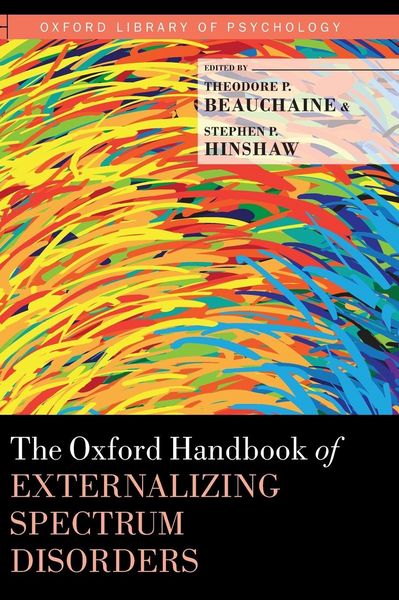
Produktbild: Oxford Handbook of Externalizing Spectrum Disorders

Oxford Handbook of Externalizing Spectrum Disorders

235,99 €

inkl. gesetzl. MwSt., Versandkostenfrei


Beschreibung

Recent developments in the conceptualization of externalizing spectrum disorders, including attention-deficit/hyperactivity disorder, conduct disorder, antisocial personality disorder, and substance use disorders, suggest common genetic and neural substrates. Despite this, neither shared vulnerabilities...

Beschreibung

Recent developments in the conceptualization of externalizing spectrum disorders, including attention-deficit/hyperactivity disorder, conduct disorder, antisocial personality disorder, and substance use disorders, suggest common genetic and neural substrates. Despite this, neither shared vulnerabilities nor their implications for developmental models of externalizing conduct are captured by prevailing nosologic and diagnostic systems, such as the DSM-5.
The Oxford Handbook of Externalizing Spectrum Disorders is the first book of its kind to capture the developmental psychopathology of externalizing spectrum disorders by examining causal factors across levels of analysis and developmental epochs, while departing from the categorical perspective. World renowned experts on externalizing psychopathology demonstrate how shared genetic and neural vulnerabilities predispose to trait impulsivity, a highly heritable personality construct that
is often shaped by adverse environments into increasingly intractable forms of externalizing conduct across development. Consistent with contemporary models of almost all forms of psychopathology, the Handbook emphasizes the importance of neurobiological vulnerability and environmental risk interactions in
the expression of externalizing behavior across the lifespan. The volume concludes with an integrative, ontogenic process model of externalizing psychopathology in which diverse equifinal and multifinal pathways to disorder are specified.

Produktdetails

Einband

Gebundene Ausgabe

Erscheinungsdatum

01.10.2015

Herausgeber Stephen P. Hinshaw + weitere
Verlag Oxford University Press

Produktdetails

Einband

Gebundene Ausgabe

Erscheinungsdatum

01.10.2015

Herausgeber
Verlag Oxford University Press
Seitenzahl

542

Maße (L/B/H)

26/18,3/3,3 cm

Gewicht

1202 g

Sprache

Englisch

ISBN

978-0-19-932467-5

Herstelleradresse

Libri GmbH
Europaallee 1
36244 Bad Hersfeld
DE

Email: gpsr@libri.de

Ein neues Kapitel für Ihre Bücher

Ein neues Kapitel für Ihre Bücher

Schenken Sie Ihren alten Schätzen ein zweites Leben und erhalten Sie dafür eine Thalia Geschenkkarte.

Jetzt verkaufen
Jetzt verkaufen

Noch keine Bewertungen vorhanden

Verfassen Sie die erste Bewertung zu diesem Artikel

Helfen Sie anderen Kundinnen und Kunden durch Ihre Meinung.

Kundinnen und Kunden meinen

Bewertungen (0)

  • Produktbild: Oxford Handbook of Externalizing Spectrum Disorders

    • Part 1: Models of Externalizing Behavior


    • 1. Overview of DSM Disruptive Behavior Disorders


    • Deborah Drabick, Elizabeth Steinberg, and Ashley Hampton


    • 2. Attention-Deficit/Hyperactivity Disorder: Similarities to and Differences from other Externalizing Disorders


    • Shaikh I. Ahmad and Stephen P. Hinshaw


    • 3. Substance Use Disorders as Externalizing Outcomes


    • Christopher J. Patrick, Jens Foell, Noah C. Venables, and Darrell A. Worthy


    • 4. Self-Injury, Borderline Personality Development, and the Externalizing Spectrum


    • Erin A. Kaufman, Sheila E. Crowell, and Stephanie D. Stepp


    • 5. The Externalizing Spectrum of Personality and Psychopathology: An Empirical and Quantitative Alternative to Discrete Disorder Approaches


    • Robert Krueger and Jennifer Tackett


    • 6. The Developmental Psychopathology Perspective on Externalizing Behavior Dimensions and Externalizing Disorders


    • Stephen P. Hinshaw and Theodore P. Beauchaine


    • Part II: Biological Vulnerabilities to Externalizing Spectrum Disorders


    • 7. Behavioral Genetics of the Externalizing Spectrum


    • Devika Dhamija, Catherine Tuvblad, and Laura Baker


    • 8. Molecular Genetic Approaches to Studying the Externalizing Spectrum


    • Ian Gizer, Jacqueline M. Otto, and Jarrod M. Ellingson


    • 9. Molecular Genetics of the Externalizing Spectrum


    • Ian Gizer, Jacqueline M. Otto, and Jarrod M. Ellingson


    • 10. Temperament and Vulnerability to Externalizing Behavior


    • Fernanda V. Krieger and Argyris Stringaris


    • 11. Midbrain Neural Mechanisms of Trait Impulsivity


    • Aimee Zisner and Theodore P. Beauchaine


    • 12. Prefrontal and Anterior Cingulate Cortex Mechanisms of Impulsivity


    • Natalie Castellanos-Ryan and Jean SÃ(c)guin


    • 13. Neural Mechanisms of Low Trait Anxiety and Risk for Externalizing Behavior


    • Philip J. Corr and Neil McNaughton


    • 14. Sex Differences in the Prevalence and Expression of Externalizing Behavior


    • Robert Eme


    • Part III: Socialization Mechanisms of Externalizing Behavior


    • 15. Child Maltreatment and Vulnerability to Externalizing Spectrum Disorders


    • Adrienne VanZomeren-Dohm, Xiaoyenan Xu, Eric Thibodeau, and Dante Cicchetti


    • 16. Coercive Family Processes in the Development of Externalizing Behavior: Incorporating Neurobiology into Intervention Research


    • James Snyder


    • 17. Friendship and Adolescent Problem Behavior: Deviancy Training and Coercive Joining as Dynamic Mediators


    • Thomas J. Dishion, Hanjoe Kim, and Jenn-Yun Tein


    • 18. Neighborhood Risk and Development of Antisocial Behavior


    • Wesley Jennings and Bryanna Hahn Fox


    • 19. Incarceration and Development of Delinquency


    • Sytske Besemer and Joseph Murray


    • Part IV: Cognitive and Emotional Vulnerabilities to Externalizing Spectrum Disorders


    • 20. Externalizing Behaviors and Attribution Biases


    • Anne-Marie R. Iselin, Allison A. McVey, and Colleen M. Ehatt


    • 21. Callous-Unemotional Traits and the Development of Externalizing Spectrum Disorders


    • Farrah N. Golmaryami and Paul Frick


    • 22. Low Intelligence and Poor Executive Function as Vulnerabilities to Externalizing Behavior


    • Michelle Pinsonneault, Sophie Parent, Natalie Castellanos-Ryan, and Jean SÃ(c)guin


    • Part V: Other Vulnerabilities to Externalizing Spectrum Disorders


    • 23. Head Injury and Externalizing Behavior


    • Joan Gerring and Roma A. Vasa


    • 24. Teratogen Exposure and Externalizing Behavior


    • Diana M. Graham, Leila Glass, and Sara Mattson


    • Part VI: Externalizing Comorbidities


    • 25. Externalizing and Internalizing Comorbidity


    • Florence Levy, David J. Hawes, and Adam Johns


    • 26. Comorbidity Among Externalizing Disorders


    • Molly Nikolas


    • Part VII: Conclusions and Future Directions


    • 27. An Ontogenic Processes Model of Externalizing Psychopathology


    • Theodore P. Beauchaine, Tiffany Shadery, and Stephen P. Hinshaw


    • Index