















































KI-Beratung Beta

Produktbild: Heidi

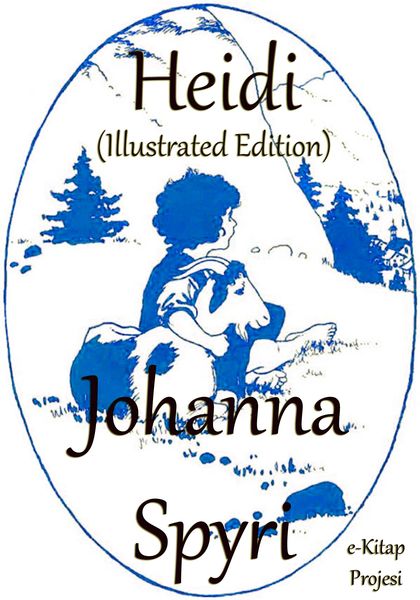
Heidi Illustrated Edition

1

0,99 €

inkl. gesetzl. MwSt.

Nein, App installieren Ja, App öffnen

Beschreibung

THROWING HERSELF IN HER GRANDFATHER'S ARMS, SHE HELD HIM TIGHT

She climbed so fast that she could soon discover, first the tree-tops, then the roof, finally the hut. Now she could see her grandfather sitting on his bench, smoking a pipe. Above the cottage the fir-trees gently swayed and rustled in the...

Beschreibung

THROWING HERSELF IN HER GRANDFATHER'S ARMS, SHE HELD HIM TIGHT

She climbed so fast that she could soon discover, first the tree-tops, then the roof, finally the hut. Now she could see her grandfather sitting on his bench, smoking a pipe. Above the cottage the fir-trees gently swayed and rustled in the evening breeze. At last she had reached the hut, and throwing herself in her grandfather's arms, she hugged him and held him tight. She could say nothing but "Grandfather! grandfather! grandfather!" in her agitation.

The old man said nothing either, but his eyes were moist, and loosening Heidi's arms at last, he sat her on his knee. When he had looked at her a while, he said: "So you have come home again, Heidi? Why? You certainly do not look very cityfied! Did they send you away?"

"Oh no, you must not think that, grandfather. They all were so good to me; Clara, Mr. Sesemann and grandmama. But grandfather, sometimes I felt as if I could not bear it any longer to be away from you! I thought I should choke; I could not tell any one, for that would have been ungrateful. Suddenly, one morning Mr. Sesemann called me very early, I think it was the doctor's fault and-but I think it is probably written in this letter;" with that Heidi brought the letter and the bank-roll from her basket, putting them on her grandfather's lap.

"This belongs to you," he said, laying the roll beside him. Having read the letter, he put it in his pocket. "Do you think you can still drink milk with me, Heidi?" he asked, while he stepped into the cottage. "Take your money with you, you can buy a bed for it and clothes for many years."

                                                          ***

Unassuming in plot and style, "Heidi" may none the less lay claim to rank as a world classic. In the first place, both background and characters ring true. The air of the Alps is wafted to us in every page; the house among the pines, the meadows, and the eagle poised above the naked rocks form a picture that no one could willingly forget. And the people, from the kindly towns-folk to the quaint and touching peasant types, are as real as any representation of human nature need be. Every goat even, has its personality. As for the little heroine, she is a blessing not only to everyone in the story, but to everyone who reads it. The narrative merits of the book are too apparent to call for comment. As to the author, Johanna Spyri, she has so entirely lost herself in her creation that we may pass over her career rather rapidly. She was born in Switzerland in 1829, came of a literary family, and devoted all her talent to the writing of books for and about children. Since "Heidi" has been so often translated into English it may well be asked why there is any need for a new version. The answer lies partly in the conventional character of the previous translations. Now, if there is any quality in "Heidi" that gives it a particular charm, that quality is freshness, absolute spontaneity. To be sure, the story is so attractive that it could never be wholly spoiled; but has not the reader the right to enjoy it in English at least very nearly as much as he could in German? The two languages are so different in nature that anything like a literal rendering of one into the other is sure to result in indirectness. Such a book must be not translated, but re-lived and re-created. To perform such a feat the writer must, to begin with, be familiar with the mountains, and able to appreciate with Wordsworth The silence that is in the starry sky, The sleep that is among the lonely hills. The translator of the present version was born and reared in a region closely similar to that of the story. Her home was originally in the picturesque town of Salzburg, and her father, Franz von Pausinger, was one of the greatest landscape painters of his country and generation. Another equally important requisite is knowledge of children. It happens that this translator has a daughter just the age of the heroine, who moreover loves to dress in Tyrolese costume. To translate "Heidi" was for her therefore a labor of love, which means that the love contended with and overcame the labor.

Produktdetails

Format

ePUB

Kopierschutz

Nein

Family Sharing

Ja

Text-to-Speech

Ja

Produktdetails

Format

ePUB

Format

eBooks im ePUB-Format erlauben eine dynamische Anpassung des Inhalts an die jeweilige Display-Größe des Lesegeräts. Das Format eignet sich daher besonders für das Lesen auf mobilen Geräten, wie z.B. Ihrem tolino, Tablets oder Smartphones.

Kopierschutz

Nein

Kopierschutz

Dieses eBook können Sie uneingeschränkt auf allen Geräten der tolino Familie, allen sonstigen eReadern und am PC lesen. Das eBook ist nicht kopiergeschützt und kann ein personalisiertes Wasserzeichen enthalten. Weitere Hinweise zum Lesen von eBooks mit einem personalisierten Wasserzeichen finden Sie unter Hilfe/Downloads.

Family Sharing

Ja

Family Sharing

Mit Family Sharing können Sie eBooks innerhalb Ihrer Familie (max. sechs Mitglieder im gleichen Haushalt) teilen. Sie entscheiden selbst, welches Buch Sie mit welchem Familienmitglied teilen möchten. Auch das parallele Lesen durch verschiedene Familienmitglieder ist durch Family Sharing möglich. Um eBooks zu teilen oder geteilt zu bekommen, muss jedes Familienmitglied ein Konto bei Thalia oder einem anderen tolino-Buchhändler haben. Weitere Informationen finden Sie unter Hilfe/Family-Sharing.

Text-to-Speech

Ja

Text-to-Speech

Bedeutet Ihnen Stimme mehr als Text? Mit der Funktion Text-to-Speech können Sie sich im tolino webReader und in der aktuellen Thalia – Lesen & Hören App das eBook vorlesen lassen. Weitere Informationen finden Sie unter Hilfe/Text-to-Speech.

Erscheinungsdatum

06.04.2015

Illustriert von
  • Maria L. Kirk
  • Illustrator
Verlag EKitap Projesi
Seitenzahl

160 (Printausgabe)

Dateigröße

12981 KB

Übersetzt von
  • Elisabeth P. Stork
  • Translator
Sprache

Englisch

EAN

9786155564000

Barrierefreiheit
  • keine Information zur Barrierefreiheit bekannt

Kundinnen und Kunden meinen

Informationen zu Bewertungen

Zur Abgabe einer Bewertung ist eine Anmeldung im Konto notwendig. Die Authentizität der Bewertungen wird von uns nicht überprüft. Wir behalten uns vor, Bewertungstexte, die unseren Richtlinien widersprechen, entsprechend zu kürzen oder zu löschen.

Die Bewertungen sind nach Format, Anzahl Sterne und Datum sortiert.

  • Glueckskinderbuch.de

    5/5

    14.03.2023

    Buch (Gebundene Ausgabe)

    Ein Weltklassiker in einem wunderschönen Bilderbuch neu gestaltet.

    Wenn ihr an die Schweiz denkt, was kommt euch da in den Sinn? Unter anderem vielleicht auch hohe Berge mit farbenfrohen Blumenwiesen, glückliche Kühe und Ziegen und eine wunderschöne Natur im allgemeinen? Viele dieser romantischen und oft idealisierten Bilder, die ich über die Schweiz auch heute noch habe, finden ihren Ursprung in den weltbekannten "Heidi"-Büchern von Johanna Spyri. Die kleine Waise Heidi lebt bei ihrer Tante Dete. Als diese eine Stelle in Frankfurt annimmt, bringt sie das Mädchen zu dessen einsiedlerischem Großvater auf die Alm (im Buch Alp genannt). Dort fühlt sich Heidi inmitten der üppigen Natur sehr wohl und freundet sich bald mit dem Geißenpeter an. Doch leider ist das Glück nicht von langer Dauer, denn Tante Dete veranlasst, Heidi nach Frankfurt zu holen, um ebenda bei einer wohlhabenden Familie zu leben. Dort lernt sie lesen und schreiben unter der strengen Aufsicht von Fräulein Rottenmeier. Auch wenn Heidi sich mit Klara, ihrer neuen Freundin und Tochter des Hauses, die im Rollstuhl sitzt, wunderbar versteht, hat sie doch bitterliches Heimweh nach dem Großvater, der Alm, den Bergen und der Natur... Die berühmte Schweizer Schriftstellerin für Kinder- und Jugendliteratur Johanna Spyri lebte von 1827 bis 1901. Ein zentrales Thema in fast allen ihren Büchern sind die Lebensbedingungen der Schweizer – besonders der Kinder und jungen Frauen – zur Zeit der beginnenden Industrialisierung. Auch in "Heidi" setzt sie sich kritisch damit auseinander. Das kleine Mädchen wird aus der Idylle der Berge und der Alm ihres Großvaters gerissen und in die Großstadt geschickt, wo sie ziemlich unglücklich ist. Es erschienen in den Jahren 1880 und 1881 zwei Teile: "Heidis Lehr- und Wanderjahre" und "Heidi kann brauchen, was es gelernt hat". Der Text der Geschichte wurde von Katja Alves für das Bilderbuch vereinfacht und angepasst. Sie erzählt kindgerecht und man spürt in jeder Zeile das Nostalgische und auch oft Idyllische an dem Werk von Johanna Spyri. Auch die wunderschönen Illustrationen von Maja Dusíková spiegeln diese Nostalgie wider und lassen eine ganz besondere Stimmung aufkommen. Beim Schließen des Bilderbuches "Heidi" spürt man, dass man gerade einen kleinen Schatz gelesen und betrachtet hat, in den bereits viele Generationen vor uns hineinblickten. Wundervoll!

  • Bewertung

    aus Berlin

    5/5

    22.06.2021

    Buch (Gebundene Ausgabe)

    Beautiful

    Beautiful book cover and a great story. Its slightly smalle then the other Barnes and Noble books but still gorgeous.

Kundinnen und Kunden meinen

5

2

4

0

3

0

2

0

1

0

Bewertungen (2)

Die Leseprobe wird geladen.
  • Produktbild: Heidi