















































KI-Beratung Beta

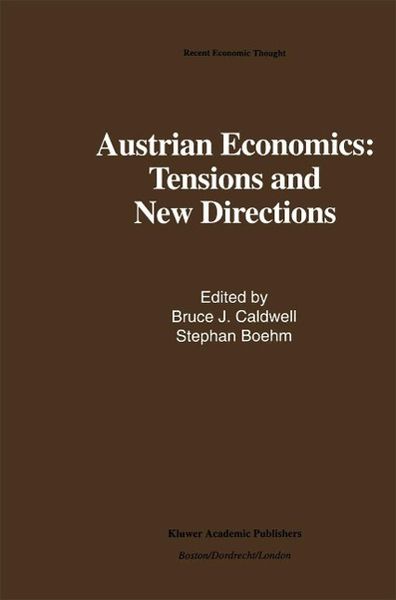
Produktbild: Austrian Economics: Tensions and New Directions
Band 30

Austrian Economics: Tensions and New Directions

Aus der Reihe Recent Economic Thought

149,79 €

inkl. gesetzl. MwSt.

Beschreibung

When we first invited the group of distinguished scholars represented here to contribute to a new volume on Austrian economics, four themes were stressed: tensions, new directions, selectivity, and criticism. In this brief introduction we will explain why those themes were emphasized and thereby shed...

Beschreibung

When we first invited the group of distinguished scholars represented here to contribute to a new volume on Austrian economics, four themes were stressed: tensions, new directions, selectivity, and criticism. In this brief introduction we will explain why those themes were emphasized and thereby shed light on our intentions and aspirations for the volume. The subtitle "Tensions and New Directions" indicates clearly the intent of the volume desired. If we take the 1871 publication of Carl Menger's Principles of Economics (Grundsiitze der Volkswirthschaftslehre) as mark­ ing its birth, the Austrian tradition is now well over one hundred years old. The origins of the so-called "Austrian Revival" are more difficult to pinpoint precisely, but many would accept two decades as a reasonable estimate of its lifespan. In any case, since the mid-1970s several collections of articles written by Austrians have been published. The intent of these collections appeared to be to educate, persuade, and inspire various audiences. Uninformed readers needed to be told about the specifics of the Austrian position, to be shown how it differed from and improved upon its rivals. The initiated needed to be reassured that their commitment to a novel program was justified. As such, much of the recent Austrian literature has consisted either of exegetical accounts of the views of past figures, or of critical assessments of the positions of alternative research programs in economics from an Austrian perspective.

Produktdetails

Format

PDF

Kopierschutz

Nein

Family Sharing

Nein

Text-to-Speech

Nein

Produktdetails

Format

PDF

Format

eBooks im PDF-Format haben eine festgelegte Seitengröße und eignen sich daher nur bedingt zum Lesen auf einem tolino eReader oder Smartphone. Für den vollen Lesegenuss empfehlen wir Ihnen bei PDF-eBooks die Verwendung eines Tablets oder Computers.

Kopierschutz

Nein

Kopierschutz

Dieses eBook können Sie uneingeschränkt auf allen Geräten der tolino Familie, allen sonstigen eReadern und am PC lesen. Das eBook ist nicht kopiergeschützt und kann ein personalisiertes Wasserzeichen enthalten. Weitere Hinweise zum Lesen von eBooks mit einem personalisierten Wasserzeichen finden Sie unter Hilfe/Downloads.

Family Sharing

Nein

Family Sharing

Mit Family Sharing können Sie eBooks innerhalb Ihrer Familie (max. sechs Mitglieder im gleichen Haushalt) teilen. Sie entscheiden selbst, welches Buch Sie mit welchem Familienmitglied teilen möchten. Auch das parallele Lesen durch verschiedene Familienmitglieder ist durch Family Sharing möglich. Um eBooks zu teilen oder geteilt zu bekommen, muss jedes Familienmitglied ein Konto bei Thalia oder einem anderen tolino-Buchhändler haben. Weitere Informationen finden Sie unter Hilfe/Family-Sharing.

Text-to-Speech

Nein

Text-to-Speech

Bedeutet Ihnen Stimme mehr als Text? Mit der Funktion Text-to-Speech können Sie sich im tolino webReader und in der aktuellen Thalia – Lesen & Hören App das eBook vorlesen lassen. Weitere Informationen finden Sie unter Hilfe/Text-to-Speech.

Erscheinungsdatum

06.12.2012

Herausgeber
Verlag Springer Netherlands
Seitenzahl

283 (Printausgabe)

Dateigröße

29424 KB

Auflage

1992

Sprache

Englisch

EAN

9789401121866

Barrierefreiheit
  • keine Information zur Barrierefreiheit bekannt

Noch keine Bewertungen vorhanden

Verfassen Sie die erste Bewertung zu diesem Artikel

Helfen Sie anderen Kundinnen und Kunden durch Ihre Meinung.

Kundinnen und Kunden meinen

Bewertungen (0)

Weitere Artikel finden Sie in

  • Produktbild: Austrian Economics: Tensions and New Directions