















































KI-Beratung Beta

Gutscheinbedingungen

Gültig bis 30.11.2026 | Gültig für nicht preisgebundene fremdsprachige Bücher | Einzelne Artikel können ausgeschlossen sein | Online auf thalia.de und in der Thalia App einlösbar | Click & Collect nur mit Online-Zahlung (Paypal/Kreditkarte) vorab | Nicht kombinierbar mit anderen Gutscheinen oder Preisaktionen | Nur einmal pro Einkauf einlösbar | Gutschein wird auf max. 500€ Bestellwert angerechnet | Keine Barauszahlung | Nicht gültig für Versandkosten und Services

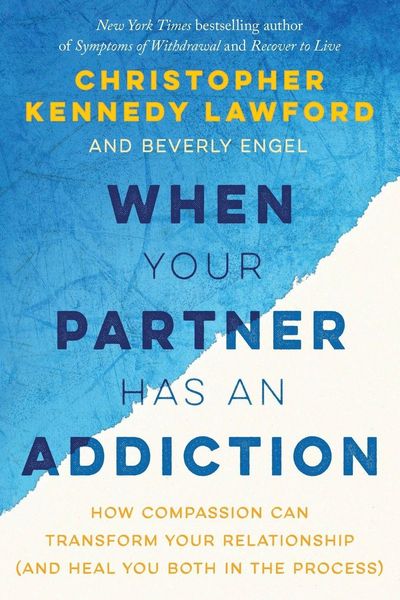
Produktbild: When Your Partner Has an Addiction

When Your Partner Has an Addiction How Compassion Can Transform Your Relationship (and Heal You Both in the Process)

24,99 €

inkl. gesetzl. MwSt., Versandkostenfrei


Beschreibung

Your partner's addiction takes a toll on both of your lives. That doesn't mean you should turn your back on the person you love. We've been told that staying with a partner who struggles with addiction—whether it be with drugs, alcohol, or addictive behaviors—means that we're enabling their destructive...

Beschreibung

Your partner's addiction takes a toll on both of your lives.
That doesn't mean you should turn your back on the person you love.
We've been told that staying with a partner who struggles with addiction—whether it be with drugs, alcohol, or addictive behaviors—means that we're enabling their destructive behavior. That wanting to help them means we're codependent, and that the best thing for both of us is to walk away from the relationship entirely. But is that true?
When Your Partner Has an Addiction challenges the idea that the best chance for recovery—for the addict and their partner—is to walk away. Instead, it makes the revolutionary claim that you, and the love you have for your partner, can be a key part of his or her journey to recovery.
Together, addiction activist and bestselling author Christopher Kennedy Lawford and psychotherapist Beverly Engel, MFT, take a fresh look at addiction and codependency—the latest research on what causes them and what the two have in common. Rather than treat addiction or codependency as disease or weakness, When Your Partner Has an Addiction honors the trauma and shame that often lie at their source and shows you how to use your love to combat that shame, allowing you to more effectively support your partner and heal yourself.
The research proves that, while you cannot "fix" your partner, you can have a positive impact on their recovery. Whether you suffer from codependency, and whether your partner is already in recovery, When Your Partner Has an Addiction provides you with proven techniques and strategies to drastically improve your relationship and help get your partner the help he needs—without leaving and while taking care of yourself in the process.

Produktdetails

Einband

Taschenbuch

Erscheinungsdatum

04.10.2016

Verlag Simon & Schuster Distribution Clients
Seitenzahl

232

Produktdetails

Einband

Taschenbuch

Erscheinungsdatum

04.10.2016

Verlag Simon & Schuster Distribution Clients
Seitenzahl

232

Maße (L/B/H)

22,7/15,2/2 cm

Gewicht

285 g

Sprache

Englisch

ISBN

978-1-941631-86-7

Herstelleradresse

Libri GmbH
Europaallee 1
36244 Bad Hersfeld
DE

Email: gpsr@libri.de

Ein neues Kapitel für Ihre Bücher

Ein neues Kapitel für Ihre Bücher

Schenken Sie Ihren alten Schätzen ein zweites Leben und erhalten Sie dafür eine Thalia Geschenkkarte.

Jetzt verkaufen
Jetzt verkaufen

Noch keine Bewertungen vorhanden

Verfassen Sie die erste Bewertung zu diesem Artikel

Helfen Sie anderen Kundinnen und Kunden durch Ihre Meinung.

Kundinnen und Kunden meinen

Bewertungen (0)

Die Leseprobe wird geladen.
  • Produktbild: When Your Partner Has an Addiction

  • Introduction

    Part I. Love, Compassion, and Understanding

    Chapter 1: Love and Addiction: Can They Coexist?

    Chapter 2: Do I Love My Partner Enough to Stay?

    Chapter 3: Hope and Compassion: The Keys to Healing

    Part II. Taking on a Compassionate Attitude

    Chapter 4: A Fresh Look at Addiction

    Chapter 5: A Different Perspective on Codependency

    Part III. Your Role in Your Partner's Recovery

    Chapter 6: The Difference between Codependency and Compassion

    Chapter 7: Should You Be a Supporter or a Collaborator?

    Chapter 8: Becoming a Compassionate Supporter

    Chapter 9: Becoming a Compassionate Collaborator

    Chapter 10: Creating Your Own Self-Care Program

    Conclusion

    Appendix I: Types of Childhood Abuse

    Appendix II: Options for Recovery

    Endnotes

    About the Authors