















































KI-Beratung Beta

Gutscheinbedingungen

Gültig bis 30.11.2026 | Gültig für nicht preisgebundene fremdsprachige Bücher | Einzelne Artikel können ausgeschlossen sein | Online auf thalia.de und in der Thalia App einlösbar | Click & Collect nur mit Online-Zahlung (Paypal/Kreditkarte) vorab | Nicht kombinierbar mit anderen Gutscheinen oder Preisaktionen | Nur einmal pro Einkauf einlösbar | Gutschein wird auf max. 500€ Bestellwert angerechnet | Keine Barauszahlung | Nicht gültig für Versandkosten und Services

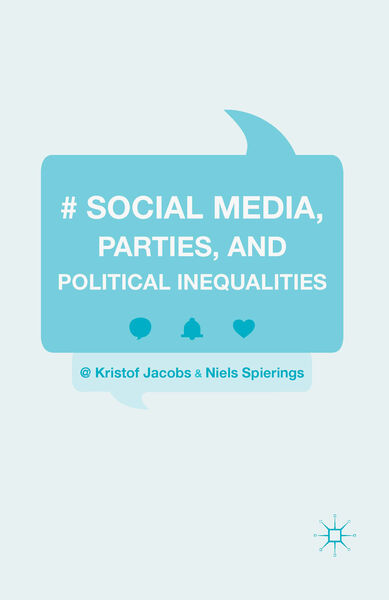
Produktbild: Social Media, Parties, and Political Inequalities

Social Media, Parties, and Political Inequalities

48,99 €

inkl. gesetzl. MwSt., Versandkostenfrei


Beschreibung

This book examines how social media have transformed politics in established democracies. Specifically, the authors examine the influence of the unique qualities of social media on the power balance between and within parties. They present a general theory as well as an in-depth case study of the Netherlands...

Beschreibung

This book examines how social media have transformed politics in established democracies. Specifically, the authors examine the influence of the unique qualities of social media on the power balance between and within parties. They present a general theory as well as an in-depth case study of the Netherlands and compare it to the US and European democracies. The authors show how and why social media's introduction leads to equalization for some and normalization for others. Additional to national politics, Jacobs and Spierings investigate often-overlooked topics such as local and European politics and the impact on women and ethnic minorities.

Rezension

'Jacobs and Spierings are the first ones to provide a comprehensive account of the role social media play in politics. With their multi-method, comparative approach they debunk the common wisdom of massive social media effects, but also show in a nuanced way when and how these media actually matter. The book is a must-read for everyone wanting to understand how politics has changed due to the rise of new media.' - Rens Vliegenthart, Professor of Communication Science and Chair in Media and Society, University of Amsterdam, Netherlands
'This book makes an important contribution to the literature on the internet and politics. In looking comparatively at elites' use of Twitter and Facebook it extends our understanding of how far social media are affecting political practice in campaigns and elections worldwide. The authors update the standard normalization-equalization debate that has characterized the study of this topic by presenting a more nuanced understanding of party competition online.' - Rachel Gibson, Professor of Politics, University of Manchester, UK

Produktdetails

Einband

Taschenbuch

Erscheinungsdatum

05.06.2016

Verlag Palgrave Macmillan US
Seitenzahl

221

Produktdetails

Einband

Taschenbuch

Erscheinungsdatum

05.06.2016

Verlag Palgrave Macmillan US
Seitenzahl

221

Maße (L/B/H)

21,6/14/1,3 cm

Gewicht

303 g

Auflage

1st edition 2016

Sprache

Englisch

ISBN

978-1-349-57271-7

Herstelleradresse

Palgrave Macmillan
Tiergartenstr. 17
69121 Heidelberg
DE

Email: ProductSafety@springernature.com

Ein neues Kapitel für Ihre Bücher

Ein neues Kapitel für Ihre Bücher

Schenken Sie Ihren alten Schätzen ein zweites Leben und erhalten Sie dafür eine Thalia Geschenkkarte.

Jetzt verkaufen
Jetzt verkaufen

Noch keine Bewertungen vorhanden

Verfassen Sie die erste Bewertung zu diesem Artikel

Helfen Sie anderen Kundinnen und Kunden durch Ihre Meinung.

Kundinnen und Kunden meinen

Bewertungen (0)

  • Produktbild: Social Media, Parties, and Political Inequalities
  • PART I: BACKGROUND

    1. Introduction

    2. Theorizing Social Media, Parties and Political Inequalities

    3. Social Media in Politics: The Netherlands from a Comparative Perspective

    PART II: CHANGES IN THE POWER BALANCE

    4. Inter-Party Relations: David versus Goliath

    5. Intra-Party Politics: David versus Nabal and Abigail

    6. Social Media go Glocal: The Local and European Arenas

    PART III: THE TRANSFORMATIVE IMPACT OF SOCIAL MEDIA

    7. The Electoral Impact of Social Media

    8. Conclusion