















































KI-Beratung Beta

Gutscheinbedingungen

Gültig bis 30.11.2026 | Gültig für nicht preisgebundene fremdsprachige Bücher | Einzelne Artikel können ausgeschlossen sein | Online auf thalia.de und in der Thalia App einlösbar | Click & Collect nur mit Online-Zahlung (Paypal/Kreditkarte) vorab | Nicht kombinierbar mit anderen Gutscheinen oder Preisaktionen | Nur einmal pro Einkauf einlösbar | Gutschein wird auf max. 500€ Bestellwert angerechnet | Keine Barauszahlung | Nicht gültig für Versandkosten und Services

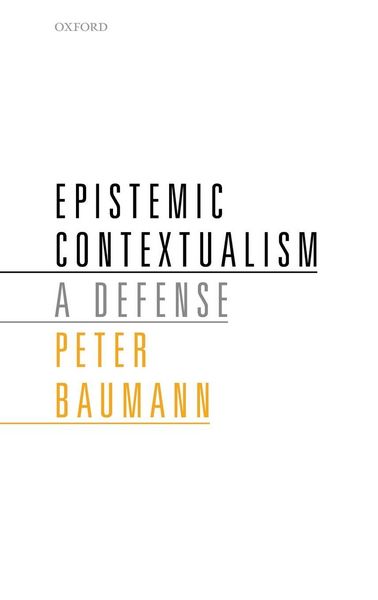
Produktbild: Epistemic Contextualism

Epistemic Contextualism A Defense

115,99 €

inkl. gesetzl. MwSt., Versandkostenfrei


Beschreibung

Peter Baumann develops and defends a distinctive version of epistemic contextualism, the view that the truth conditions or the meaning of knowledge attributions of the form "S knows that p" can vary with the context of the attributor. The first part of the book examines arguments for contextualism and...

Beschreibung

Peter Baumann develops and defends a distinctive version of epistemic contextualism, the view that the truth conditions or the meaning of knowledge attributions of the form "S knows that p" can vary with the context of the attributor. The first part of the book examines arguments for contextualism and develops Baumann's version. The first chapter deals with the argument from cases and ordinary usage; the following two chapters address "theoretical" arguments, from reliability and from luck. The second part of the book discusses the problems contextualism faces, to which it must respond, and provides an extension of contextualism beyond epistemology. Chapter 4 discusses "lottery-scepticism" and argues for a contextualist response. Chapter 5 is dedicated to a homemade problem for contextualism: a threat of inconsistency. Baumann argues for a way out and for a version of contextualism that can underwrite this solution. Chapter 6 proposes a contextualist account of responsibility: The concept of knowledge is not the only one which allows for a contextualist analysis and it is important to explore structural analogies in other areas of philosophy. The third part of the book is focused on some major objections to contextualism and alternative views, namely subject-sensitive invariantism, contrastivism and relativism.

Rezension

Those who are familiar with debates over epistemic contextualism will find a stimulating new direction in this book; readers new to those debates, looking for a guide to the literature, will find this as good a starting point as any. In short, there is something here for everyone. Roger Clarke, Queen's University Belfast, International Journal for the Study of Skepticism 11

Produktdetails

Einband

Gebundene Ausgabe

Erscheinungsdatum

01.12.2016

Verlag Oxford University Press
Seitenzahl

276

Produktdetails

Einband

Gebundene Ausgabe

Erscheinungsdatum

01.12.2016

Verlag Oxford University Press
Seitenzahl

276

Maße (L/B/H)

24/16,1/1,9 cm

Gewicht

531 g

Sprache

Englisch

ISBN

978-0-19-875431-2

Herstelleradresse

Libri GmbH
Europaallee 1
36244 Bad Hersfeld
DE

Email: gpsr@libri.de

Ein neues Kapitel für Ihre Bücher

Ein neues Kapitel für Ihre Bücher

Schenken Sie Ihren alten Schätzen ein zweites Leben und erhalten Sie dafür eine Thalia Geschenkkarte.

Jetzt verkaufen
Jetzt verkaufen

Noch keine Bewertungen vorhanden

Verfassen Sie die erste Bewertung zu diesem Artikel

Helfen Sie anderen Kundinnen und Kunden durch Ihre Meinung.

Kundinnen und Kunden meinen

Bewertungen (0)

Die Leseprobe wird geladen.
  • Produktbild: Epistemic Contextualism
    • Introduction

    • Arguments

    • 1: The Argument From Cases: Standard Contextualism and Standards Contextualism

    • 2: The Argument from Reliability: Reference Classes and Another Aspect of Contexts

    • 3: The Argument from Luck: The Role of Descriptions

    • Problems and Extensions

    • 4: Scepticism, Lotteries and Contextualist Solutions

    • 5: Cross-Context Attributions and the Knowability Problem: Does Contextualism Lead to a Contradiction?

    • 6: Beyond Knowledge: Action and Responsibility

    • Objections and Alternatives

    • 7: Objections

    • 8: Alternatives?