















































KI-Beratung Beta

Gutscheinbedingungen

Gültig bis 11.11.2026 | Gültig für Spielzeug, Filme, Musik, Software, Games, Geschenke & Trends, Schreibwaren, Hörbücher und Hörbuch-Downloads (außer Abo & Shelfies), gebrauchte Bücher, nicht preisgebundene Bücher und Kalender | Einlösbar unter thalia.de und in der Thalia App | Click & Collect nur mit Online-Zahlung (Paypal/Kreditkarte) vorab | Einzelne Artikel können ausgeschlossen sein | Nicht kombinierbar mit anderen Gutscheinen oder Preisaktionen | Nur einmal pro Einkauf einlösbar | Gutschein wird auf max. 500€ Bestellwert angerechnet | Keine Barauszahlung | Digitale Hörbücher nur für Android  | Nicht gültig für preisgebundene Artikel (aufgrund der Buchpreisbindung sind Gutscheine nicht auf Bücher, eBooks, Presse einlösbar), tolino eReader & Zubehör, Abonnements & Flatrates, Geschenkkarten, Versandkosten und Services

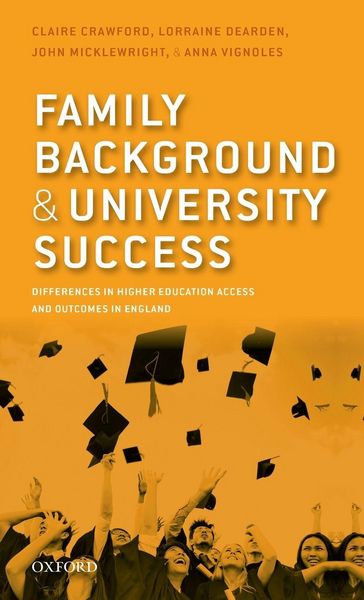
Produktbild: Family Background and University Success

Family Background and University Success Differences in Higher Education Access and Outcomes in England

59,99 €

inkl. gesetzl. MwSt., Versandkostenfrei


Beschreibung

Why do fewer teenagers in England from disadvantaged backgrounds go to university than young people from better-off families? Once at university, how well do poorer students fare compared with other students - who drops out from university and who gets the best degrees? After university - who secures...

Beschreibung

Why do fewer teenagers in England from disadvantaged backgrounds go to university than young people from better-off families? Once at university, how well do poorer students fare compared with other students - who drops out from university and who gets the best degrees? After university - who secures better jobs and higher pay? What really has been the impact on university entry of the controversial increases in tuition fees in 2006 and 2012, especially for students from poorer families? Is there no alternative to charging for university places and what do other countries do? What should governments, universities, and schools do to reduce the gaps in university entry and success by family background? And what advice can be given to families and young people themselves deciding between the costs and benefits of university? This book answers these questions using the latest available evidence, drawing on a wealth of data from administrative records of the school and university system and sample surveys of young people and their families. The authors' analysis of the situation in England is set against a background of evidence for other countries. The book provides much needed dispassionate analysis of issues that are at the forefront of both public policy and popular debate on higher education around the world today.

Produktdetails

Einband

Gebundene Ausgabe

Erscheinungsdatum

01.01.2017

Abbildungen

31 Figures, 5 Tables

Verlag Oxford University Press

Produktdetails

Einband

Gebundene Ausgabe

Erscheinungsdatum

01.01.2017

Abbildungen

31 Figures, 5 Tables

Verlag Oxford University Press
Seitenzahl

178

Maße (L/B/H)

22,2/14,5/1,3 cm

Gewicht

363 g

Sprache

Englisch

ISBN

978-0-19-968913-2

EU-Ansprechpartner

Kolibri 360 GmbH
Ettore-Bugatti-Straße 6-14
51149 Köln
DE
produktsicherheit@kolibri360.de

Herstelleradresse

Oxford University Press
Great Clarendon Street
OX2 6DP Oxford
GB
EXPORTtradequeries@oup.com

Ein neues Kapitel für Ihre Bücher

Ein neues Kapitel für Ihre Bücher

Schenken Sie Ihren alten Schätzen ein zweites Leben und erhalten Sie dafür eine Thalia Geschenkkarte.

Jetzt verkaufen
Jetzt verkaufen

Noch keine Bewertungen vorhanden

Verfassen Sie die erste Bewertung zu diesem Artikel

Helfen Sie anderen Kundinnen und Kunden durch Ihre Meinung.

Kundinnen und Kunden meinen

Bewertungen (0)

Die Leseprobe wird geladen.
  • Produktbild: Family Background and University Success
    • 1: Family background and university success - what are the issues?

    • 2: Why and how do governments fund higher education?

    • 3: How is university teaching funded in England?

    • 4: Have recent funding reforms widened the family background gaps?

    • 5: What is the role of prior attainment?

    • 6: When and how to intervene to increase university attendance?

    • 7: Is getting pupils from poorer backgrounds through the doors enough?

    • 8: Do socio-economic differences persist beyond university?

    • 9: What do we conclude?