















































Beschreibung
Produktdetails
Einband
Gebundene Ausgabe
Erscheinungsdatum
05.01.2017
Verlag
Oxford University PressSeitenzahl
334
Maße (L/B/H)
24/16,1/2,3 cm
Gewicht
666 g
Sprache
Englisch
ISBN
978-0-19-878501-9
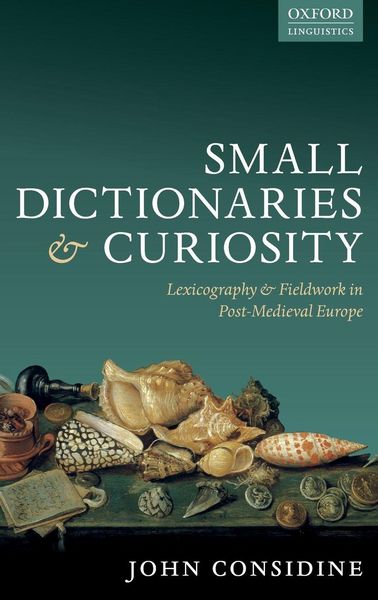
The book gives an account of about 90 of these dictionaries and wordlists, some of them single-page jottings and some of them full-sized printed books, paying attention to their content and their physical form alike. It explores the kinds of curiosity and imagination by which their makers were moved: the lover of all languages hearing new voices in an inn; the speaker of a dying language recording his linguistic memories; the patriot deploying his lexicographical findings in the service of an emerging nation. It offers an encounter with the diverse voices of the entirety of post-medieval Europe, turning away from the people of the courts and universities whose language was documented in big dictionaries to listen to people who did not speak the languages of power: the people of remote places and dying communities; the illiterate poor, settled or homeless; migrants from the edges of Europe and beyond.
Ein neues Kapitel für Ihre Bücher
Ein neues Kapitel für Ihre Bücher
Schenken Sie Ihren alten Schätzen ein zweites Leben und erhalten Sie dafür eine Thalia Geschenkkarte.
Noch keine Bewertungen vorhanden
Verfassen Sie die erste Bewertung zu diesem Artikel
Helfen Sie anderen Kundinnen und Kunden durch Ihre Meinung.
Kurze Frage zu unserer Seite
Vielen Dank für Ihr Feedback
Wir nutzen Ihr Feedback, um unsere Produktseiten zu verbessern. Bitte haben Sie Verständnis, dass wir Ihnen keine Rückmeldung geben können. Falls Sie Kontakt mit uns aufnehmen möchten, können Sie sich aber gerne an unseren Kund*innenservice wenden.
zum Kundenservice