















































KI-Beratung Beta

Gutscheinbedingungen

Gültig bis 11.11.2026 | Gültig für Spielzeug, Filme, Musik, Software, Games, Geschenke & Trends, Schreibwaren, Hörbücher und Hörbuch-Downloads (außer Abo & Shelfies), gebrauchte Bücher, nicht preisgebundene Bücher und Kalender | Einlösbar unter thalia.de und in der Thalia App | Click & Collect nur mit Online-Zahlung (Paypal/Kreditkarte) vorab | Einzelne Artikel können ausgeschlossen sein | Nicht kombinierbar mit anderen Gutscheinen oder Preisaktionen | Nur einmal pro Einkauf einlösbar | Gutschein wird auf max. 500€ Bestellwert angerechnet | Keine Barauszahlung | Digitale Hörbücher nur für Android  | Nicht gültig für preisgebundene Artikel (aufgrund der Buchpreisbindung sind Gutscheine nicht auf Bücher, eBooks, Presse einlösbar), tolino eReader & Zubehör, Abonnements & Flatrates, Geschenkkarten, Versandkosten und Services

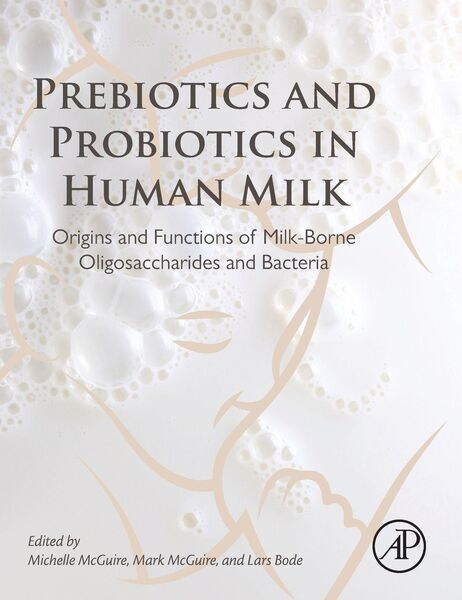
  • Produktbild: Prebiotics and Probiotics in Human Milk
  • Produktbild: Prebiotics and Probiotics in Human Milk

Prebiotics and Probiotics in Human Milk

157,99 €

inkl. gesetzl. MwSt., Versandkostenfrei


Beschreibung

Produktdetails

Einband

Gebundene Ausgabe

Erscheinungsdatum

24.10.2016

Herausgeber

Michelle McGuire + weitere

Verlag

Academic Press

Seitenzahl

508

Maße (L/B/H)

23,5/19,1/2,9 cm

Gewicht

1082 g

Sprache

Englisch

ISBN

978-0-12-802725-7

Beschreibung

Portrait

Dr. McGuire is an Associate Professor in the School of Biological Sciences at Washington State University specializing in lactation physiology and nutrition. A member of the faculty at WSU since 1995, she has focused on understanding how maternal diet influences milk composition and infant nutrition, mostly in the area of biologically-active lipids such as various trans fatty acids and conjugated linoleic acid (CLA). Her research group has provided evidence that maternal consumption of industrially-produced trans fatty acids can cause milk fat depression and that CLA can be synthesized from trans-vaccenic acid in the mammary gland. Dr. Michelle McGuire collaborates with colleague Dr. Mark McGuire to study the human and bovine milk microbiomes. Shelley has been an active member of the American Society for Nutrition (ASN), having served as chair of the Human Milk and Lactation Research Interest Section (RIS), member of the Executive Board, National Spokesperson, and RIS director. She is also a long-standing, active member of the International Society for Research in Human Milk and Lactation (ISRHML), having received its Ehrlich-Koldovsky Award and currently serving as its secretary-treasurer. She is also author of two nutrition textbooks: Nutritional Sciences: From Fundamentals to Foods (in its 3rd edition) and NUTR. Dr. McGuire received her M.S. in Nutritional Sciences from the University of Illinois where she studied the effect of maternal selenium consumption on milk selenium content and her Ph.D. in Human Nutrition from Cornell University where she used animal models to study the interactions among maternal nutritional status, suckling behaviors, and duration of postpartum anovulation.Dr. McGuire is Professor and head of the University of Idaho's Department of Animal and Veterinary Science, where he not only oversees an active research program but also works closely with the state's dairy and other commodity industries to promote education and research that will benefit the state, region, and nation in this regard. His research is focused around milk. For instance his studies have described nutritional and metabolic means to enrich milk with conjugated linoleic acid (CLA) and omega-3 fatty acids in both cows and women. He has also conducted research related to how particularly fatty acids might be involved in protection against pathogens that cause mastitis - for instance Staphylococcus aureus. Other work has addressed the effect of exotoxins produced by S. aureus on the response by the mammary gland in its battle against infection. Along with his colleague, Dr. Shelley McGuire, Mark has also become interested in the possibility that milk may be an important source of healthy bacteria for the nursing neonate/infant. Their interdependent, interdisciplinary work shows that milk produced by healthy women contains many types of bacteria, and that this community structure seems to be personalized within a woman. The importance of the milk microbiome to development of the infant gastrointestinal tract and health of the breast are areas under current study. Dr. McGuire is a Council Member on the Executive Committee for the International Society for Research in Human Milk and Lactation (ISRHML), and an active member of many professional societies including the American Dairy Science Association (ADSA), American Society of Animal Science (ASAS), American Society of Microbiology (ASM), and the American Society for Nutrition (ASN). His research has been recognized by ADSA with the Richard M. Hoyt Dairy Research Award and the Agway Inc. Young Scientist award.Originally from Hameln, Germany, Dr. Bode earned his M.S. and Ph.D. in Nutritional Sciences from the Justus-Liebig University Giessen in Germany where he studied the effects of human milk oligosaccharides (HMO) on selectin-mediated cell-cell interactions in the immune system. Dr. Bode completed his post-doctoral fellowship at the Burnham Institute for Medical Research in La Jolla, California, where he made major contributions in elucidating the central role of heparan sulfate proteoglycans and heparin in pathogenesis and therapy of protein-losing enteropathy. Currently an Associate Professor of Pediatrics in-residence in the Division of Neonatology and the Division of Pediatric Gastroenterology, Hepatology and Nutrition, at the University of California, San Diego, Dr. Bode leads a research program focused on elucidating functions and biosynthesis of human milk oligosaccharides. Dr. Bode has served as chair of the Lactation Research Interest Section (RIS) for the American Society for Nutrition (ASN) and as Council Member on the Executive Committee for the International Society for Research in Human Milk and Lactation (ISRHML); he is currently the president-elect of ISRHML. Dr. Bode has received numerous awards including ISRHML's Ehrlich-Koldovsky Award and ASN's Bio Serv Award in Experimental Animal Nutrition and Normal Kretchmer Memorial Award in Nutrition and Development.

Produktdetails

Einband

Gebundene Ausgabe

Erscheinungsdatum

24.10.2016

Herausgeber

Verlag

Academic Press

Seitenzahl

508

Maße (L/B/H)

23,5/19,1/2,9 cm

Gewicht

1082 g

Sprache

Englisch

ISBN

978-0-12-802725-7

EU-Ansprechpartner

Kolibri 360 GmbH
Ettore-Bugatti-Straße 6-14
51149 Köln
DE
produktsicherheit@kolibri360.de

Herstelleradresse

A&C Black Publishers Ltd.
36 Soho Square
W1D 3QY London
UK
enquiries@acblack.com

Ein neues Kapitel für Ihre Bücher

Ein neues Kapitel für Ihre Bücher

Schenken Sie Ihren alten Schätzen ein zweites Leben und erhalten Sie dafür eine Thalia Geschenkkarte.

Jetzt verkaufen
Jetzt verkaufen

Noch keine Bewertungen vorhanden

Verfassen Sie die erste Bewertung zu diesem Artikel

Helfen Sie anderen Kundinnen und Kunden durch Ihre Meinung.

Kundinnen und Kunden meinen

Bewertungen (0)

Die Leseprobe wird geladen.
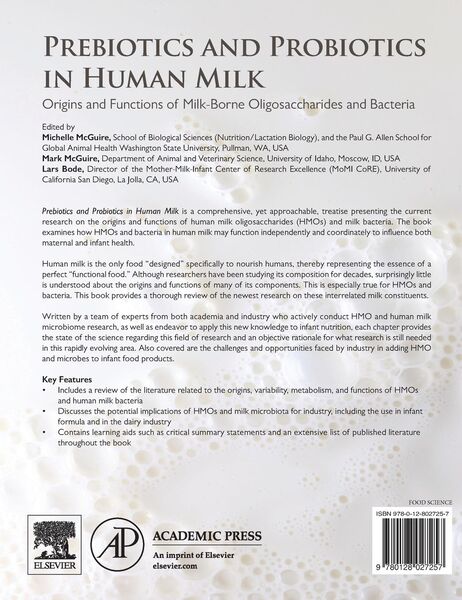
  • Produktbild: Prebiotics and Probiotics in Human Milk
  • Produktbild: Prebiotics and Probiotics in Human Milk
  • Section A. Background, Structures, Synthesis, and Analysis

    Chapter 1. From Bifidus Factor to Human Milk Oligosaccharides: A Historical Perspective on Complex Sugars in Milk

    Chapter 2. Structures, Classification, and Biosynthesis of Human Milk Oligosaccharides

    Chapter 3. Oligosaccharides in the Milk of Other Mammals

    Chapter 4. Analytical Methods to Characterize Human Milk Oligosaccharides

    Section B. Potential Functions and Benefits

    Chapter 5. Oligosaccharide Metabolism in the Breastfed Infant

    Chapter 6. The Role of Human Milk Oligosaccharides in Host-Microbial Interactions

    Chapter 7. Potential Public Health Impact of Human Milk Oligosaccharides

    Chapter 8. Human Milk Oligosaccharides as Modulators of Intestinal and Systemic Immunity

    Section C. Challenges and Opportunities

    Chapter 9. Making Human Milk Oligosaccharides Available for Research and Application - Approaches, Challenges, and Future Opportunities

    Section D. Background, Methods, Origin, and Interpretation

    Chapter 10. Isn't Milk Sterile? A Historical Perspective on Microbes in Milk

    Chapter 11. From the Human Milk Microbiota to the Human Milk Metagenome: Evolution of Methods to Study Human Milk Microbial Communities

    Chapter 12. Maternal Factors Related to Variability in the Human Milk Microbiome

    Chapter 13. The Origin of Human Milk Bacteria

    Section E. Human Milk Microbes and Health

    Chapter 14. An Evolutionary, Biosocial Perspective on Variation in Human Milk Microbes and Oligosaccharides: An Example of Eco-Homeorhesis?

    Chapter 15. Infectious Mastitis During Lactation: A Mammary Dysbiosis Model

    Chapter 16. Probiotics During the Perinatal Period: Impact on the Health of Mothers and Infants

    Section F. Challenges and Opportunities

    Chapter 17. Human Milk Microbes - Summary and Research Gaps