















































KI-Beratung Beta

Gutscheinbedingungen

Gültig bis 11.11.2026 | Gültig für Spielzeug, Filme, Musik, Software, Games, Geschenke & Trends, Schreibwaren, Hörbücher und Hörbuch-Downloads (außer Abo & Shelfies), gebrauchte Bücher, nicht preisgebundene Bücher und Kalender | Einlösbar unter thalia.de und in der Thalia App | Click & Collect nur mit Online-Zahlung (Paypal/Kreditkarte) vorab | Einzelne Artikel können ausgeschlossen sein | Nicht kombinierbar mit anderen Gutscheinen oder Preisaktionen | Nur einmal pro Einkauf einlösbar | Gutschein wird auf max. 500€ Bestellwert angerechnet | Keine Barauszahlung | Digitale Hörbücher nur für Android  | Nicht gültig für preisgebundene Artikel (aufgrund der Buchpreisbindung sind Gutscheine nicht auf Bücher, eBooks, Presse einlösbar), tolino eReader & Zubehör, Abonnements & Flatrates, Geschenkkarten, Versandkosten und Services

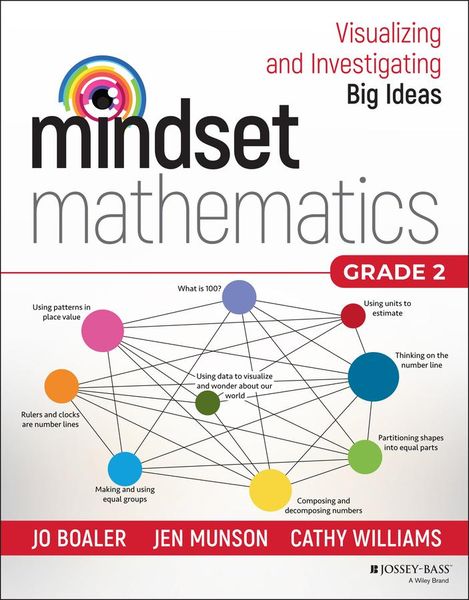
Produktbild: Mindset Mathematics: Visualizing and Investigating Big Ideas, Grade 2

Mindset Mathematics: Visualizing and Investigating Big Ideas, Grade 2

Aus der Reihe Mindset Mathematics

25,99 €

inkl. gesetzl. MwSt., Versandkostenfrei


Beschreibung

Engage students in mathematics using growth mindset techniques   The most challenging parts of teaching mathematics are engaging students and helping them understand the connections between mathematics concepts. In this volume, you'll find a collection of low-floor, high-ceiling tasks that will help you...

Beschreibung

Engage students in mathematics using growth mindset techniques
 
The most challenging parts of teaching mathematics are engaging students and helping them understand the connections between mathematics concepts. In this volume, you'll find a collection of low-floor, high-ceiling tasks that will help you do just that, by looking at the big ideas in second grade through visualization, play, and investigation.
 
During their work with tens of thousands of teachers, authors Jo Boaler, Jen Munson, and Cathy Williams heard the same message--that they want to incorporate more brain science into their math instruction, but they need guidance in the techniques that work best to get across the concepts they needed to teach. So, the authors designed Mindset Mathematics around the principle of active student inquiry, with tasks that reflect the latest brain science on learning. Open, creative, and visual math tasks have been shown to support student learning, and more importantly change their relationship with mathematics and start believing in their own potential. The tasks in Mindset Mathematics reflect the lessons from brain science that:
* There is no such thing as a math person and anyone can learn mathematics to high levels.
* Mistakes, struggle, and challenge are opportunities for brain growth.
* Speed is unimportant, and even counterproductive, in mathematics.
* Mathematics is a visual and beautiful subject, and our brains want to think visually about mathematics.
 
With engaging questions, open-ended tasks, and four-color visuals that will help kids get excited about mathematics, Mindset Mathematics is organized around nine big ideas which emphasize the connections within the Common Core State Standards (CCSS) and can be used with any current curriculum.

Produktdetails

Einband

Taschenbuch

Erscheinungsdatum

14.12.2021

Verlag John Wiley & Sons Inc
Seitenzahl

288

Produktdetails

Einband

Taschenbuch

Erscheinungsdatum

14.12.2021

Verlag John Wiley & Sons Inc
Seitenzahl

288

Maße (L/B/H)

27,4/21,5/1,5 cm

Gewicht

774 g

Auflage

1. Auflage

Sprache

Englisch

ISBN

978-1-119-35863-3

Herstelleradresse

Libri GmbH
Europaallee 1
36244 Bad Hersfeld
DE

Email: gpsr@libri.de

Ein neues Kapitel für Ihre Bücher

Ein neues Kapitel für Ihre Bücher

Schenken Sie Ihren alten Schätzen ein zweites Leben und erhalten Sie dafür eine Thalia Geschenkkarte.

Jetzt verkaufen
Jetzt verkaufen

Noch keine Bewertungen vorhanden

Verfassen Sie die erste Bewertung zu diesem Artikel

Helfen Sie anderen Kundinnen und Kunden durch Ihre Meinung.

Kundinnen und Kunden meinen

Bewertungen (0)

Weitere Artikel finden Sie in

Die Leseprobe wird geladen.
  • Produktbild: Mindset Mathematics: Visualizing and Investigating Big Ideas, Grade 2
  • Introduction 1

    Low-Floor, High-Ceiling Tasks 2

    Youcubed Summer Camp 3

    Memorization versus Conceptual Engagement 4

    Mathematical Thinking, Reasoning, and Convincing 5

    Big Ideas 9

    Structure of the Book 9

    Note on Materials 17

    Manipulatives and Materials Used in This Book 18

    Activities for Building Norms 21

    Encouraging Good Group Work 21

    How Many Do You See? Learning to Reason, Convince, and Pose Questions 23

    ¿ Big Idea 1: Partitioning Shapes into Equal Parts 31

    Visualize: Equal or Same? 33

    Play: Four Fourths 39

    Investigate: Rows and Columns 44

    ¿ Big Idea 2: Making and Using Equal Groups 53

    Visualize: The Groups Inside 55

    Play: Skipping down the Hall 61

    Investigate: Array Museum 67

    ¿ Big Idea 3: What Is 100? 73

    Visualize: The Many Ways to See 100 75

    Play: Scoop and Count 82

    Investigate: Making a Dollar, Revisited 86

    ¿ Big Idea 4: Composing and Decomposing Numbers 91

    Visualize: Array Talks 93

    Play: Which Is More? 103

    Investigate: Coin Grab 114

    ¿ Big Idea 5: Using Patterns in Place Value 119

    Visualize: What's in Your 12? 121

    Play: Reach for It! 126

    Investigate: Window Mysteries 136

    ¿ Big Idea 6: Thinking on the Number Line 145

    Visualize: Long Lives 148

    Play: Life- Span Puzzles 157

    Investigate: Living on the Number Line 166

    ¿ Big Idea 7: Rulers and Clocks Are Number Lines 173

    Visualize: Noticing the Ruler and Clock 175

    Play: Walking the Clock 181

    Investigate: A Sea of Sharks 187

    ¿ Big Idea 8: Using Units to Estimate 205

    Visualize: Foot by Foot 207

    Play: Length Scavenger Hunt 216

    Investigate: School- Day Walkabout 222

    ¿ Big Idea 9: Using Data to Visualize and Wonder about Our World 229

    Visualize: Fruit around the World 231

    Play: Eat Your Roots 238

    Investigate: Dear Data 243

    Appendix 253

    Grid Paper 254

    About the Authors 255

    Acknowledgments 257

    Index 259