















































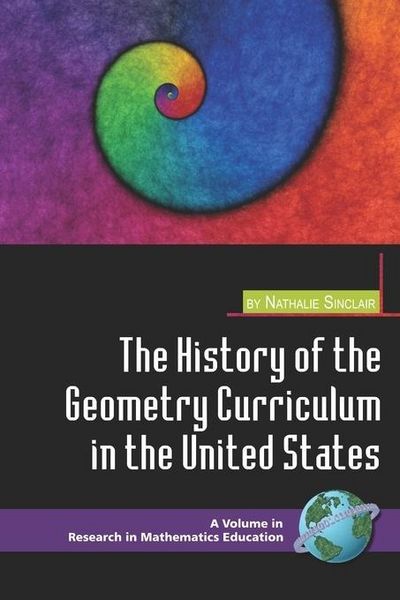
The History of the Geometry Curriculum in the United States
-
- Taschenbuch
- eBook ausgewählt
-
Form:Einzelkauf Download
-
Sprache:Englisch
50,99 €
inkl. gesetzl. MwSt.Beschreibung
Produktdetails
Format
ePUB
Kopierschutz
Ja
Family Sharing
Nein
Text-to-Speech
Ja
Erscheinungsdatum
01.02.2008
Verlag
Information Age PublishingSeitenzahl
117 (Printausgabe)
Dateigröße
3602 KB
Sprache
Englisch
EAN
9781607527305
This volume investigates the evolution of the geometry curriculum in the United States over the past 150 years. A primary goal is to increase awareness of the shape and nature of the current geometry curriculum by explaining how things have come to be as they are.
Given the limited access to first-hand accounts of the enacted geometry curriculum during the past 150 years, the monograph relies on textbooks to provide a record of the implemented curriculum at any given point in time. Policy documents can provide insight into the choices made in textbooks by hinting at the issues considered and the recommendations made.
The monograph is organized in a chronological sequence of "notable events" leading to discernable changes in thinking about the geometry curriculum over the past century and a half-roughly the extent of time during which geometry has been taught in American schools. Notable events include important reports or commissions, influential texts, new schools of thought, and developments in learning technologies. These events affected, among other things: content and aims of the geometry curriculum; the nature of mathematical activity as construed by both mathematicians and mathematics educators; and, the resources students are given for engaging in mathematical activity. Before embarking through the notable events, it is necessary to consider the "big bang" of geometry, namely the moment in time that shaped the future life of the geometry curriculum. This corresponds to the emergence of Euclidean geometry. Given its influence on the shape of the geometry curriculum, familiarity with the nature of the geometry articulated in Euclid's Elements is essential to understanding the many tensions that surround the school geometry curriculum.
Several themes emerge over the course of the monograph, and include: the aims and means of the geometry curriculum, the importance of proof in geometry, the role of visualization and tactile experiences, the fusion between solid and plane geometry, the curricular connections between geometry and algebra, and the use of motion and continuity.
The intended audience would include curriculum developers, researchers, teachers, and curriculum supervisors.
Noch keine Bewertungen vorhanden
Verfassen Sie die erste Bewertung zu diesem Artikel
Helfen Sie anderen Kundinnen und Kunden durch Ihre Meinung.
Kurze Frage zu unserer Seite
Vielen Dank für Ihr Feedback
Wir nutzen Ihr Feedback, um unsere Produktseiten zu verbessern. Bitte haben Sie Verständnis, dass wir Ihnen keine Rückmeldung geben können. Falls Sie Kontakt mit uns aufnehmen möchten, können Sie sich aber gerne an unseren Kund*innenservice wenden.
zum Kundenservice