















































KI-Beratung Beta

Gutscheinbedingungen

Gültig bis 30.11.2026 | Gültig für nicht preisgebundene fremdsprachige Bücher | Einzelne Artikel können ausgeschlossen sein | Online auf thalia.de und in der Thalia App einlösbar | Click & Collect nur mit Online-Zahlung (Paypal/Kreditkarte) vorab | Nicht kombinierbar mit anderen Gutscheinen oder Preisaktionen | Nur einmal pro Einkauf einlösbar | Gutschein wird auf max. 500€ Bestellwert angerechnet | Keine Barauszahlung | Nicht gültig für Versandkosten und Services

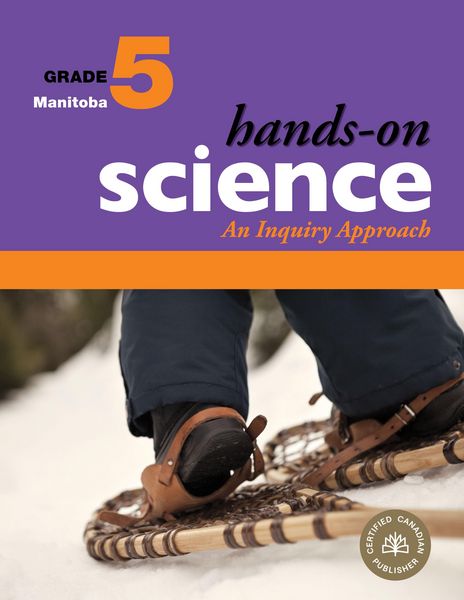
Produktbild: Hands-On Science for Manitoba, Grade 5

Hands-On Science for Manitoba, Grade 5 An Inquiry Approach

135,99 €

inkl. gesetzl. MwSt., Versandkostenfrei


Beschreibung

Hands-On Science for Manitoba is filled with a year's worth of classroom-tested activities. The grade-five book is divided into four units:

  • Maintaining a Healthy Body
  • Properties of and Changes in Substances
  • Forces and Simple Machines
  • Weather

This new edition includes many familiar features for both teachers...

Beschreibung

Hands-On Science for Manitoba is filled with a year's worth of classroom-tested activities. The grade-five book is divided into four units:

  • Maintaining a Healthy Body
  • Properties of and Changes in Substances
  • Forces and Simple Machines
  • Weather

This new edition includes many familiar features for both teachers and students: curriculum correlation charts; background information on the science topics; complete, easy-to-follow lesson plans; digital reproducible student materials; materials lists; and hands-on, student-centred activities. Useful new features include:

  • the components of an inquiry-based approach
  • a four-part instructional process-engage, explore, embed, and enhance
  • ideas for embedding Indigenous knowledge, multicultural connections, and real-world application
  • an emphasis on technology and sustainability infused into all units
  • a fully developed assessment plan that includes opportunities for assessment for, as, and of learning
  • a focus on the design process to solve real-life practical problems
  • inclusion of learning centres that focus on multiple intelligences and universal design for learning (UDL)

Download the FREE digital resources that accompany this book by following the instructions printed on the first page of the Access Digital Resources page.

Produktdetails

Einband

Taschenbuch

Altersempfehlung

ab 1 Jahr(e)

Erscheinungsdatum

19.09.2016

Verlag Portage & Main Press

Produktdetails

Einband

Taschenbuch

Altersempfehlung

ab 1 Jahr(e)

Erscheinungsdatum

19.09.2016

Verlag Portage & Main Press
Seitenzahl

490

Maße (L/B/H)

27,9/20,3/3 cm

Gewicht

1429 g

Sprache

Englisch

ISBN

978-1-55379-313-7

Herstelleradresse

Libri GmbH
Europaallee 1
36244 Bad Hersfeld
DE

Email: gpsr@libri.de

Ein neues Kapitel für Ihre Bücher

Ein neues Kapitel für Ihre Bücher

Schenken Sie Ihren alten Schätzen ein zweites Leben und erhalten Sie dafür eine Thalia Geschenkkarte.

Jetzt verkaufen
Jetzt verkaufen

Noch keine Bewertungen vorhanden

Verfassen Sie die erste Bewertung zu diesem Artikel

Helfen Sie anderen Kundinnen und Kunden durch Ihre Meinung.

Kundinnen und Kunden meinen

Bewertungen (0)

  • Produktbild: Hands-On Science for Manitoba, Grade 5
  • Introduction to Hands-On Science for Manitoba, Grade 5 2

    • Program Introduction 2
    • The Foundations of Scientific Literacy 2
    • Program Principles 2
    • Program Implementation 3
    • Program Resources 3
    • Classroom Environment 6
    • Timelines 6
    • Classroom Management 6
    • Classroom Safety 7
    • Scientific Inquiry Skill: Guidelines for Teachers 7
    • Observing 7
    • Exploring 7
    • Classifying 7
    • Measuring 8
    • Communicating, Analyzing, and Interpreting 8
    • Predicting 11
    • Inferring 11
    • Inquiry Through Investigating and Experimenting 11
    • Inquiry Through Research 11
    • Online Considerations 12
    • Addressing Students' Literacy Needs 12
    • Using the Design Process 12
    • Developing Attitudes Related to Science, Technology, and Society 13
    • Cultural Connections 13
    • Indigenous Connections 13
    • Technology 14
    • Sustainability 14
    The Hands-On Science Assessment Plan 15
    • Assessment for Learning 15
    • Assessment as Learning 15
    • Assessment of Learning 16
    • Performance Assessment 16
    • Portfolios 17
    • An Important Note to Teachers 17
    • Assessment Reproducibles 18
    Unit 1: Maintaining a Healthy Body 29
    • Introduction 30
    • Curriculum Correlation Chart: Knowledge and Understanding Outcomes 33
    • Curriculum Correlation Chart: Scientific Inquiry and Design Process Outcomes 34
    • Resources for Students 37
    • Websites and Online Videos 38
    • 1 What Do We Know About Keeping Our Bodies Healthy? 40
    • 2 Why Does It Matter What We Eat? 48
    • 3 What Happens to Food After We Eat It? 61
    • 4 Why Is Water Important for a Healthy Body? 71
    • 5 How Can We Design and Construct a Model of the Digestive System? 77
    • 6 Why Is Healthy Blood Red? 82
    • 7 How Does Exercise Affect Your Heart and Lungs? 94
    • 8 How Do Healthy Joints, Bones, and Muscles Help You Move? 103
    • 9 How Does Our Brain Send Messages to Our Body? 120
    • 10 How Does Skin Protect Our Bodies? 132
    • 11 How Do Our Bodies Fight Illness and Injury? 142
    • 12 How Do I Keep My Body Healthy? 152
    • 13 Inquiry Project: What More Do I Want to Know About Maintaining a Healthy Body? 156
    Unit 2: Properties of and Changes in Substances 161
    • Introduction 162
    • Curriculum Correlation Chart: Knowledge and Understanding Outcomes 165
    • Curriculum Correlation Chart: Scientific Inquiry and Design Process Outcomes 166
    • Resources for Students 169
    • Websites and Online Videos 170
    • 1 What Do We Know About the Properties of Substances? 173
    • 2 What Are Some Characteristics of Matter? 186
    • 3 How Do We Determine Buoyancy? 189
    • 4 How Do We Determine Solubility? 195
    • 5 How Do Substances Interact? 200
    • 6 How Do Substances Interact to Produce Gases? 204
    • 7 What Are the Properties of Solids, Liquids, and Gases? 211
    • 8 How Can We Design and Construct a Device to Measure Mass? 219
    • 9 How Can We Compare the Mass of Objects That Change? 229
    • 10 How Does Water Behave as It Melts, Freezes, Evaporates, or Condenses? 234
    • 11 When Are Physical Changes in Matter Reversible? 241
    • 12 How Can We Identify a Chemical Change? 247
    • 13 How Does Cooking Depend on Physical and Chemical Changes? 253
    • 14 How Can We Practise Safety With Household Chemicals? 257
    • 15 How Are Products Manufactured? 263
    • 16 Inquiry Project: How Can We Create and Evaluate Household Products? 269
    Unit 3: Forces and Simple Machines 277
    • Introduction 278
    • Curriculum Correlation Chart: Knowledge and Understanding Outcomes 281
    • Curriculum Correlation Chart: Scientific Inquiry and Design Process Outcomes 282
    • Resources for Students 285
    • Websites and Online Videos 287
    • 1 What Do We Know About Forces and Machines? 289
    • 2 Why Is a Lever a Simple Machine? 298
    • 3 How Do Wheels and Axles Work? 308
    • 4 How Do Gears Help Make Work Easier? 316
    • 5 What Can We Learn About Gears and Direction of Movement? 320
    • 6 How Can We Design and Construct Devices With Working Gears? 327
    • 7 Why Is a Single-Fixed Pulley a Simple Machine? 331
    • 8 How Do Movable and Compound Pulleys Make Work Easier? 338
    • 9 How Can We Design and Construct a Working Pulley System? 348
    • 10 How Does an Inclined Plane Make Work Easier? 355
    • 11 Why Is a Screw a Simple Machine? 360
    • 12 Why Is a Wedge a Simple Machine? 363
    • 13 What Have We Learned About Simple Machines? 367
    • 14 Inquiry Project: How Can We Design and Build a System of Simple Machines to Do a Particular Job? 371
    Unit 4: Weather 375
    • Introduction 376
    • Curriculum Correlation Chart: Knowledge and Understanding Outcomes 379
    • Curriculum Correlation Chart: Scientific Inquiry and Design Process Outcomes 380
    • Resources for Students 383
    • Websites and Online Videos 385
    • 1 What Do We Know About Weather? 387
    • 2 How Do Weather Conditions Affect the Lives of Humans and Other Animals? 396
    • 3 What Is the Difference Between Weather and Climate? 400
    • 4 How Is Weather Affected by the Water Cycle? 407
    • 5 How Are Clouds Formed? 415
    • 6 What Are the Properties of Air That Affect Weather? 422
    • 7 How Do Air Masses Affect the Weather? 429
    • 8 How Can We Design and Construct Weather Instruments? 437
    • 9 How Does a Meteorologist Predict the Weather? 451
    • 10 How Can We Compare Short-Term and Long-Term Weather Forecasts? 456
    • 11 What Is Weather Lore? 464
    • 12 What Are the Characteristics of Severe Weather Conditions? 468
    • 13 Inquiry Project: What Factors Cause Changes in the Earth's Climate? 472
    References for Teachers 480
    About the Contributors 483
    Access Digital Resources 484