















































KI-Beratung Beta

Gutscheinbedingungen

Gültig bis 11.11.2026 | Gültig für Spielzeug, Filme, Musik, Software, Games, Geschenke & Trends, Schreibwaren, Hörbücher und Hörbuch-Downloads (außer Abo & Shelfies), gebrauchte Bücher, nicht preisgebundene Bücher und Kalender | Einlösbar unter thalia.de und in der Thalia App | Click & Collect nur mit Online-Zahlung (Paypal/Kreditkarte) vorab | Einzelne Artikel können ausgeschlossen sein | Nicht kombinierbar mit anderen Gutscheinen oder Preisaktionen | Nur einmal pro Einkauf einlösbar | Gutschein wird auf max. 500€ Bestellwert angerechnet | Keine Barauszahlung | Digitale Hörbücher nur für Android  | Nicht gültig für preisgebundene Artikel (aufgrund der Buchpreisbindung sind Gutscheine nicht auf Bücher, eBooks, Presse einlösbar), tolino eReader & Zubehör, Abonnements & Flatrates, Geschenkkarten, Versandkosten und Services

  • Produktbild: The God Who Commands
  • Produktbild: The God Who Commands

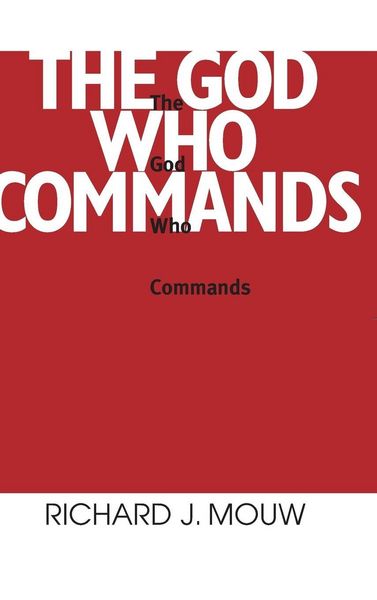
The God Who Commands

119,99 €

inkl. gesetzl. MwSt., Versandkostenfrei


Beschreibung

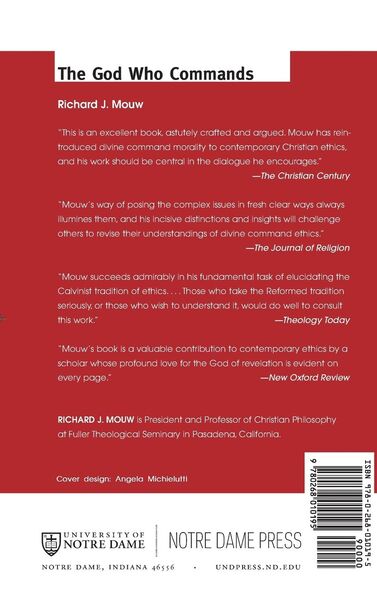
In this book Richard J. Mouw, one of the foremost thinkers in the field of Christian ethics, develops a constructive theological ethic, employing primarily Calvinist themes. Exploring issues that are at the intersection of philosophical and theological discussions, he sets forth an ethical perspective...

Beschreibung

In this book Richard J. Mouw, one of the foremost thinkers in the field of Christian ethics, develops a constructive theological ethic, employing primarily Calvinist themes. Exploring issues that are at the intersection of philosophical and theological discussions, he sets forth an ethical perspective in which obedience to divine commands occupies a central place. After responding to some secularist objections to divine command theory, Mouw looks at the ways in which treatments of divine authority relate to contemporary philosophical discussions of moral justification. He then discusses the divine command perspective, turning to a specific examination of the Reformation emphasis on "naked selfhood." He defends Reformational selfhood against critiques of Protestantism and explores the differences and similarities between the conceptions of moral selfhood portrayed in classical Calvinism and recent existentialism. Examining Protestant, and especially Calvinist, emphases on divine command, Mouw argues that a divine command perspective need not be viewed as antithetical to the claims made by recent defenders of "narrativist" ethics. He explores the ways in which differing intratrinitarian emphases influence Christian moral experience, and he argues that a strong God-the-Father emphasis needs to be supplemented by perspectives that attend more to divine "nearness," as in contemporary feminism and Pentecostalism. He concludes with some reflections on the way in which a divine command ethical perspective speaks in positive ways to the contemporary moral quest.

Produktdetails

Einband

Gebundene Ausgabe

Erscheinungsdatum

31.01.1990

Verlag University Of Notre Dame Press
Seitenzahl

224

Produktdetails

Einband

Gebundene Ausgabe

Erscheinungsdatum

31.01.1990

Verlag University Of Notre Dame Press
Seitenzahl

224

Maße (L/B/H)

23,5/15,7/1,7 cm

Gewicht

434 g

Sprache

Englisch

ISBN

978-0-268-01019-5

Herstelleradresse

Libri GmbH
Europaallee 1
36244 Bad Hersfeld
DE

Email: gpsr@libri.de

Ein neues Kapitel für Ihre Bücher

Ein neues Kapitel für Ihre Bücher

Schenken Sie Ihren alten Schätzen ein zweites Leben und erhalten Sie dafür eine Thalia Geschenkkarte.

Jetzt verkaufen
Jetzt verkaufen

Noch keine Bewertungen vorhanden

Verfassen Sie die erste Bewertung zu diesem Artikel

Helfen Sie anderen Kundinnen und Kunden durch Ihre Meinung.

Kundinnen und Kunden meinen

Bewertungen (0)

Die Leseprobe wird geladen.
  • Produktbild: The God Who Commands
  • Produktbild: The God Who Commands