















































KI-Beratung Beta

Gutscheinbedingungen

Gültig bis 30.11.2026 | Gültig für nicht preisgebundene fremdsprachige Bücher | Einzelne Artikel können ausgeschlossen sein | Online auf thalia.de und in der Thalia App einlösbar | Click & Collect nur mit Online-Zahlung (Paypal/Kreditkarte) vorab | Nicht kombinierbar mit anderen Gutscheinen oder Preisaktionen | Nur einmal pro Einkauf einlösbar | Gutschein wird auf max. 500€ Bestellwert angerechnet | Keine Barauszahlung | Nicht gültig für Versandkosten und Services

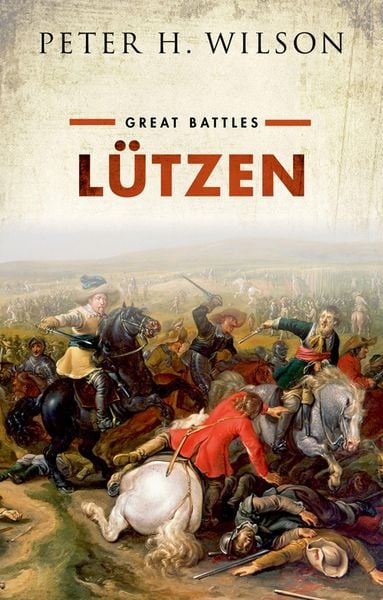
Produktbild: Lützen

Lützen Great Battles

Aus der Reihe Great Battles

37,99 €

inkl. gesetzl. MwSt., Versandkostenfrei


Beschreibung

The Thirty Years' War (1618-48) was Europe's most destructive conflict prior to the two world wars. Two of European history's greatest generals faced each other at Lützen in November 1632, mid-way through this terrible war. Neither achieved his objective. Albrecht von Wallenstein withdrew his battered...

Beschreibung

The Thirty Years' War (1618-48) was Europe's most destructive conflict prior to the two world wars. Two of European history's greatest generals faced each other at Lützen in November 1632, mid-way through this terrible war. Neither achieved his objective. Albrecht von Wallenstein withdrew his battered imperial army at nightfall, unaware that his opponent, King Gustavus Adolphus of Sweden, had died a few hours earlier.
The indecisive military outcome found an immediate echo in image and print, and became the object of political and historical disputes. Swedish propaganda swiftly fostered the lasting image of the king's sacrifice for the Protestant cause against the spectre of Catholic Habsburg 'universal monarchy'. The standard assumption that the king had 'met his death in the hour of victory' became integral to how Gustavus Adolphus's contribution to modern warfare has been remembered, even celebrated, while the study of Lützen's wider legacy shows how such events are constantly rewritten as elements of propaganda, religious and national identity, and professional military culture. The battle's religious and political associations also led to its adoption as a symbol by those advocating German unification under Prussian leadership. The battlefield remains a place of pilgrimage to this day and a site for the celebration of Protestant German and Nordic culture.
This book is the first to combine analysis of the battle itself with an assessment of its cultural, political and military legacy, and the first to incorporate recent archaeological research within a reappraisal of the events and their significance. It challenges the accepted view that Lützen is a milestone in military development, arguing instead that its impact was more significant on the cultural and political level.

Rezension

A very readable book. Highly recommended for anyone wishing to understand more about the Thirty Years' War. An excellent addition to OUP's Great Battles series. Chris May, Battlefield

Produktdetails

Einband

Gebundene Ausgabe

Erscheinungsdatum

22.02.2018

Abbildungen

21 Black & white illustrations and six maps

Verlag Oxford University Press

Produktdetails

Einband

Gebundene Ausgabe

Erscheinungsdatum

22.02.2018

Abbildungen

21 Black & white illustrations and six maps

Verlag Oxford University Press
Seitenzahl

272

Maße (L/B/H)

22,3/14,1/2,5 cm

Gewicht

436 g

Sprache

Englisch

ISBN

978-0-19-964254-0

Herstelleradresse

Libri GmbH
Europaallee 1
36244 Bad Hersfeld
DE

Email: gpsr@libri.de

Ein neues Kapitel für Ihre Bücher

Ein neues Kapitel für Ihre Bücher

Schenken Sie Ihren alten Schätzen ein zweites Leben und erhalten Sie dafür eine Thalia Geschenkkarte.

Jetzt verkaufen
Jetzt verkaufen

Noch keine Bewertungen vorhanden

Verfassen Sie die erste Bewertung zu diesem Artikel

Helfen Sie anderen Kundinnen und Kunden durch Ihre Meinung.

Kundinnen und Kunden meinen

Bewertungen (0)

Die Leseprobe wird geladen.
  • Produktbild: Lützen
    • 1: Introduction
    • 2: Context
    • 3: Campaign
    • 4: Battle
    • 5: Military Legacy
    • 6: Political and Cultural Legacy
    • 7: Conclusion
    • Appendix: Orders of battle
    • Bibliography
    • Index