KI-Beratung Beta

Gutscheinbedingungen

Gültig bis 30.11.2026 | Gültig für nicht preisgebundene fremdsprachige Bücher | Einzelne Artikel können ausgeschlossen sein | Online auf thalia.de und in der Thalia App einlösbar | Click & Collect nur mit Online-Zahlung (Paypal/Kreditkarte) vorab | Nicht kombinierbar mit anderen Gutscheinen oder Preisaktionen | Nur einmal pro Einkauf einlösbar | Gutschein wird auf max. 500€ Bestellwert angerechnet | Keine Barauszahlung | Nicht gültig für Versandkosten und Services

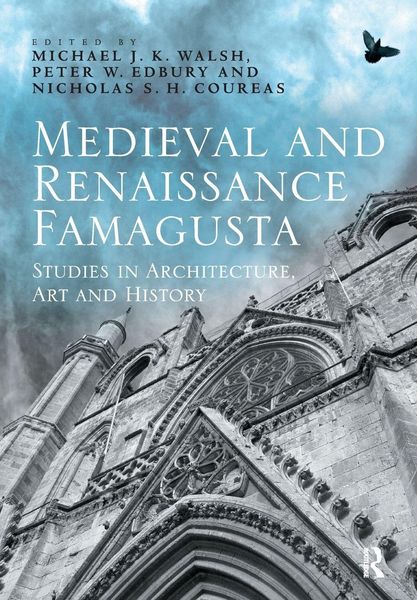
  • Produktbild: Medieval and Renaissance Famagusta
  • Produktbild: Medieval and Renaissance Famagusta

Medieval and Renaissance Famagusta Studies in Architecture, Art and History

118,99 €

inkl. gesetzl. MwSt., Versandkostenfrei


Beschreibung

There was a time seven centuries ago when Famagusta's wealth and renown could be compared to that of Venice or Constantinople. The Cathedral of St Nicholas in the main square of Famagusta, serving as the coronation place for the Crusader Kings of Jerusalem after the fall of Acre in 1291, symbolised both...

Beschreibung

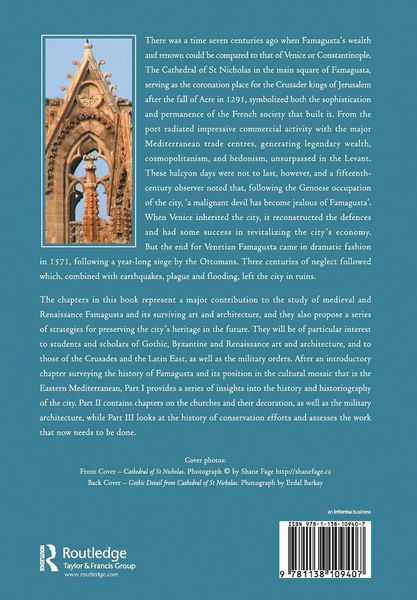
There was a time seven centuries ago when Famagusta's wealth and renown could be compared to that of Venice or Constantinople. The Cathedral of St Nicholas in the main square of Famagusta, serving as the coronation place for the Crusader Kings of Jerusalem after the fall of Acre in 1291, symbolised both the sophistication and permanence of the French society that built it. From the port radiated impressive commercial activity with the major Mediterranean trade centres, generating legendary wealth, cosmopolitanism, and hedonism, unsurpassed in the Levant. These halcyon days were not to last, however, and a 15th century observer noted that, following the Genoese occupation of the city, 'a malignant devil has become jealous of Famagusta'. When Venice inherited the city, it reconstructed the defences and had some success in revitalising the city's economy. But the end for Venetian Famagusta came in dramatic fashion in 1571, following a year long siege by the Ottomans. Three centuries of neglect followed which, combined with earthquakes, plague and flooding, left the city in ruins. The essays collected in this book represent a major contribution to the study of Medieval and Renaissance Famagusta and its surviving art and architecture and also propose a series of strategies for preserving the city's heritage in the future. They will be of particular interest to students and scholars of Gothic, Byzantine and Renaissance art and architecture, and to those of the Crusades and the Latin East, as well as the Military Orders. After an introductory chapter surveying the history of Famagusta and its position in the cultural mosaic that is the Eastern Mediterranean, the opening section provides a series of insights into the history and historiography of the city. There follow chapters on the churches and their decoration, as well as the military architecture, while the final section looks at the history of conservation efforts and assesses the work that now needs to be done.

Rezension

'a necessary and long-awaited effort aimed not only to analyze and understand the unique historical and monumental heritage of the city but also to draw attention to its art and architecture, which are in desperate and urgent need of conservation and restoration. ... the editors must be commended for their job, as all the essays ... are clear, compelling, and erudite, de facto forming a seminal study on a city that boasted a multi-cultural and 'multi-confessional society'' Speculum '... this book is a fantastic study of a city that has been largely overlooked by the historical community... a passionate testament to the editors who love their subject.' Comitatus '... this volume brings to light much new work and highlights Famagusta's many possibilities still to be explored.' Renaissance Quarterly


Produktdetails

Einband

Taschenbuch

Erscheinungsdatum

24.11.2017

Herausgeber Michael J. K. Walsh + weitere
Verlag Taylor & Francis

Produktdetails

Einband

Taschenbuch

Erscheinungsdatum

24.11.2017

Herausgeber
Verlag Taylor & Francis
Seitenzahl

406

Maße (L/B/H)

24,4/17/2,2 cm

Gewicht

698 g

Sprache

Englisch

ISBN

978-1-138-10940-7

Herstelleradresse

Libri GmbH
Europaallee 1
36244 Bad Hersfeld
DE

Email: gpsr@libri.de

Ein neues Kapitel für Ihre Bücher

Ein neues Kapitel für Ihre Bücher

Schenken Sie Ihren alten Schätzen ein zweites Leben und erhalten Sie dafür eine Thalia Geschenkkarte.

Jetzt verkaufen
Jetzt verkaufen

Noch keine Bewertungen vorhanden

Verfassen Sie die erste Bewertung zu diesem Artikel

Helfen Sie anderen Kundinnen und Kunden durch Ihre Meinung.

Kundinnen und Kunden meinen

Bewertungen (0)

Die Leseprobe wird geladen.
  • Produktbild: Medieval and Renaissance Famagusta
  • Produktbild: Medieval and Renaissance Famagusta
  • Contents: Foreword, Phillip Roux de Lusignan; Preface, Nicola Coldstream; Introduction - Famagusta: an imperilled cultural mosaic in the Eastern Mediterranean, The Editors; Part I History and Historiography: Camlet manufacture, trade in Cyprus and the economy of Famagusta from the 13th to the late 15th century, David Jacoby; Famagusta and the tradition of history writing in Frankish Cyprus, Peter W. Edbury; Mythes et réalités de la présence templière à Famagouste, Pierre-Vincent Claverie; Taverns in medieval Famagusta, Nicholas S.H. Coureas. Part II Art and Architecture: St Nicholas in Famagusta: a new approach to the dating, chronology and sources of architectural language, Arne Franke; Notes on the marginal sculpture of the cathedral of St Nicholas, Allan Langdale; Les Ordres mendiants à Famagouste: une référence spirituelle et architecturale, Thierry Soulard; The Holy Mother of God Armenian church in Famagusta, Dickran Kouymjian; Gothic and Byzantine in the monumental arts of Famagusta: diversity, permeability and power, Justine M. Andrews; Famagusta from a Latin perspective: Venetian heraldic shields and other fragmentary remains, Vincenzo Lucchese; The military architecture of Venetian Famagusta, Gianni Perbellini. Part III Conservation: What lies beneath: a contemporary survey of the surviving frescoes of the churches in the Syrian quarter of Famagusta, Michael J.K. Walsh; 20th-century restorations to the medieval and Renaissance monuments of Famagusta, Ege Uluca Tümer; Monumental buildings in the revitalization process of historic urban quarters: the case of the walled city of Famagusta, Naciye Doratli; An inspection of three of Famagusta's churches, Paulo B. LourenÃo and LuÃs F. Ramos; An assessment of the structural fabric of the church of Saints Peter and Paul: a case study in historical reference and structural appraisal, George S. Ballard and Stephen W. Kemp; The historic walled city of Famagusta, 2008: a report, Robert Silman and Kent Severs